Two things about a walking cane are worth getting right before anything else, and most
people get at least one of them wrong.
The height: the top of the handle should sit level with the crease of your wrist
when you stand with your arms hanging naturally, wearing the shoes you actually wear.
The hand: you hold it on the side opposite your weaker leg. If your right knee is
the problem, the cane goes in your left hand. That feels wrong and it is correct —
it is how your arms already swing when you walk, and it widens your base of support at the moment
you need it.
Quick Reference: Getting It Right
| Question | Answer |
|---|---|
| How high? | Handle level with your wrist crease |
| How much elbow bend? | About 15–30° |
| Which hand? | Opposite your weaker leg |
| Rough length estimate | Your height × 0.45 |
| What wears out first | The rubber tip. Replace it |
| Measure in your outdoor shoes. A cane fitted barefoot indoors will be two to three centimetres too short the moment you go out in it. | |
Height and Hand: The Two That Matter
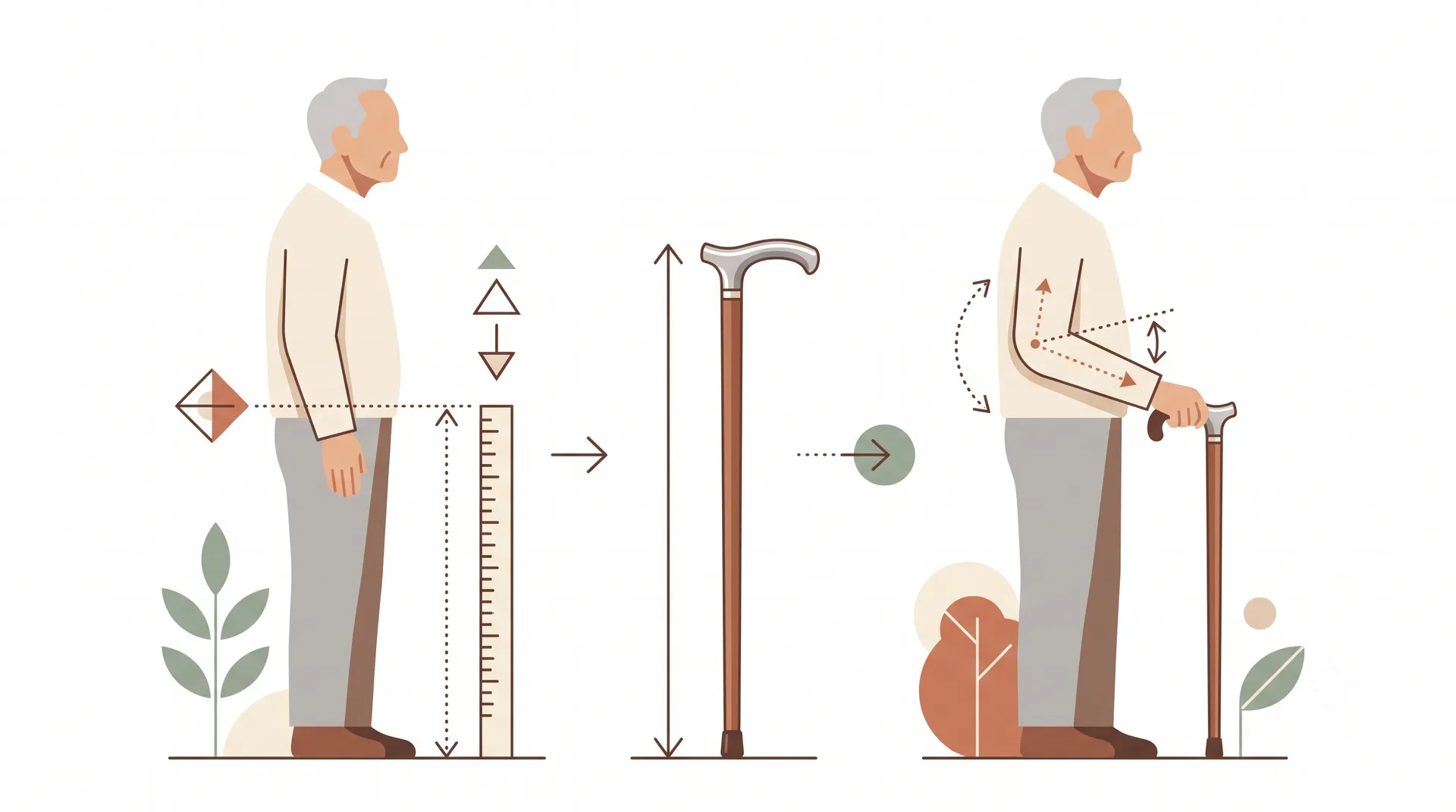
Height: measure to the wrist crease
Stand upright in your usual outdoor shoes, arms hanging relaxed at your sides. The top of the cane handle should come level with the crease where your hand meets your wrist.
Holding it then, your elbow should be bent about 15 to 30 degrees. That slight bend is what lets your arm actually take weight — a straight arm cannot absorb anything, and a heavily bent one makes you stoop.
As a rough starting estimate, your height multiplied by 0.45 gets you close enough to test in a shop.
⚠ Too long is worse than too short
A cane set too high forces your shoulder up and pushes your weight sideways,
which is destabilising in exactly the situation the cane exists to prevent.
Too short makes you lean forward and takes weight off the cane, so it stops
helping — bad, but less immediately dangerous.
If in doubt, err a centimetre short and adjust.
Hand: the opposite side, and it is not arbitrary
Hold the cane in the hand opposite your weaker or painful leg. Right leg affected, cane in the left hand. This is standard clinical guidance and it is consistent across orthopaedic sources.
The reason is how you already walk. In a normal gait the arm on the opposite
side swings forward with each leg — right leg forward, left arm forward.
Putting the cane in that hand means it lands at the same moment as the weak leg,
taking load off it precisely when the load arrives.
It also widens your base of support, because the cane is planted away from the
weak side rather than beside it.
Cane and weak leg move together. That is the whole rhythm.
Most people's instinct is the opposite — to hold it on the side that hurts, which narrows the base and does much less for the affected leg.
One honest note: this article covers fitting, not diagnosis. If you are recovering from surgery, have balance problems, or are not sure a single cane is the right aid at all, a physiotherapist will fit you properly in ten minutes and that is worth far more than any article.
Why Japanese — Where a Cane Is Not a Medical Product
Japan has the oldest population in the world, and that has changed what a cane is sold as.
In most Western countries a cane is still a medical supply — bought from a pharmacy or a mobility shop, in grey or black aluminium, from a range of about four.
In Japan it is a consumer product. Canes are sold in department stores, designed by manufacturers who also make trekking poles, and come in wood grains, patterned shafts, colours, folding designs and carbon-fibre versions light enough to carry all day.
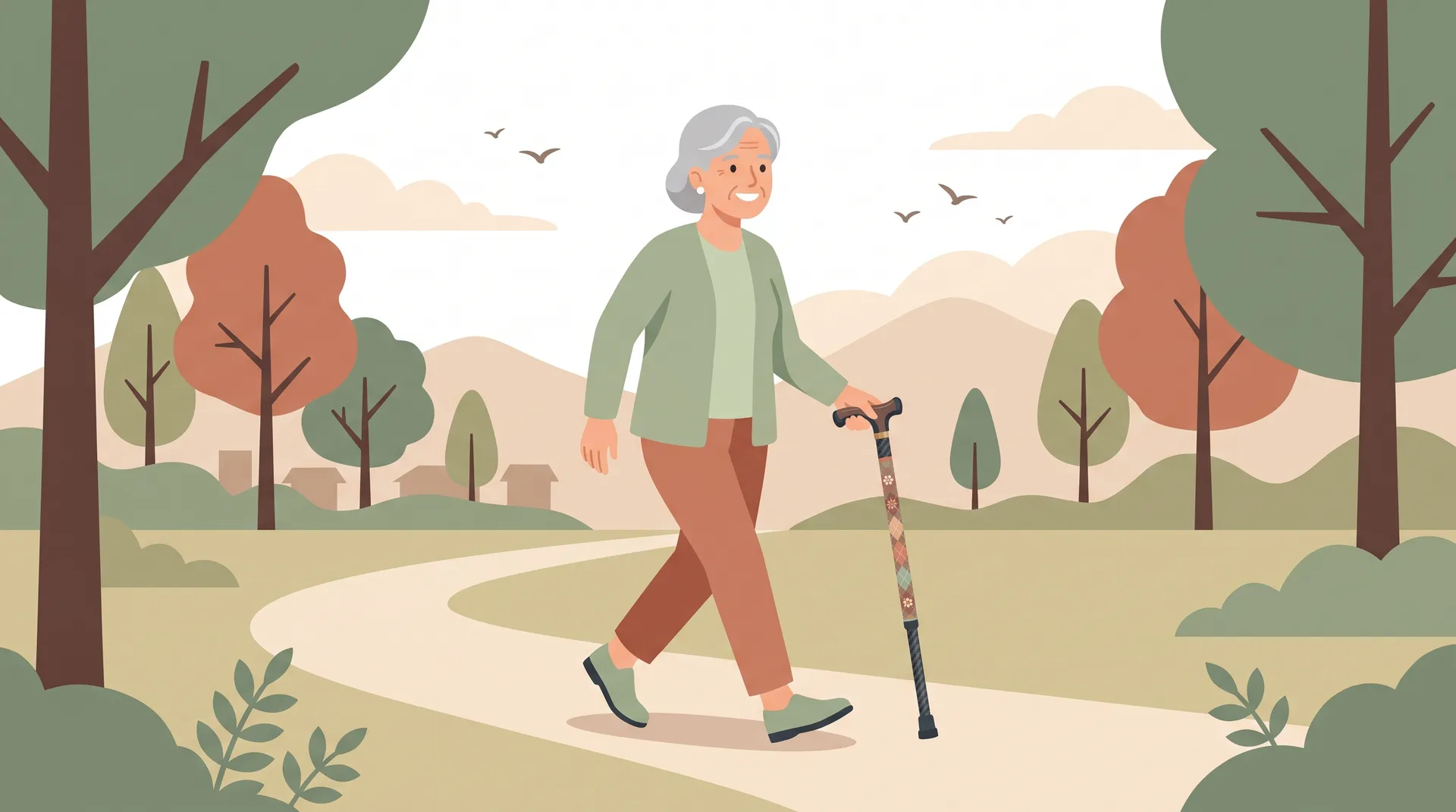
This matters more than it sounds, because the biggest risk with a cane is not using
it.
People who feel that a cane announces frailty leave it at home, and then fall.
A cane that looks like an object someone chose — rather than one issued to them — gets carried.
That is a safety feature, not vanity.
Japan worked this out because it had to, several decades before anywhere else.
⚠ What the SG Mark Does and Does Not Cover
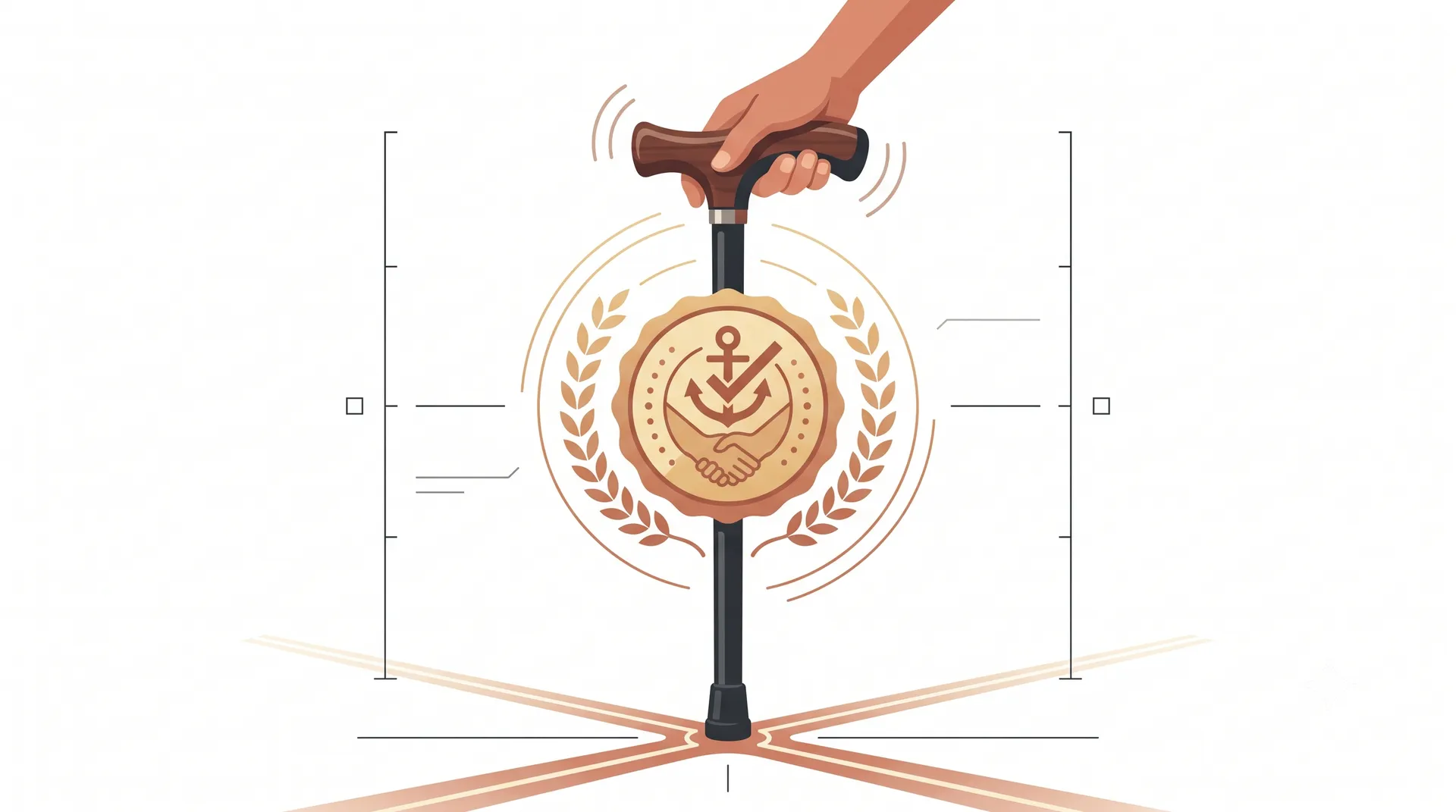
Japanese canes often carry an SG mark — "Safe Goods" — administered by the Consumer Product Safety Association since 1973 under Japan's Consumer Product Safety Act.
It means the product was tested against a national SG standard for that category, which for a cane covers things like static load, repeated loading and joint strength.
It also comes with a liability scheme. The association operates a compensation arrangement for people injured by a defect in an SG-marked product.
⚠ That compensation scheme is a Japanese domestic arrangement. We cannot tell
you it extends to a cane you imported and use in another country, and you should not assume it
does.
What does carry over is the testing. A cane built to pass a load standard is a
cane built to pass a load standard, wherever it ends up.
And what does not carry over is your own market's certification. An imported
Japanese cane will not bear a CE or equivalent mark, which may matter if it is being supplied
through a healthcare route rather than bought privately.
Treat the SG mark as evidence of engineering rather than as a warranty that follows you home. On that basis it is a genuinely useful thing to look for, and it is the reason Japanese canes are worth considering over unbranded ones at a similar price.
Folding, Telescopic, or Fixed
- Fixed length — the strongest and the lightest. No joints to work loose, no mechanism to fail. Cut to your height once and that is it, which is why wooden canes are still made this way.
- Telescopic — adjustable, and the sensible default. You can fine-tune the height after a few days of walking, which almost everyone needs to. Check the locking collar occasionally.
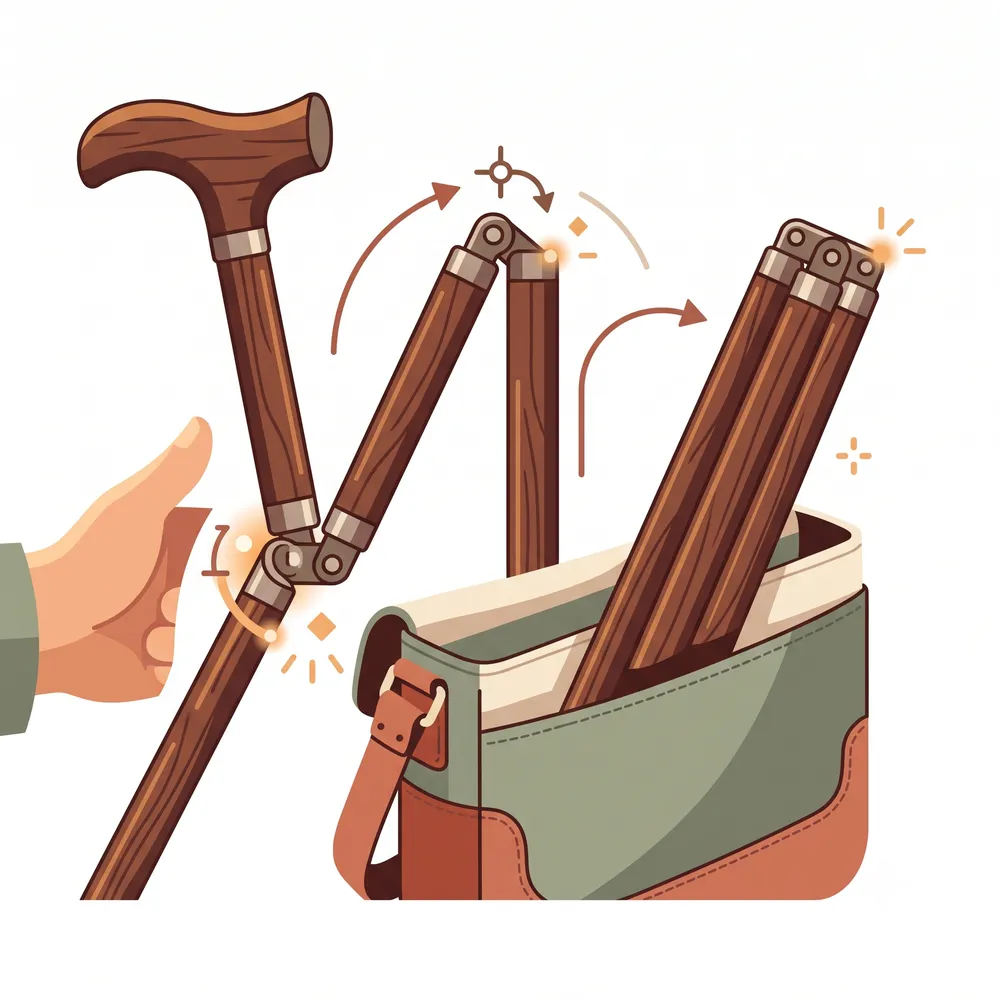
- Folding — for carrying, not for walking all day. Sections held by an internal elastic cord, folding into a bag. Ideal for travel, restaurants, and anyone who needs a cane sometimes rather than always.
Folding canes have one consumable most people do not know about: the elastic cord inside. It stretches over years and eventually snaps, at which point the cane will not hold itself straight. It is replaceable — that is a repair, not a write-off.
Aluminium or carbon fibre? Carbon is lighter and absorbs a little vibration,
which matters over a long day. Aluminium is cheaper and entirely adequate.
The weight difference is real but small — worth paying for if the cane is used
constantly, not worth agonising over if it lives by the door.
The Grip, and Why It Decides Comfort
The shaft carries the load; the grip decides whether you will use it. Almost all complaints about canes are complaints about the handle.
- T-shape or offset — the standard. Weight passes down through the shaft directly under your hand, which is the mechanically sound arrangement.
- Crook or curved — hangs on your arm. Convenient in shops and on public transport, less comfortable to bear weight on for long.
- Palm-grip or contoured — spreads the load. Worth seeking out if you have arthritic hands, since it takes pressure off the fingers and puts it into the palm.
- Whatever the shape, it should fill your hand. A grip too small for your hand concentrates pressure and is the most common cause of soreness.
Try to hold one before buying if you possibly can. Grip comfort is genuinely individual, and it is the only part of a cane that cannot be assessed from a photograph.
What to Look For
We could not confirm authorised English-language retail for the Japanese cane
manufacturers — the specialists here also make trekking poles and largely sell
domestically.
So rather than pointing you at a marketplace listing we cannot vouch for, here is the
specification to check, which applies whoever you buy from.
The checklist
- Height range
- Covers your wrist-crease measurement, in shoes
- Maximum user weight
- Stated. If it is not, walk away
- Safety mark
- SG in Japan, or your own market's equivalent
- Tip
- Replaceable, and spares available
- Grip
- Fills your hand; contoured if your hands hurt
- Folding
- Elastic cord replaceable
The stated maximum user weight is the item most often missing and most worth insisting on. It is the number that tells you the cane was engineered rather than assembled.
⚠ The rubber tip is a consumable, and people forget
The tip wears smooth, and a smooth tip slips. This is the single most common
preventable failure with a walking cane.
Look at it once a month. If the tread pattern is worn flat or the rubber has
gone hard and shiny, replace it — tips cost very little and screw or push on.
Replace it before winter, not after the first slip.
Frequently Asked Questions
Which hand should I hold it in?
The hand opposite your weaker or painful leg. Right leg affected means the cane
goes in your left hand.
It matches how your arms already swing — the opposite arm moves forward with
each leg — so the cane lands at the same moment as the weak leg and takes load off it.
How do I check the height is right?
Stand in your outdoor shoes with your arms relaxed: the handle should be level with your
wrist crease, giving about 15–30° of bend at the elbow when you hold it.
Too long is more dangerous than too short, because it pushes your weight
sideways.
What is the difference between a single-tip and a quad cane?
A quad cane has four feet and stands up on its own, giving much more support and
a wider base — used where balance is a significant problem.
It is heavier and slower, and it needs a flat surface to work properly. A
single-tip cane suits someone who needs assistance rather than substantial support; which
category you are in is a question for a clinician.
Can I take a cane on a plane?
Yes — mobility aids are normally carried in the cabin and do not count against your
baggage allowance, though airlines and airports vary and screening applies.
A folding cane is easier all round, since it goes in a bag when you are seated
rather than needing somewhere to live.
The elastic in my folding cane has snapped. Is it finished?
No — the internal cord is a consumable and can be replaced. It stretches with
use and eventually gives out, which is normal rather than a defect.
Replacement cord is sold for the purpose, and the job is straightforward on most
designs.
Is a cane an appropriate gift?
It can be, and it depends entirely on whether the person has accepted that they want
one. Giving a cane to someone who has not is a statement about them, however kindly
meant.
If they already use one, a better one is a genuinely good present — lighter,
folding, or simply something they would have chosen rather than been issued.
Final Thoughts: The Cane You Will Actually Carry
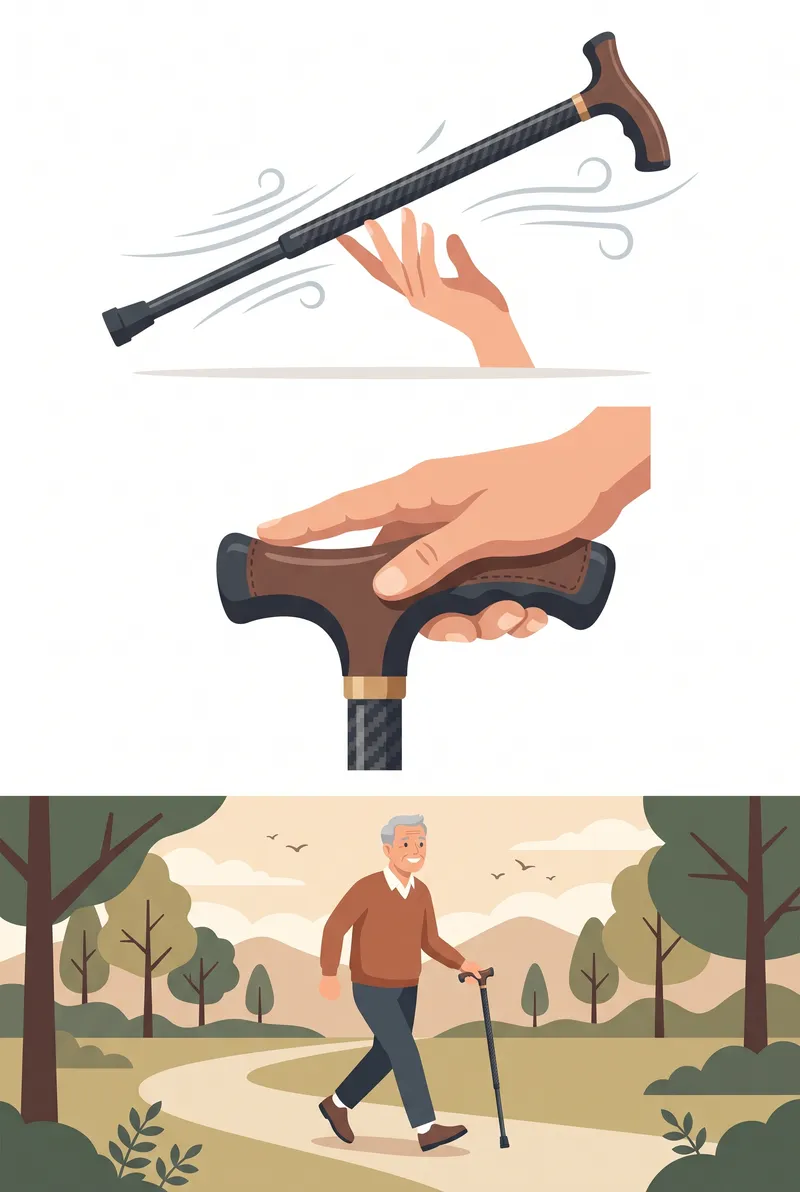
Wrist crease for height, opposite hand for the weak leg, and check the rubber tip once a month. Those three cover most of what goes wrong.
Beyond that, the Japanese insight is worth taking seriously: a cane only works if it gets picked up. Japan builds them as objects people are willing to be seen with, because a country with that many older people learned what happens when they are not.
And if you are fitting a first cane, spend ten minutes with a physiotherapist. It is the cheapest part of the whole exercise and the part that matters most.
Japanese Dress Shoes: Wide Fittings and How to Buy

Haramaki: Why Japan Warms the Middle, Not the Ends