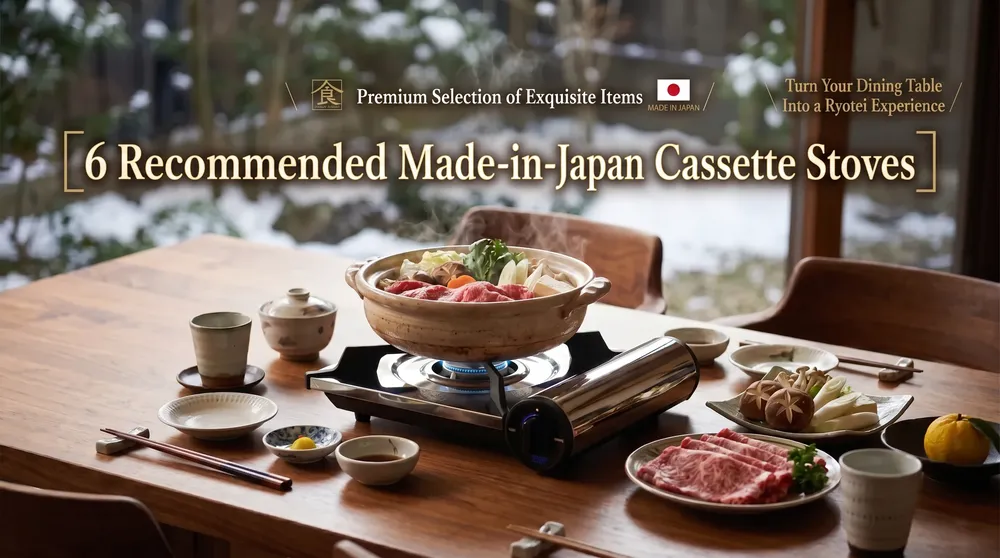
There is no voltage problem here — a cassette stove runs on gas. Which sounds like
good news, and immediately creates a harder one.
You cannot ship or fly with gas canisters. Import a Japanese-market stove and you
have an object that takes a fuel cartridge you have no legal way to obtain. The stove is not the
problem; the fuel is.
Fortunately the answer is simple: Iwatani already sells these where you live,
complete with certified canisters for your market. This guide covers which model to buy, why
Japanese cassette stoves are built the way they are — and
the single mistake that makes them explode.
Quick Reference: Before You Buy
| Question | Answer |
|---|---|
| Does it need electricity? | No. Gas only, piezo ignition |
| Can I import one from Japan? | Do not. Canisters cannot be shipped or flown |
| So what do I do? | Buy Iwatani's model for your market, with its certified fuel |
| How long does one last? | About 10 years. Replace it, do not nurse it |
| ⚠ Never use a griddle or grill plate wider than the stove is designed for. It reflects heat down onto the canister. This is how these explode — read the safety section. | |
Will One Work in Your Country? It Is About the Fuel
Short answer — yes, easily, provided you buy the version sold in your market rather than importing one.
Gas canisters cannot be shipped or flown
Pressurised fuel cartridges are prohibited in checked and carry-on baggage, and are not
accepted by ordinary international parcel services. That is not a formality anyone works
around — it is a hazardous goods rule.
So a Japanese-market cassette stove arriving at your door is an appliance with no legal
fuel supply. You would be relying on finding a locally sold cartridge that fits a stove
it was not certified for, which is exactly the situation the safety systems below were designed to
prevent.
The good news: Iwatani is already there
Iwatani operates in the United States and sells stoves built for that market — different model numbers from the Japanese line, sold alongside its own butane canisters that are UL listed and conform to US hazardous-goods packaging standards.
That is the whole solution. Same manufacturer, same engineering tradition, correct certification, fuel you can buy in a shop.
Where they are sold is slightly unexpected
In the US these often move through restaurant supply channels rather than general
retail, because tableside cooking equipment is what they are used for professionally.
If a general shop does not stock them, a catering supplier will.
Use the manufacturer's own fuel. Other cartridges may physically fit, and Iwatani
is explicit that only its own canisters are recommended — the pressure-sensing safety mechanism is
calibrated around them.
Why Japanese — Safety Systems You Cannot See
A cassette stove is a burner sitting a few centimetres from a sealed can of pressurised
flammable gas, on a table, next to people eating. The engineering that matters is
entirely about what happens when something goes wrong.
Japanese stoves — Iwatani in particular — build in mechanisms that a cheap stove does not have,
and none of them are visible in a product photo.
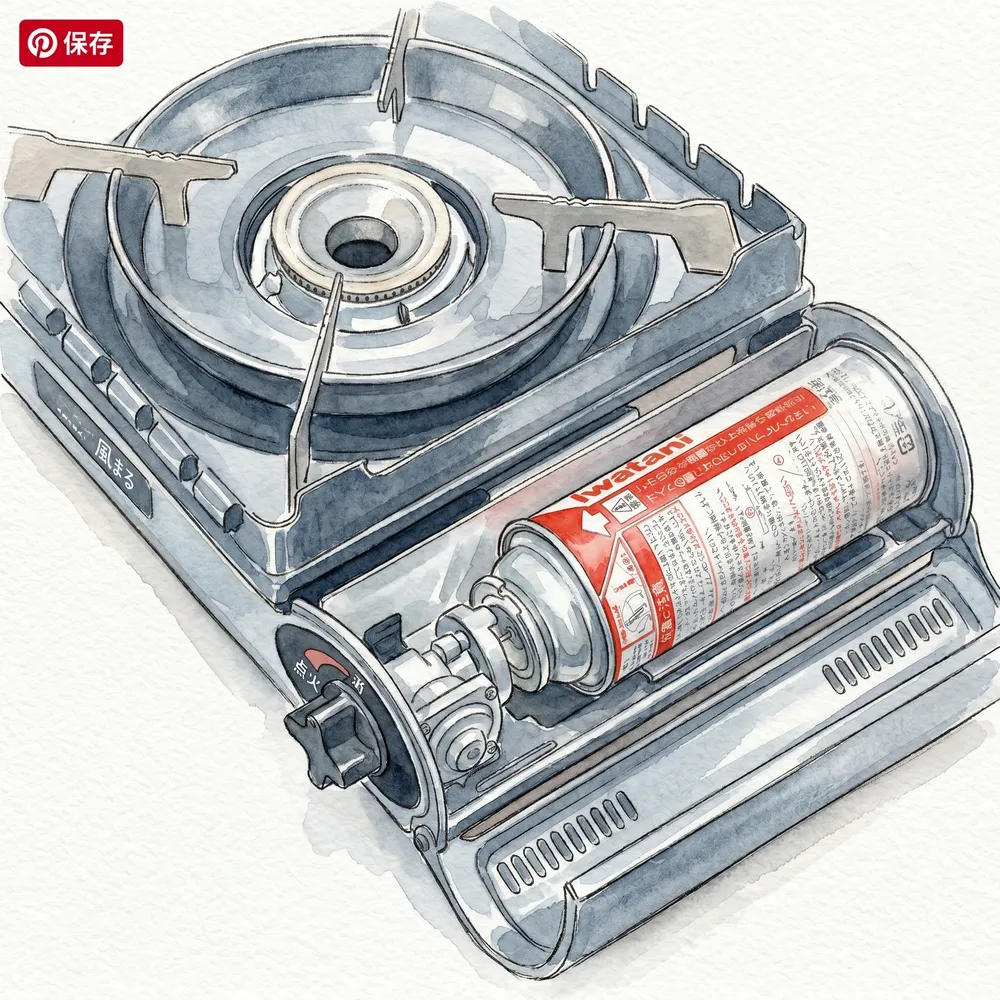
- Pressure-sensing shutoff. If the canister gets too hot its internal pressure rises — and the mechanism releases the cartridge before it can rupture. This is the single most important part of the stove.
- Magnetic cartridge mounting. The canister is held by a magnet rather than screwed in, so it can be ejected instantly by the mechanism above, and so it cannot be fitted slightly wrong.
- Heat shielding between burner and cartridge, so ordinary cooking does not warm the can in the first place.
- Flame failure detection on many models, cutting gas if the flame goes out.
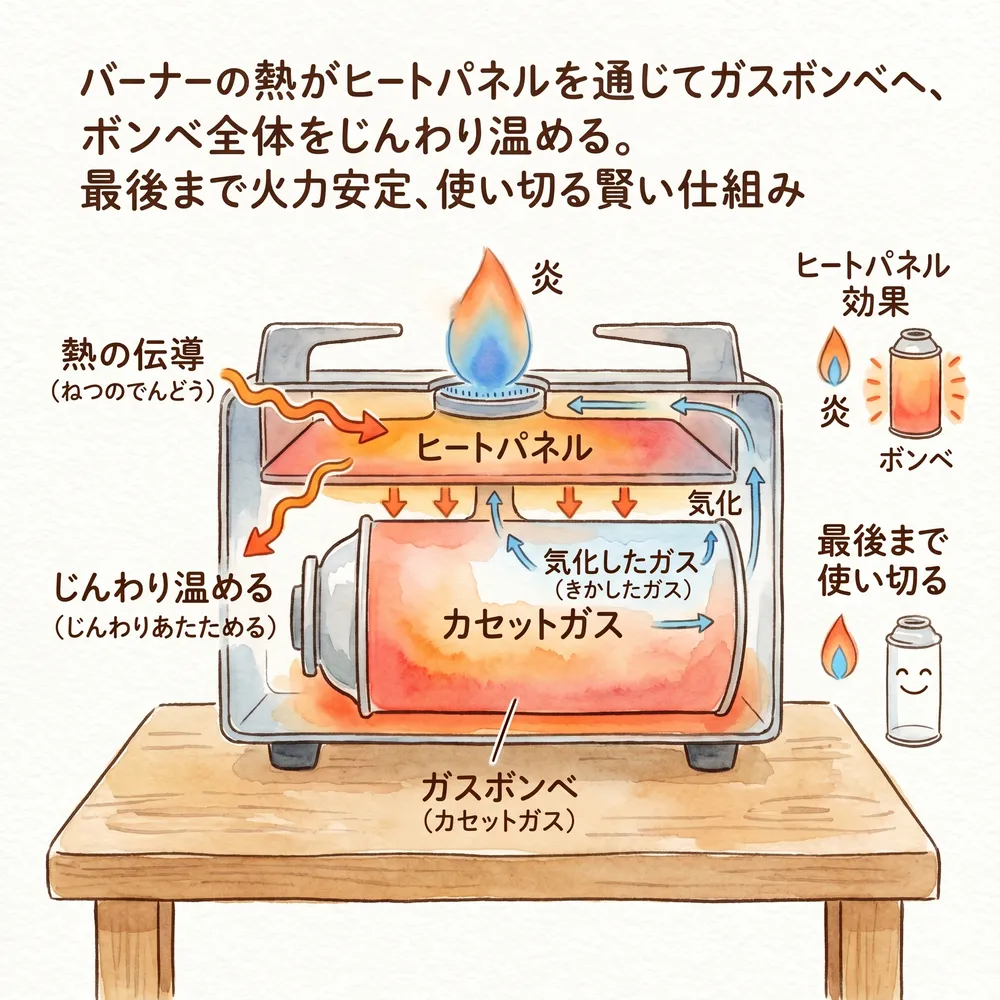
And the opposite problem: cold
Butane stops vaporising properly as it approaches freezing, so the flame weakens and dies —
which is why cheap stoves are useless outdoors in winter.
Better Japanese models include a heat panel that channels a little warmth from the
burner back to the cartridge, keeping it just warm enough to keep vaporising.
If you intend to use it outside in cold weather, this feature is the reason to spend
more.
⚠ The Oversized Plate Problem
Never put a griddle, grill plate or pan on the stove that is wider than the manufacturer specifies. This is the leading cause of cassette stove accidents, and it is entirely avoidable.
The mechanism is simple and not obvious. A plate wider than the burner area catches rising heat and radiates it sideways and downwards — including onto the cartridge compartment, which the stove's heat shielding was not designed to protect against.
The canister warms. Internal pressure rises. On a good stove the pressure-sensing mechanism ejects the cartridge and you get a fright. On a cheap stove without one, or if the mechanism is defeated, the cartridge can rupture.
- Use only plates and pans within the stated maximum diameter. Manufacturers state it clearly and it is not conservative padding.
- Two stoves side by side is dangerous — each one heats the other's cartridge. Keep real separation between them.
- Never wrap the stove in foil to catch spills. Foil traps heat exactly where the shielding is supposed to vent it.
- Do not use it inside a windbreak that encloses it, for the same reason.
- Ventilate. Butane combustion consumes oxygen and produces carbon monoxide if it burns incompletely. Tabletop use is fine in a normal room; a sealed tent is not.
These stoves have an unusually good safety record, and it is because of the mechanisms above rather than because the situation is inherently safe. The rules exist to keep the mechanisms in a position to work.
Choosing: Height, Flame Type, Wind
Height matters more than anything on the spec sheet. A cassette stove usually
sits in the middle of a table with a communal pot on it, and a tall stove puts the pot
above eye level — you cannot see what you are serving and neither can anyone else.
The premium Japanese models are noticeably thin for exactly this reason. It reads as styling and
it is functional.
Inner flame or outer flame
- Outer flame (the usual design) — the burner ring directs flame outwards and upwards. Good for large pots, spreads heat wide.
- Inner flame — flame angled inwards towards the centre. More efficient with smaller pots and it keeps heat off the stove body, which some models use to reduce the load on the cartridge compartment.
For hotpot at a table, outer flame is the standard answer. Inner flame suits smaller vessels and single portions.
Outdoors is a different specification
Wind is the enemy, not cold — though cold is a close second. A tabletop stove has no wind protection and a light breeze will halve its output.
If you want one that works outdoors, look for a windbreak-integrated design and a cartridge heat panel. Without both, an outdoor cassette stove is a fair-weather object.
What to Buy
Buy the model sold in your market. This is the rare Japanese category where that advice is not a compromise — the manufacturer is the same, and it is the only way to get certified fuel.
Iwatani's US line — the correct answer
Iwatani sells several stoves built and certified for the US market, and they carry the same
safety architecture as the domestic range: magnetic cartridge mounting, pressure
sensing and heat shielding.
Buy the matching fuel canisters at the same time. Iwatani states plainly that
only its own cartridges are recommended, and the pressure-sensing mechanism is calibrated
around them.
- Power
- Gas only. No electricity, piezo ignition
- Safety
- Magnetic mount, pressure-sensing cartridge ejection
- Fuel
- Manufacturer's own canisters, certified for your market
- Where
- Manufacturer's site; restaurant supply dealers
- Price range
- $60–$150 plus fuel
Perfect for: Everyone. Tabletop hotpot, Korean barbecue, emergency cooking, and camping in fair weather.
Matching fuel canisters — not optional
Iwatani's own butane cartridges for the US market are UL listed and conform to US
hazardous-goods packaging standards. Other brands may physically fit; the
manufacturer recommends against them, and the reason is that the safety mechanism is
calibrated to a specific pressure behaviour.
Buy fuel locally, always. There is no scenario in which shipping cartridges
internationally is the answer.
- Certification
- UL listed, DOT-compliant packaging
- Runtime
- Roughly an hour to ninety minutes per can on high
- Storage
- Cool, dark, upright. Never in a hot car
- Disposal
- Empty completely, then follow local rules for pressurised containers
Perfect for: Buying three at once, because running out mid-hotpot is the classic error.
The Japanese domestic models, for reference only
Japan gets a premium tier that does not export: Amorufo Premium — the one
restaurants use, notably thin with a machined finish — plus Kiwami and
Miyabi in more decorative styling, and stoves from makers such as
Nichinen.
These take Japanese cartridges and there is no way to fuel them abroad. Listed
because they are worth seeing in Japan, not because you should order one.
Frequently Asked Questions
Does a cassette stove need electricity?
No. It runs entirely on a butane cartridge with a piezo igniter — no plug, no battery, no voltage question. That also makes it genuinely useful in a power cut, which is why Japanese households keep one for emergencies.
Can I import a Japanese one?
You can import the stove and you cannot import the fuel. Pressurised gas
cartridges are prohibited in air baggage and are not carried by ordinary international parcel
services.
Buy the model sold in your market — same manufacturer, correct certification, and
fuel you can actually obtain.
Can I use another brand's canisters?
The manufacturer says no, and the reason is not commercial. The pressure-sensing
safety mechanism that ejects an overheating cartridge is calibrated around a specific fuel
behaviour.
Other cartridges may physically fit. Fitting and being certified for are different things.
Why can't I use a big griddle plate on it?
Because it reflects heat down onto the gas cartridge. A plate wider than the
specified maximum catches rising heat and radiates it sideways and downwards, past shielding that
was never designed for it.
This is the leading cause of cassette stove accidents. Stay within the stated
maximum diameter, never wrap the stove in foil, and never run two side by side.
Will it work outside in winter?
Only if it has a cartridge heat panel. Butane stops vaporising properly near
freezing, so the flame weakens and dies — better models route a little burner heat back to the
cartridge to prevent that.
Wind is the bigger enemy, though. A tabletop stove with no windbreak loses most
of its output in a light breeze.
How long does a cassette stove last?
Around ten years, and that is a real limit rather than a marketing one. Rubber
seals and the safety mechanism age whether or not the stove looks fine.
Replace it rather than nursing an old one — the part that ages is the part that
protects you.
Final Thoughts: Buy Local, Stay Within the Plate Size
This is the easiest recommendation on the site and the one with the firmest restriction. Iwatani sells these where you live with fuel certified for your market — so buy that, and do not import a stove you cannot legally feed.
What you are paying for is the mechanism that throws the cartridge out before it can rupture, and the shielding that stops it getting warm in the first place. None of it is visible, and all of it is the product.
Then respect the plate size. Almost every accident with these stoves is a griddle too wide for the burner — and it is the one rule that costs you nothing to follow.
Donabe Rice Pots: Clay Instead of Electricity
Japanese Rice Cookers: Buy the 120V Model