Two things get lost in translation here, and both of them matter before you buy anything.
A nata is not a machete. A machete is long and thin and sweeps through
vegetation. A nata is short, thick and heavy at the edge — it is a splitting tool, much closer to a
billhook. Buy one expecting a machete and you will be disappointed by both.
And a Higonokami does not lock. It is a friction folder, held open by
thumb pressure on a lever — an eccentric design in 2026, and the reason it may be the one
Japanese blade you can legally carry where you live. That is worth understanding before you
order a fixed blade from Japan and discover the rules afterwards.
Quick Reference: Which Tool for What
| Tool | Blade | What it is for |
|---|---|---|
| Higonokami friction folder |
Non-locking, small | Whittling, food, everyday cutting. The pocketable one |
| Camp knife | Fixed, full tang | Cooking, feather sticks, light batoning |
| Nata billhook, not machete |
Thick, short, heavy | Splitting wood. Chops and wedges rather than slices |
| Axe / hatchet | Wedge on a handle | Larger rounds. More force, less control |
| ⚠ Check your own country's carry rules before importing anything. A blade that is unremarkable in Japan can be an offence to carry where you live — read the next section first. | ||
Before You Import: Carry Rules Where You Live
This is general information, not legal advice. Knife law varies enormously by country and often by state, province or city, and it changes. Check the rules that apply to you before buying or carrying anything.
The Japanese article this is based on has a section on complying with Japanese law. That is useful in Japan and useless to you — so here is the version that is not.
The pattern across most of Europe and the Commonwealth is the same in shape: a small non-locking folding knife is treated as an ordinary object, and almost everything else requires a reason.
The United Kingdom, as a worked example
- A folding pocket knife with a cutting edge of 3 inches (7.62cm) or less, which does not lock, may be carried in public without needing to justify it.
- A locking mechanism removes that exemption entirely. A locking knife — even one well under three inches — is treated the same as a fixed blade.
- Everything else requires a "good reason": work, an outdoor activity you are actually engaged in, religious use. Camping counts while you are camping and travelling to it; it does not cover the knife living in your bag afterwards.
- Self-defence is never accepted as a good reason.
Which is why the Higonokami is interesting
A Higonokami is a friction folder: the blade has no locking mechanism at all, and
is held open by the pressure of your thumb on the extended tang lever. That design is a century
old and predates the legal question entirely — but it means a small one can sit inside the
non-locking exemption in jurisdictions that have one.
Measure the cutting edge and check your own rules. Higonokami are made in several
sizes and not all of them are small.
Fixed blades — camp knives, nata, axes — are tools you take to a place and use there. That is a perfectly legitimate use nearly everywhere, and it is a different thing from carrying one around. Transport them sheathed, packed, and not accessible from the driver's seat.
Import rules are a separate question again. Some countries restrict particular knife types at the border regardless of what you intend to do with them. Check before ordering, not after.
Why Japanese Blades — Three Forging Towns
Japan's blade industry sits in a handful of places that have been forging steel for centuries,
and each ended up with a speciality.
Tosa in Kochi is the outdoor one — free-forged blades, historically for
forestry and agriculture, and the source of most serious nata. Sanjo in Niigata
covers tools and cutlery broadly. Miki in Hyogo is carpentry: chisels, planes
and saws.
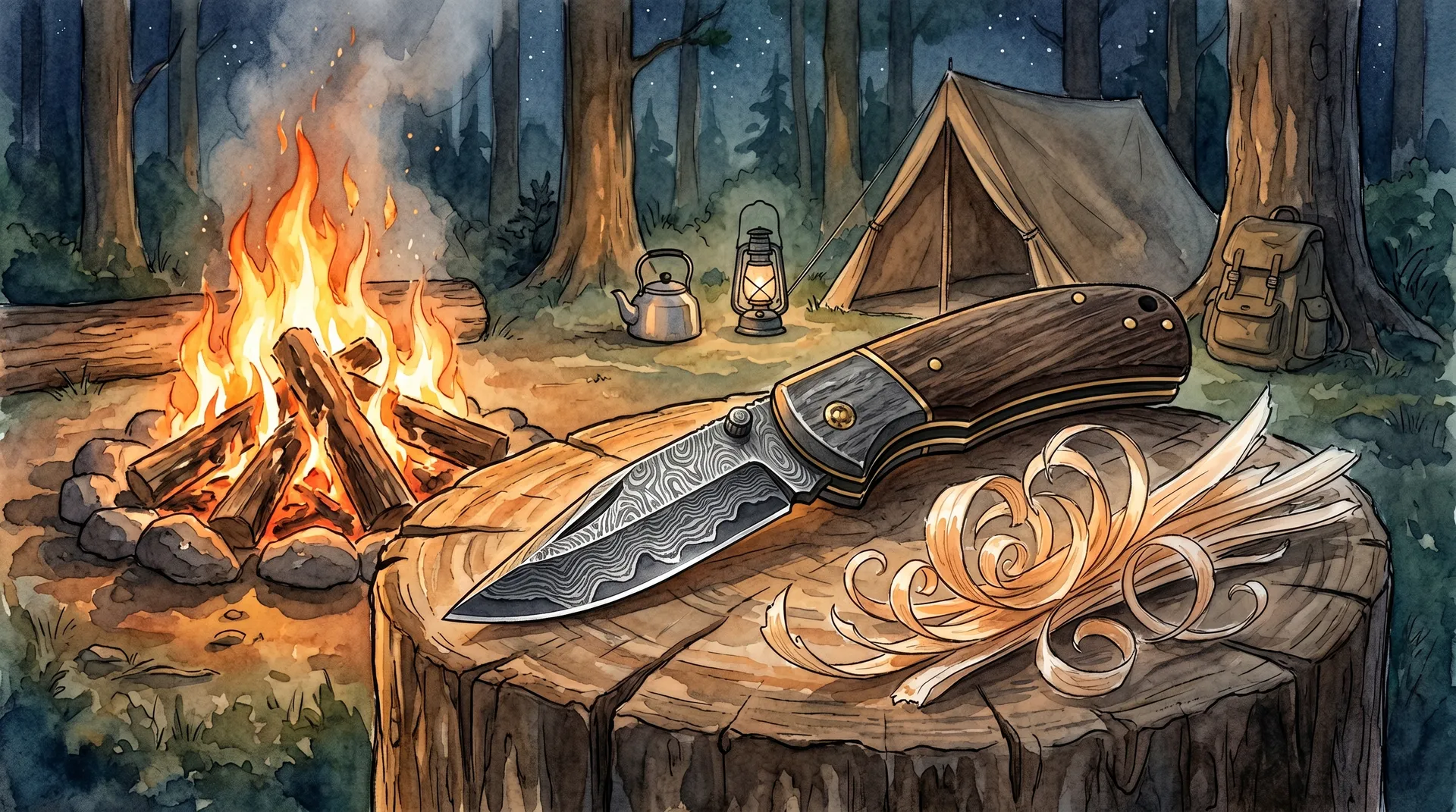
The construction detail worth knowing is lamination. Many Japanese outdoor blades are not one steel — a hard, brittle cutting steel is forge-welded between softer iron or steel, so the edge can be taken to a hardness that would shatter on its own while the body absorbs shock.
That is the same principle behind Japanese kitchen knives and, for a tool you intend to hit with a baton, it matters more here than it does in a kitchen. You get an edge that holds and a blade that does not snap.
Single bevel, and why it might be the wrong one
Many nata are ground on one side only. A single bevel drives the blade sideways as it enters wood, which is exactly what you want when splitting — it acts as a wedge and pops the grain apart.
But single-bevel blades are handed. A right-handed nata used left-handed steers the wrong way and is unpleasant and less safe. Check which you are buying; double-bevel nata exist and are the safer default if you are unsure or share the tool.
Nata, Knife or Axe: What Batoning Actually Needs
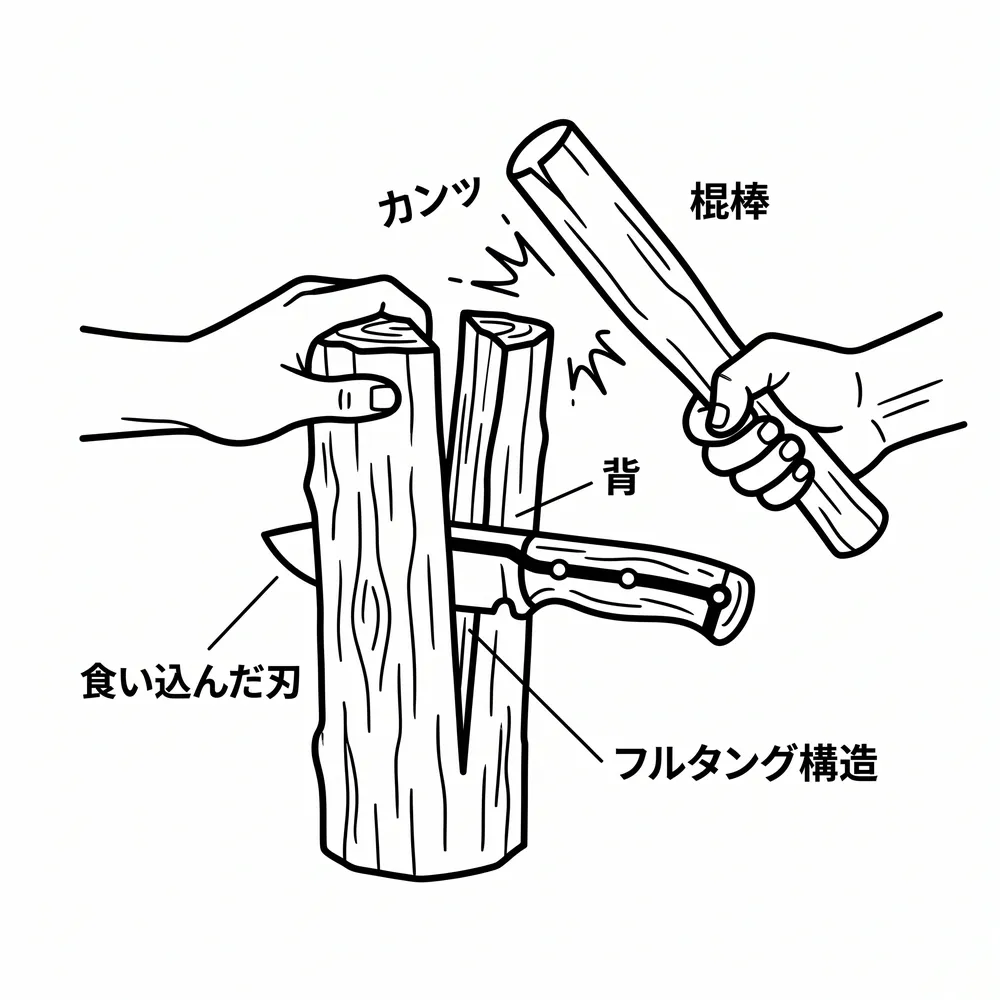
Batoning is splitting wood by placing a blade on the end grain and striking its
spine with a wooden baton. It is controlled, quiet, and much safer than swinging an axe in the
dark — which is why it became the standard camp technique.
It also asks a lot of the blade. The spine takes repeated hammering and the
blade is wedged sideways by the wood, which is precisely the load a thin knife is worst at.
What each tool is actually good at
- Camp knife (fixed, full tang). Full tang means the steel runs the whole length of the handle as one piece — essential if you intend to baton, because a partial tang is a hinge waiting to happen. Good for cooking, feather sticks and small splitting.
- Nata. Thick spine, short blade, weight forward. Built specifically for splitting, and it batons better than any knife because the geometry is a wedge rather than a slicer. Poor at food prep.
- Axe or hatchet. More force per stroke for large rounds, less control, and it needs swinging room and clear ground. For campsite firewood, a nata usually beats a hatchet on safety and on noise.
If you buy one thing
Buy the knife first, not the nata. A good camp knife cooks, carves, prepares
tinder and splits small wood; a nata does one job superbly and cannot do the others.
Add the nata when you find yourself wanting to split rounds thicker than your wrist — which for
most campers is later than they expect, and for some is never.
Stainless or Carbon
Japanese outdoor blades come in both, and the choice is a genuine trade rather than a quality tier.
| Carbon steel | Stainless | |
|---|---|---|
| Edge | Takes a keener edge, easier to sharpen | Good, slightly harder work to sharpen |
| Rust | Rusts readily. Needs drying and oiling | Largely looks after itself |
| Field repair | Sharpens on almost anything | Wants a proper stone |
| Buy it if | You maintain your gear and like doing it | The knife lives wet, or in a bag for months |
Be honest about your habits rather than aspirational. A carbon blade you forget to dry becomes a rusted blade in one damp weekend; a stainless blade you never sharpen is still a working knife. Most people who buy carbon because it is "better" would be happier with stainless.
What to Buy
Higonokami — the one to start with
A folding knife pattern from Miki that has barely changed in over a century: a
laminated carbon blade, a folded brass handle, no spring, no lock, no screws. You
hold it open with your thumb on the tang lever, which sounds precarious and is completely
stable in use.
It is cheap, it is genuinely excellent at whittling and food, and — as covered above —
the absence of a lock is legally significant in several countries.
- Type
- Friction folder. Non-locking
- Blade
- Laminated carbon steel, various sizes
- Made in
- Miki, Hyogo
- Note
- Carbon — it will patina and will rust if neglected
- Price range
- $25–$70
Perfect for: Everyone. The cheapest way to understand why Japanese blades have the reputation they do, and the most likely to be legal in your pocket.
A Tosa outdoor knife — the working fixed blade
Tosa smiths free-forge blades rather than working from stock profiles, and the outdoor knives
coming out of Kochi are thick-spined, laminated, and built for exactly the kind of
abuse batoning applies.
Often supplied in a wooden sheath rather than leather, which is traditional and works
surprisingly well — it does not hold moisture against the blade the way leather can.
- Made in
- Tosa, Kochi — free-forged
- Construction
- Laminated, full tang, thick spine
- Good for
- Batoning, feather sticks, general camp work
- Availability
- Outdoor blade specialists in Europe and North America
- Price range
- $90–$250
Perfect for: One fixed blade to do everything at a campsite. Buy this before you buy a nata.
A nata — when you are splitting seriously
Short, thick and weight-forward. A nata splits wood better than any knife and better
than a hatchet of the same weight, because the geometry is a wedge and the short
blade means you can strike accurately in a small space.
Decide on single or double bevel before ordering — single-bevel blades are
handed, and the wrong hand is genuinely worse than a compromise double bevel.
- Blade
- Thick, short, often laminated
- Bevel
- Single (handed) or double (safer default)
- Good for
- Splitting, limbing, clearing. Not food
- ⚠ Note
- Fixed blade — see the carry rules section
- Price range
- $100–$300
Perfect for: Anyone processing their own firewood regularly. A luxury for a weekend camper.
Japanese makers worth knowing
FEDECA makes a folding cooking knife aimed squarely at campsite food, and has
some international presence. Toyokuni is a Tosa maker whose outdoor blades reach
Western specialists. Moki Knife builds more conventional Western-pattern
sheath knives to a high standard.
Babacho and UNIFLAME make well-regarded nata that are essentially domestic —
names for a trip rather than a link.
Care, and Why Carbon Blades Turn Black
A carbon blade that has been used will not stay bright, and that is not neglect — it is chemistry, and it is protective.
Carbon steel reacts with acids and moisture to form a stable dark oxide layer, a patina. Unlike red rust, a patina is tightly bound to the surface and slows further corrosion. Cutting fruit or onions accelerates it. Many owners deliberately encourage one on a new blade for exactly this reason.
- Dry the blade immediately after use. Every time. This is the whole discipline.
- Wipe with a light oil before storing — camellia oil is traditional and any food-safe oil works.
- Do not store in a leather sheath long term. Leather is tanned with substances that attract moisture and hold it against the steel. Store the blade out, sheathe it to carry.
- Red rust comes off with a rust eraser or fine abrasive. A black patina should be left alone.
- Sharpen on a whetstone. Laminated Japanese blades sharpen beautifully — a #1000 stone handles routine maintenance.
For a nata specifically: check the handle fit periodically. Wooden handles shrink in dry conditions, and a loose head on a tool you swing is the one genuine safety issue in this article.
Frequently Asked Questions
Can I legally carry a Japanese knife where I live?
It depends entirely on your jurisdiction, and this is general information rather than
legal advice. The common pattern in the UK and much of Europe is that a
non-locking folding knife with a short blade is treated as an ordinary object,
while locking knives and fixed blades require a genuine reason.
Check your own rules before buying. Import restrictions are a separate question
again.
Is a nata the same as a machete?
No, and the difference is functional. A machete is long and thin and sweeps
through soft vegetation. A nata is short, thick and heavy at the edge — it splits wood by
acting as a wedge.
The closest Western equivalent is a billhook. Buying one expecting machete behaviour leads to
disappointment in both directions.
Knife or nata first?
Knife. A good full-tang camp knife cooks, carves, makes feather sticks and splits
small wood. A nata splits superbly and does nothing else well.
Add the nata when you regularly need to split rounds thicker than your wrist — which is later than
most people expect.
Why is my nata single-bevelled?
Because a single bevel steers the blade sideways as it enters wood, which is
exactly what you want when splitting — it wedges the grain apart.
Single-bevel blades are handed. A right-handed nata used left-handed steers the
wrong way. Double-bevel versions exist and are the safer choice if you are unsure or sharing.
Carbon or stainless?
Be honest about your habits. Carbon takes a keener edge and sharpens on almost
anything, and it rusts if you do not dry it after every use.
If your gear lives damp or gets packed away for months, buy stainless. A
neglected carbon blade is worse than an unsharpened stainless one.
My carbon blade has gone black. Is that rust?
No — that is patina, and it is protective. Carbon steel forms a stable dark oxide
that binds tightly to the surface and slows further corrosion. Cutting acidic food speeds it up,
and many owners encourage it deliberately.
Orange-red rust is the problem; remove that with a rust eraser and leave the black
alone.
Final Thoughts: Check the Law, Then Buy the Knife
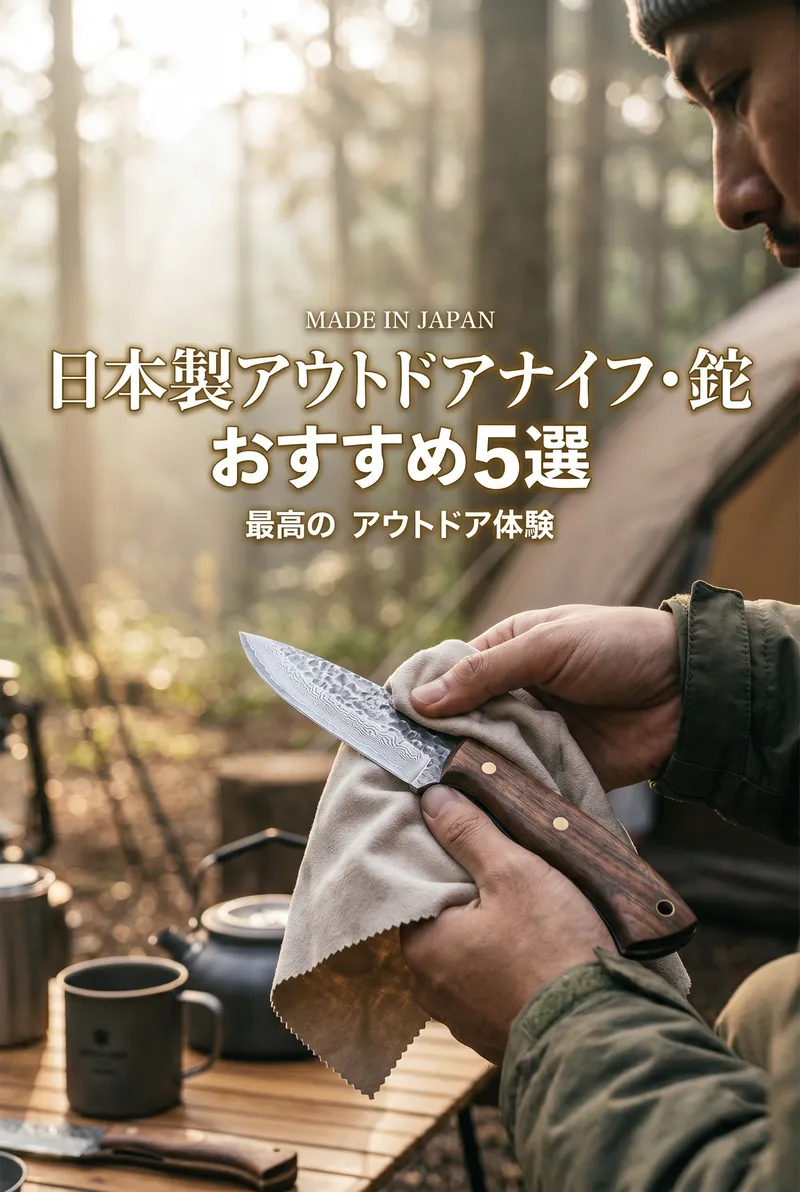
Find out what you are allowed to carry before you order anything — a blade that is unremarkable in a Japanese hardware shop can be an offence in your pocket, and the rules turn on details like whether the thing locks.
Then start small. A Higonokami costs almost nothing, is non-locking, and shows you exactly what a laminated Japanese edge feels like. If you want more after that, buy a full-tang Tosa camp knife — and only add a nata when you are genuinely splitting wood.
And whatever you own: dry it every time. Everything else in this article is a preference. That one is the difference between a tool and a rusted memory of one.
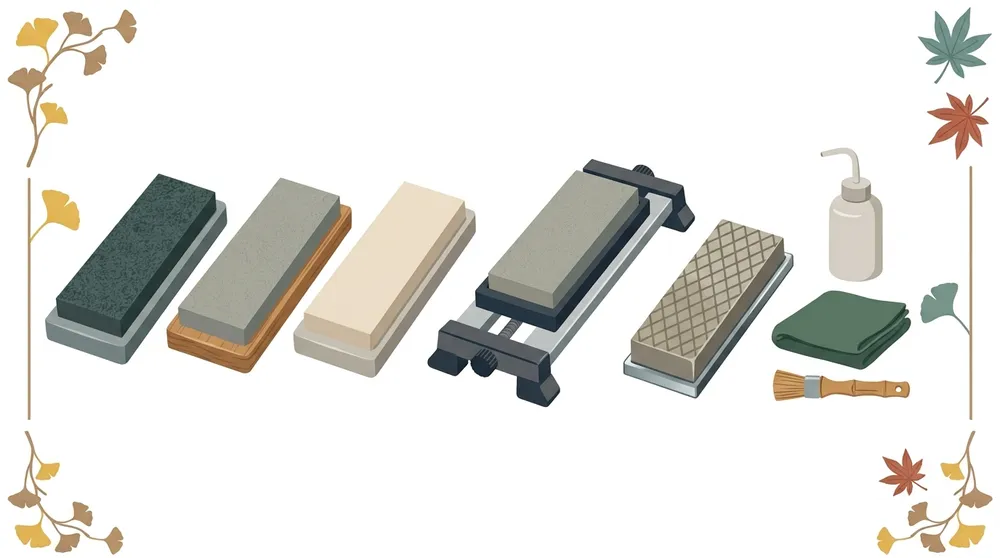
Japanese Whetstones: Which Grit You Actually Need
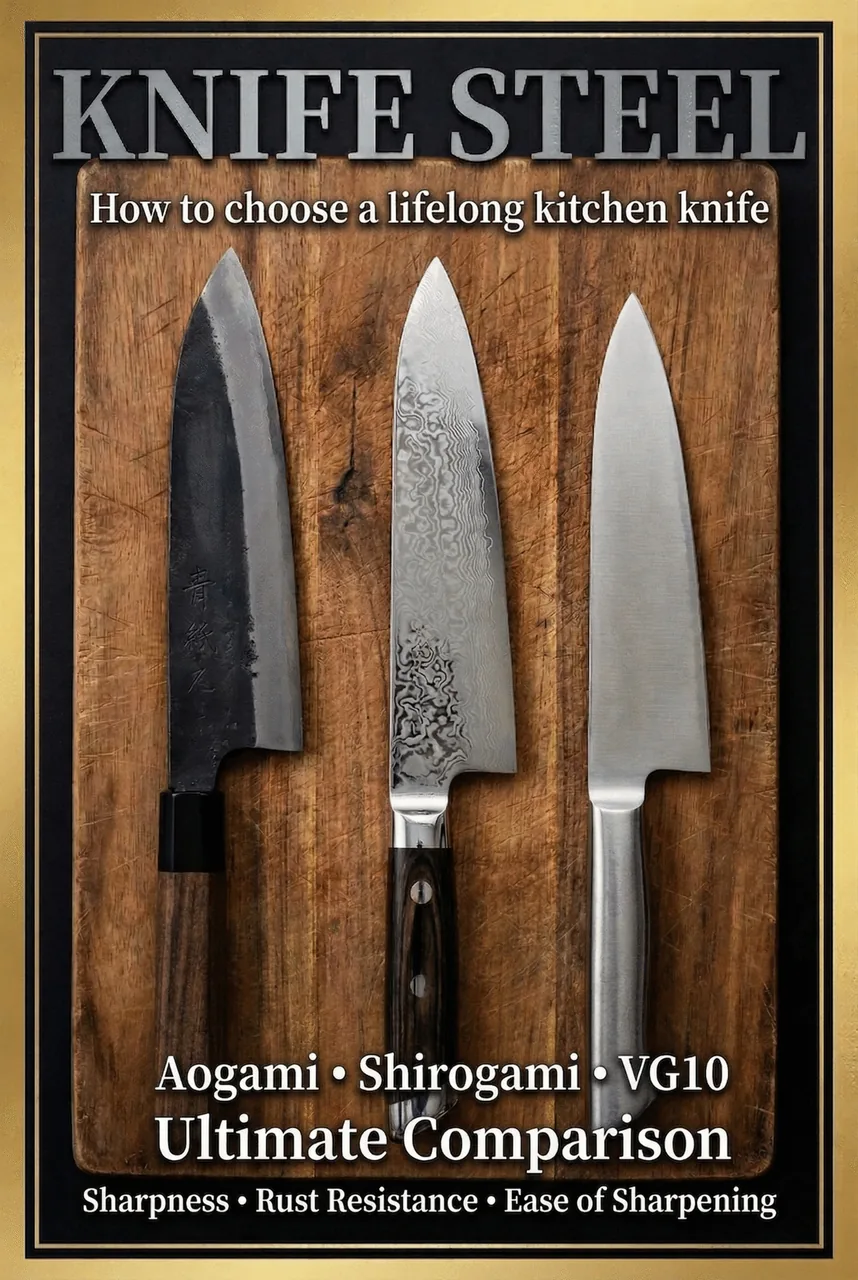
VG10 vs SG2: Every Japanese Knife Steel, Compared