If you have shopped raw denim, you have seen "Tochigi leather" on belts from half a
dozen unrelated brands and probably assumed it was one of them.
It is not a brand. It is a tannery — a Japanese tannery whose vegetable-tanned
hides are bought by makers across Japan and abroad, which is why the same name turns up on a
$60 belt and a $200 one.
This guide explains what that tanning actually does, why these belts change colour and the
chrome-tanned ones do not, and how to size one — because Japanese belts are measured in
centimetres of total length, not in waist inches, and getting that wrong is the most common way to
buy the wrong belt.
Quick Reference: Veg Tan vs Chrome Tan
| Vegetable tanned | Chrome tanned | |
|---|---|---|
| Tanned with | Plant tannins. Months in pits | Chromium salts. Around a day |
| New | Pale, stiff, almost blank | Soft and finished from day one |
| After a year | Deep amber, glossy, moulded to you | Much the same, then worn out |
| Buy it if | You want the belt to become yours | You want it right immediately |
| ⚠ Japanese belts are sized by total length in centimetres. Your waist in inches is not the number to order. See the sizing section. | ||
Why "Tochigi Leather" Is on Everything
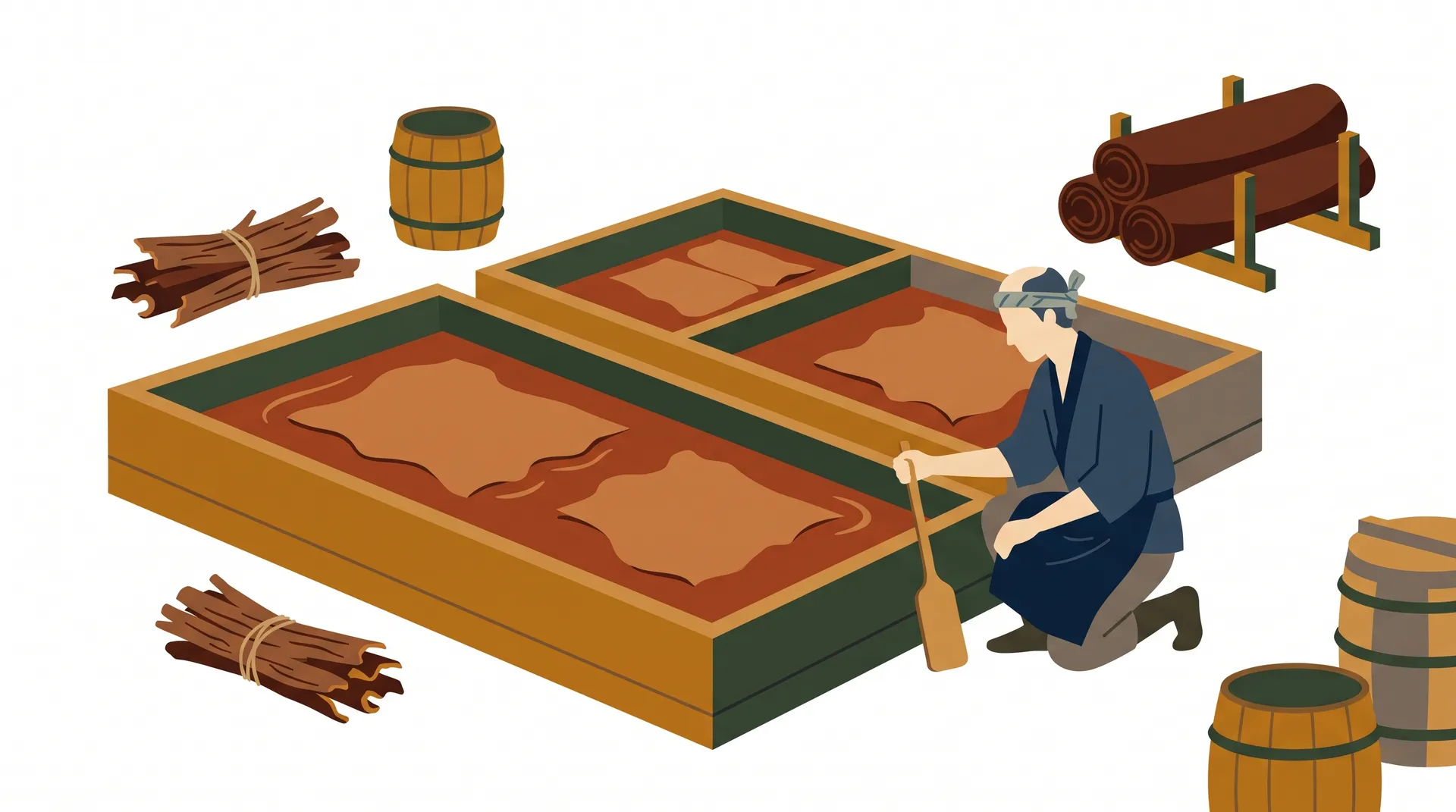
Tochigi Leather is a tannery in Tochigi prefecture, north of Tokyo, and it sells hides. It does not, in the main, make the belts you see its name on — leather goods makers buy the material and build with it.
That is why the name appears across brands that have nothing to do with each other. If you follow Japanese heritage clothing, you will have seen it on products from a range of denim and workwear labels, in Japan and among the Western shops that import them. Same tannery, different makers.
What that means when you are shopping
- "Tochigi leather" tells you about the material, not the workmanship. Stitching, edge finishing and hardware are down to whoever made the belt.
- Two Tochigi-leather belts at different prices are not the same product. Compare the construction, not the tannery name.
- It is a genuine signal, not marketing noise — the tannery has a real reputation for consistency, and pit tanning is slow and expensive to do properly.
- Other Japanese tanneries exist and are also good. Tochigi is simply the one whose name travelled.
What full vegetable tanning is
Raw hide rots. Tanning converts it into leather, and there are broadly two ways to do it.
Chrome tanning uses chromium salts and takes about a day. It produces soft, consistent, immediately usable leather, and it is what the overwhelming majority of the world's leather is. There is nothing wrong with it.
Vegetable tanning uses tannins extracted from bark and plants, and takes months — hides moving through a series of pits at increasing concentration. It is slow, it ties up capital, and it produces leather that is firmer, denser, and chemically able to keep changing after you buy it.
That last property is the whole point. A chrome-tanned belt is finished when you buy it. A veg-tanned one has barely started.
Why It Darkens, and How to Do It Well
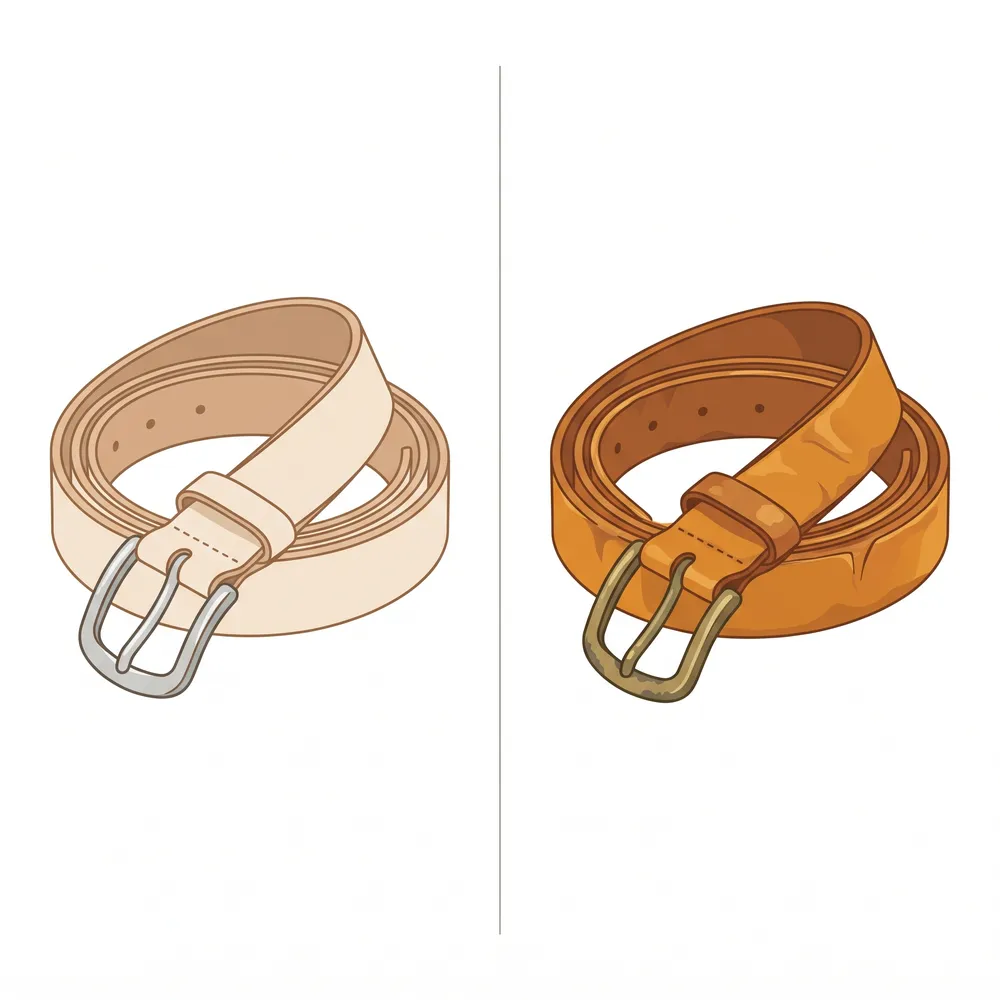
A new veg-tanned belt is pale, stiff and almost featureless. Within a year it is deep amber,
glossy in the places it flexes, and shaped to your body.
The mechanism is oxidation and oil. Tannins in the leather darken on exposure
to light and air, and oils — from your hands, from the atmosphere, from any conditioner you
apply — soak in and build a sheen. The fibres also compress where the belt bends, which is what
produces the gloss on the high points.
Doing it well rather than badly
- Use it. That is most of it. A belt in a drawer does not develop anything.
- Sunlight evens out the early colour. Some people deliberately give a new belt a few hours of indirect daylight before wearing it, so it darkens uniformly rather than only where hands touch it.
- Go very light on conditioner at first. New veg-tan absorbs unevenly, and a heavy first application leaves permanent dark blotches. Less than you think, worked in thinly.
- Keep it away from denim indigo unless you want it. Raw denim transfers colour onto pale leather, permanently. Some people like this. Decide before, not after.
- Uneven is not a fault. Scars, growth marks and grain variation are visible on veg-tan precisely because it is not heavily coated. That is the material telling the truth.
Sizing: Centimetres of Total Length
Japanese belts are listed by the total length of the strap in centimetres — 105, 110, 115 — not by your waist measurement in inches. Ordering "34" because you wear 34-inch trousers will get you a belt that does not fit.
How to get it right
- Measure a belt you already wear, from the base of the buckle to the hole you actually use. That number is your working length.
- Or: waist measurement in centimetres, plus roughly 10cm. The extra covers the buckle end and the tail that tucks through the loop.
- Measure over the trousers you will wear it with, not around your bare waist — and not around where you think your waist is.
- If you are between sizes, take the longer one. Most Japanese belts can be shortened by a leather workshop, and many makers do it as a service. A short belt cannot be lengthened.
Width, and matching it to use
- 30–35mm — dress width. Goes through suit trouser loops, sits correctly with a jacket.
- 35–40mm — the everyday range. Fine with chinos and most jeans.
- 40mm and up — casual and workwear. Will not fit dress trouser loops, and looks wrong with a suit.
Check your trouser loops before buying anything over 35mm. Dress trousers frequently have loops that a 40mm belt physically will not pass through.
What to Buy
This is one of the better-supplied Japanese categories abroad — Tochigi leather belts are on Amazon, and the heritage denim shops that ship internationally carry them as a matter of course.
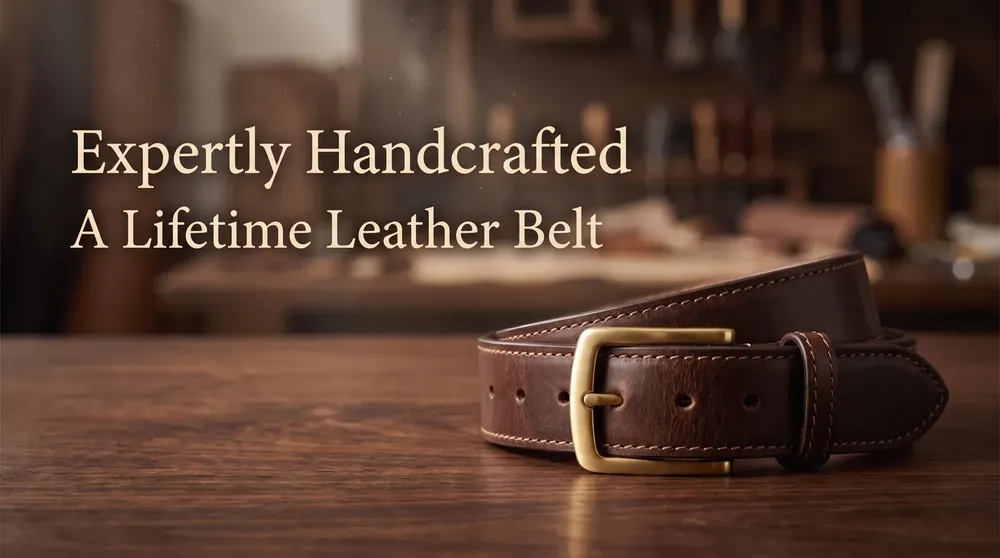
Tochigi leather with a brass buckle — the classic
The archetype: a single strip of vegetable-tanned Tochigi hide and a solid brass
buckle, nothing else. Brass matters here — it patinas alongside the leather rather
than staying bright, and it will not flake the way plated hardware does.
Starts pale and stiff. Wear it every day for six months and it becomes a different
object.
- Leather
- Tochigi, full vegetable tanned
- Buckle
- Solid brass — ages with the leather
- Width
- Typically 35mm — works for both dress and casual
- Made in
- Japan
- Price range
- $50–$90
Perfect for: A first veg-tan belt. Cheap enough that learning on it costs little, good enough to keep.
One-piece construction, interchangeable buckle
One-piece (ichimai-gawa) means the strap is cut from a single thickness of
hide rather than two thinner layers glued together. Layered belts are cheaper and
they eventually delaminate; a one-piece strap simply wears.
Belts with a removable buckle let you swap hardware, and more usefully let
you replace a buckle that fails without discarding good leather.
- Construction
- One-piece. No glued layers to separate
- Buckle
- Interchangeable on many models
- Width
- 35mm typical; check your trouser loops
- Price range
- $60–$110
Perfect for: Someone who wants one belt to last, and would rather not find a glue line opening in year three.
Heavy workwear belts — through the denim shops
At the thicker end — garrison buckles, 5mm-plus hide, belts intended to hold up heavy
denim — the route is the Japanese heritage clothing shops rather than Amazon.
Several ship worldwide and stock Tochigi-leather belts from Japanese workwear brands.
These are heavy enough to be uncomfortable at first and they do break in.
- Thickness
- Typically 4–6mm. Substantially stiffer
- Buckle
- Garrison or heavy roller, often nickel-plated
- Where
- Heritage denim retailers with international shipping
- Price range
- $120–$250
Perfect for: Raw denim wearers, and anyone who wants a belt that outlives the trousers by a decade.
Japanese workshops worth knowing, mostly domestic
K.T.Lewiston, Nagasawa Belt and MINCA are among the specialist belt makers Japanese buyers rate — small workshops, made to order, edges finished by hand. None has meaningful international distribution, so treat these as names for a trip or a proxy purchase rather than a link to click.
Care, Including When It Gets Wet
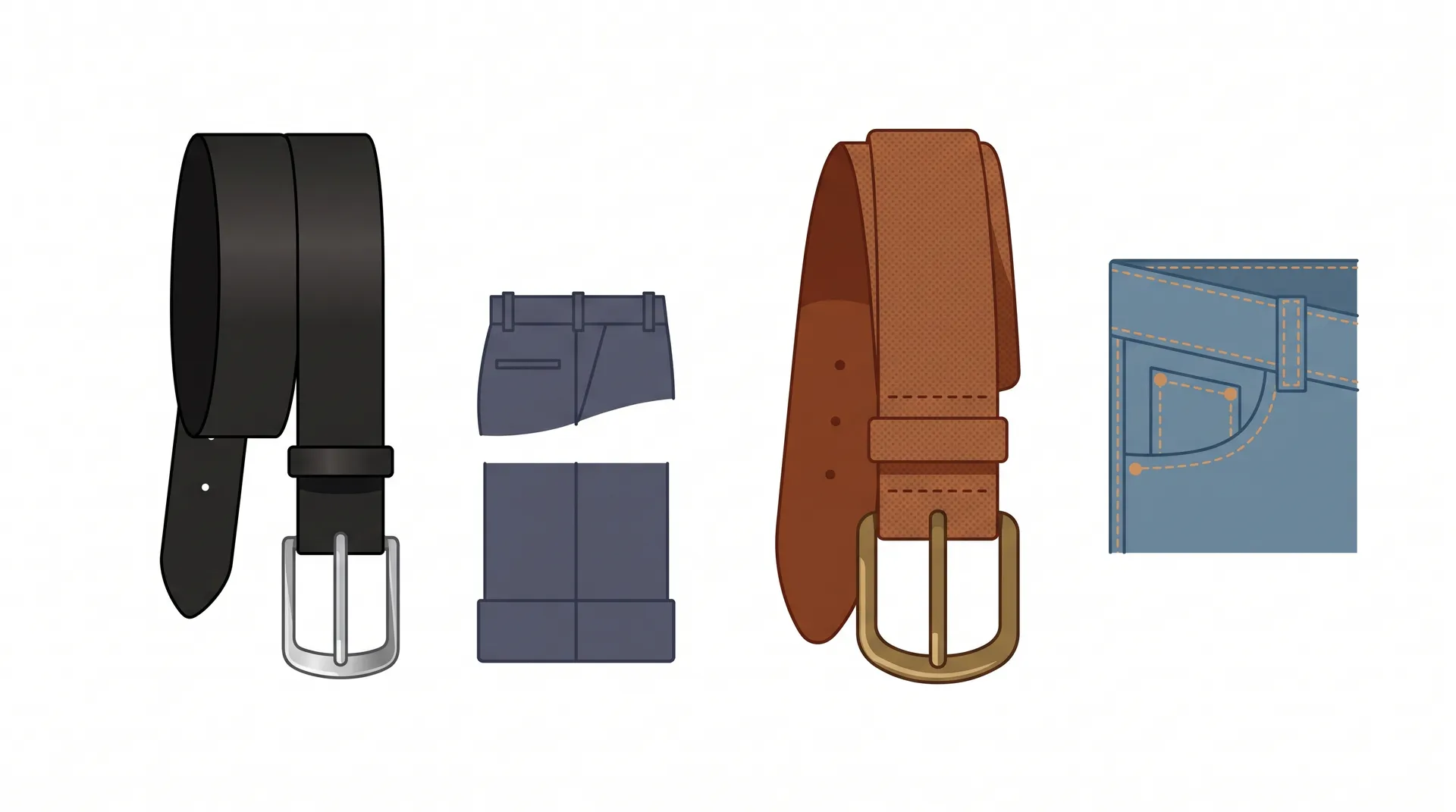
Veg-tan needs less than people think, and the wrong intervention does more harm than neglect.
- Wipe it with a dry cloth after wearing. That is genuinely most of the routine.
- Condition two or three times a year, sparingly. Over-oiling makes leather limp and blotchy, and you cannot take it back out.
- Hang it or roll it loosely. Folded storage creases the fibres permanently, and creases become cracks.
- Rotate between two belts if you wear one daily. Leather recovers when it rests, exactly as shoes do.
If it gets soaked
Blot with a dry cloth and let it dry slowly at room temperature, away from any heat.
Never a hairdryer, never a radiator — heat drives the oils out of the fibres and the leather goes
hard and cracks.
Once it is fully dry, apply a thin coat of conditioner to replace what the water
took. Expect water marks; on veg-tan they usually blend into the patina within a few months, which
is one of the quiet advantages of leather that was never heavily coated.
Frequently Asked Questions
Is Tochigi Leather a brand?
No — it is a tannery. It produces vegetable-tanned hides that leather goods
makers buy, which is why the name appears on products from many unrelated brands at very different
prices.
It tells you about the material, not about who made the belt. Judge the stitching,
edges and hardware separately.
What size should I order?
Japanese belts are listed by total strap length in centimetres, not waist inches.
Measure a belt you already wear from the buckle base to the hole you use, or take your waist in
centimetres and add about 10cm.
If between sizes, size up — belts can be shortened, never lengthened.
Why is my new belt so pale and stiff?
Because it has not been finished for you yet. Vegetable-tanned leather starts
light and firm, then darkens and softens through oxidation and absorbed oils.
Wear it. Go very light on conditioner early — heavy first applications leave permanent dark
patches that never even out.
One-piece or layered?
One-piece, if the price difference is tolerable. A single thickness of hide wears
down gradually; two thin layers glued together eventually delaminate, and a separating belt cannot
be repaired attractively.
Layered belts are lighter and more flexible, which some people prefer for dress wear.
Do my belt and shoes have to match exactly?
Close, not identical — and with veg-tan, "identical" is impossible anyway because
both are changing colour at their own rates.
Keep them in the same family: brown belt with brown shoes, black with black. A tan belt against
dark brown shoes reads as carelessness rather than as contrast.
I react to metal. Will the buckle be a problem?
Usually the culprit is nickel. Solid brass buckles are a common alternative and
are what most Tochigi-leather belts use anyway — brass contains no nickel, though it does contain
copper.
Stainless steel is the other safe option. Avoid nickel-plated hardware, where the
plating wears through to whatever is underneath.
Final Thoughts: Buy It Pale and Wear It Out
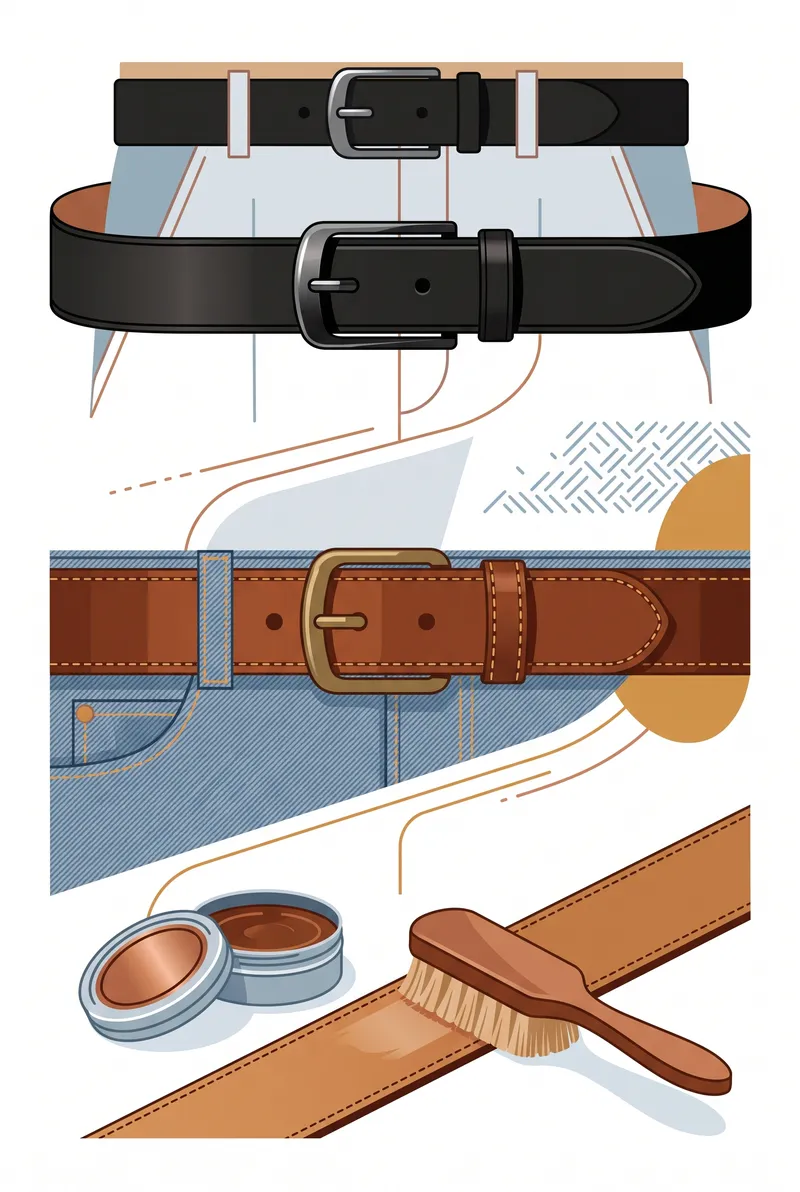
Tochigi is a tannery, not a label — so the name on the listing tells you the leather is good and tells you nothing about the belt. Look at the stitching, the edge finish and whether it is cut from one piece.
Measure in centimetres and add ten. That one line prevents the most common mistake, and no amount of leather quality survives ordering the wrong length.
Then wear it and largely leave it alone. A pale, stiff, slightly boring new belt is the correct starting condition — the interesting part is what a year of your own use does to it, and no conditioner in a tin can do that for you.
Japanese Leather Wallets: Brands Worth Buying
Japanese Dress Shoes: Wide Fittings and How to Buy