Shinohara Furin Honpo (Edo Furin)
Hand-blown Edo wind bells, made in Tokyo.
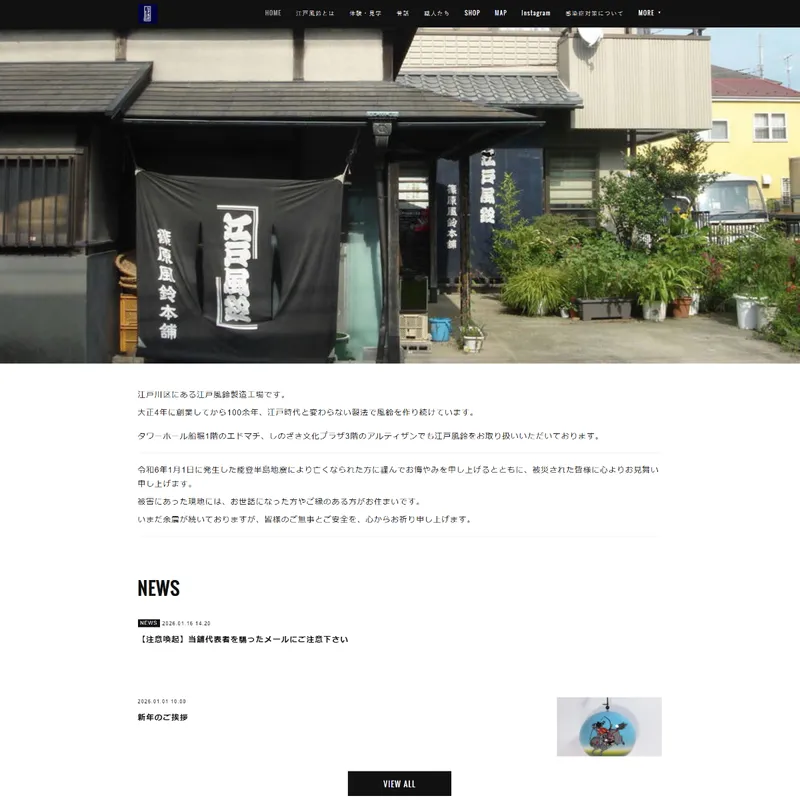
Shinohara Furin Honpo is an Edo Furin workshop in Edogawa-ku, Tokyo. Founded in 1915, the studio continues the chubuki method, shaping each glass bell by breath without using molds. The name "Edo Furin" was given around 1965 by the second-generation artisan Gi-ji Shinohara and is a registered trademark. Today, there are said to be only two Edo Furin makers: Shinohara Furin Honpo and Shinohara Maruyoshi Furin. You can visit the workshop store, join making workshops, and also purchase from the official online shop. Edo Furin is also available at local retailers such as Edomachi (Tower Hall Funabori) and Artisan (Shinozaki Cultural Plaza). Wholesale, on-site workshops for schools and facilities, and original Edo Furin requests are also possible.
Why We Love It
Start with the classic Komaru size and listen for subtle differences in tone. Seasonal motifs such as goldfish, morning glory, or fireworks make it easy to switch the mood through the year. For indoor display, pair your bell with a tabletop stand and give it a dedicated spot by a window. If you want something personal, choose a blank bell for painting or book a workshop, then add name engraving for a gift-ready finish. Beyond the workshop store, local retailers and the official online shop also make it easy to choose with the season.


PROFILE About the Company / Workshop
Shinohara Furin Honpo is based in Edogawa-ku, Tokyo, making Edo Furin through hand-blown glasswork. The workshop was founded in 1915 and has continued the chubuki method for generations. The "Edo Furin" name was given around 1965 by the second-generation artisan Gi-ji Shinohara, who is also noted as an Edogawa intangible cultural property holder with major awards. Edo Furin is also carried at local retailers such as Edomachi (Tower Hall Funabori) and Artisan (Shinozaki Cultural Plaza).
The process begins with glass melted at around 1,320°C. Artisans blow a small "kuchidama," form the body above it, and pierce a hole for the string, completing the shaping in a single breath. This is chubuki: no molds, only air and timing. After cooling, the kuchidama is cut off and the rim is finished with serrations for sound. Painting is added at the end.
The official online shop features core Edo Furin pieces such as Komaru and Tokusen Komaru, plus gourd-shaped bells and limited items. Alongside traditional patterns, modern designs are also offered. For indoor use, tabletop stands are available, and you can also find tenugui and name engraving. There are even blank bells designed for painting.
Workshops are available at the studio, typically taking about 60-90 minutes, with bookings handled online or by phone. Changes and cancellations can be requested by email. The shop is generally closed on Sundays and holidays, and may also close for maintenance, so checking the posted schedule is recommended. The studio also accepts wholesale inquiries, on-site workshops for schools and facilities, and custom Edo Furin requests.
Chubuki: shaped by breath, not molds
Molten glass is gathered from a furnace of around 1,320°C and formed quickly before it cools. The body is shaped in the air in about 1-2 minutes, then prepared with a small hole for the string. The studio now uses an electrically controlled kiln, and used coke-fired kilns until around 2000.
A serrated rim for better sound
One hallmark of Edo Furin is the intentionally serrated rim (nariguchi), finished to improve the tone. After the glasswork, the bell is painted by artisans in the workshop. Because each piece is handmade, even the same design can produce slightly different sounds.
Why it is called "Edo Furin"
The brand name "Edo Furin" was coined around 1965 by Gi-ji Shinohara, referring to glass wind bells made in Edo (Tokyo) with the same method as in the Edo period. It is a registered trademark, and there are said to be only two Edo Furin makers today.
Visit the workshop, or shop online
The workshop store is about a 15-minute walk from Mizue Station (Toei Shinjuku Line). Opening hours are 9:00-18:00 with a daily lunch break from 12:00-13:00. The online shop offers bells as well as stands, tenugui, and name engraving options.