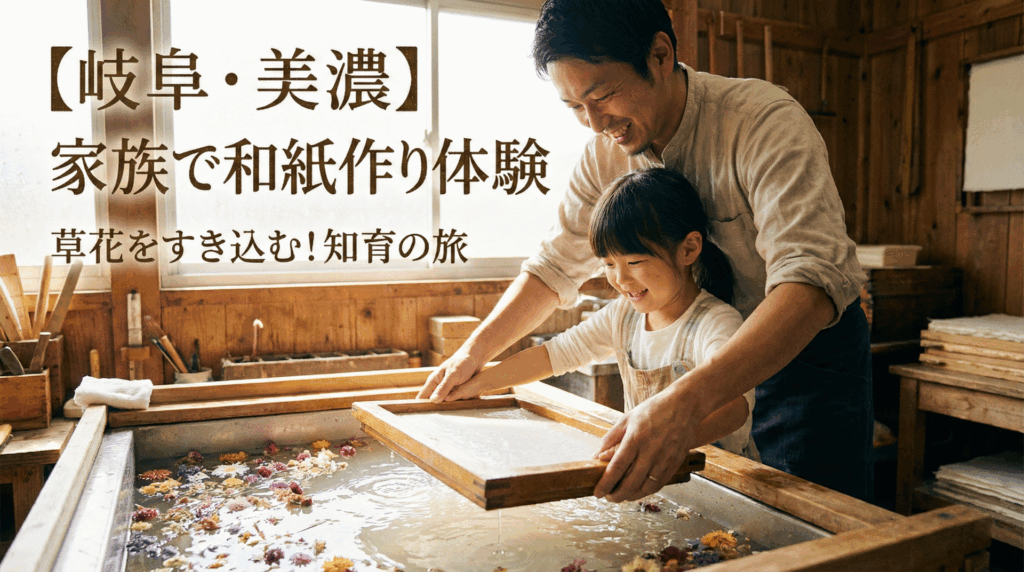
"You can make pure white paper from a tree!?"
We use "paper" every single day without a second thought. Visiting Mino City in Gifu Prefecture for a "washi papermaking experience" lets you learn together with your children how paper is made — and what it's made from.
Mino washi is one of Japan's "Three Great Washi," alongside Echizen washi and Tosa washi. With a history spanning over 1,300 years and recognized as a UNESCO Intangible Cultural Heritage, it is among the finest paper in the world.
The raw material is the bark of a tree called "kozo" (paper mulberry). Scooping it up while swishing it back and forth in water feels just like playing in a stream — exciting fun even for toddlers.
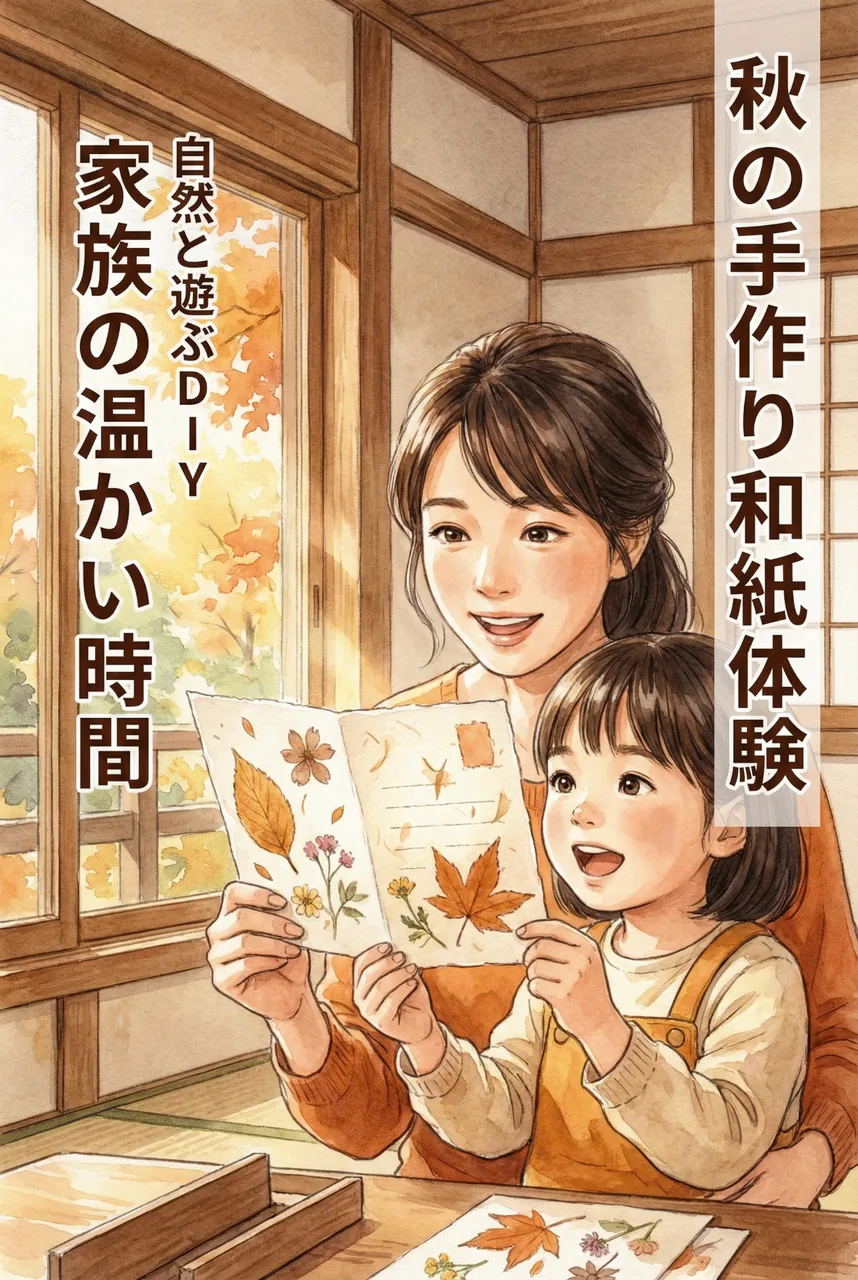
You can also press autumn leaves or dried flowers into the paper during the "sukikomi" step, creating a one-of-a-kind beautiful washi sheet. Writing a letter to grandma and grandpa on a postcard you made yourself makes this the ultimate emotional-development activity.
In this article, we cover everything from fascinating trivia about the mystery of paper to a full day-trip plan that includes a walk through the charming "udatsu" historic townscape.
Tips for Enjoying the Mino Washi Experience with Your Family (30 seconds)
- Fun for toddlers — it's like playing in water!: Scooping and swishing water makes it safe and enjoyable even for small children
- Wear clothes you don't mind getting wet: Water splashes and sleeves can get soaked, so clothes that are easy to roll up are a must
- "Flower and leaf pressing" is the most popular option: Scattering fallen leaves and colored paper lets children's artistic instincts run wild
- Explore the townscape while the paper dries: The classic route is to sightsee through the historic streets while waiting for your paper to dry
- Write a letter when you get home: The full educational experience is complete only when you actually mail a letter on the postcard you made yourself
1. [Before You Go] Rolling up your sleeves is a must! What to wear and bring
The papermaking experience involves putting your hands into cold water (or lukewarm water) in a large vat.
Absolutely essential! 3 golden rules
- ① Wear clothes you can roll up to the elbow
You need to lower the wooden frame (suketa) to the bottom of the vat, which means your sleeves can get wet up to your elbows. Even in winter, wearing clothes that can be rolled up easily is absolutely necessary. - ② Watch out for splashing water underfoot
Most facilities provide aprons, but if children splash around, their shoes and trouser cuffs can get wet. Bringing an extra towel gives you peace of mind. - ③ Watch out for your smartphone — water and drops!
Parents sometimes lean over the vat to video their child making paper, and their phone goes "plop…"! Attach a neck strap before shooting, or film safely from the side.
2. [Fascinating Background Knowledge] What is "neri"? The magical secret behind washi's strength
Ordinary (Western) paper tears easily — so why is shoji paper and washi so tough? Knowing this "magic" before your visit will take a school science project to the next level.
The truth about the thick liquid "neri"
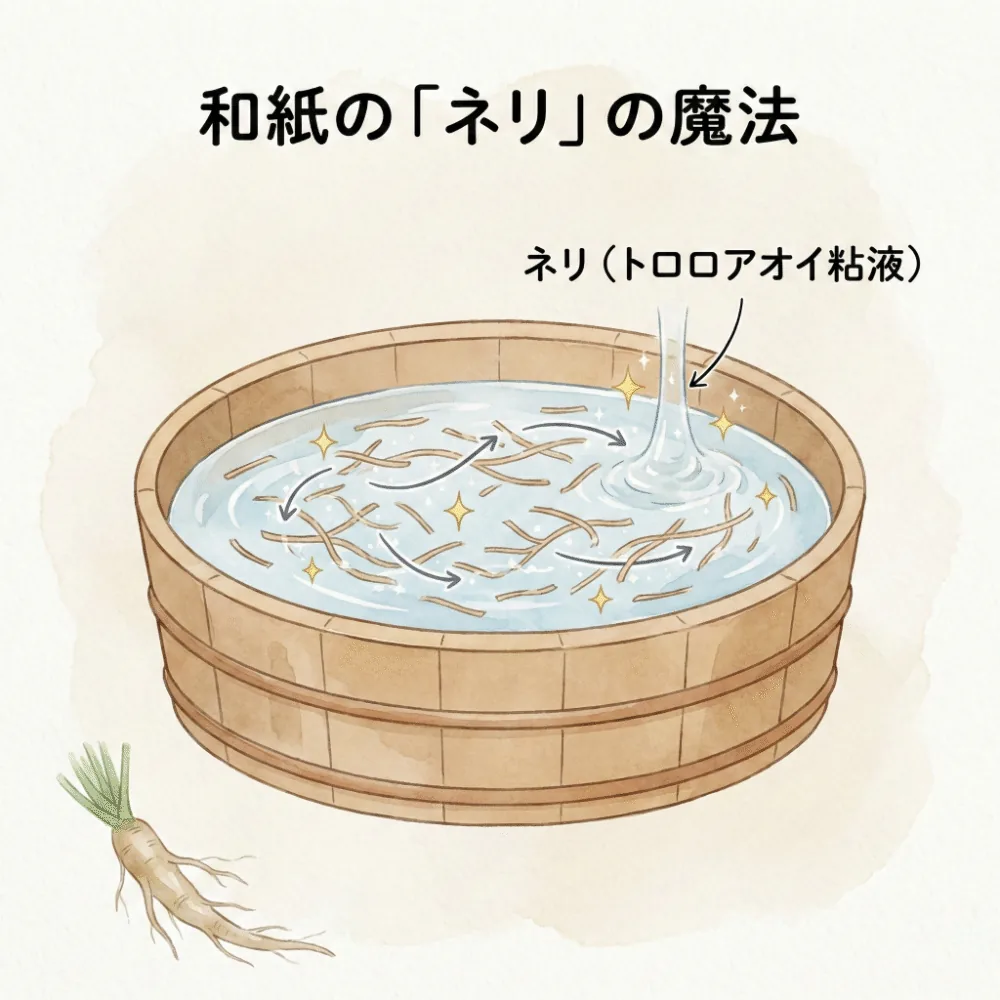
Inside the washi-making vat, along with wood fibers (kozo), there is a slightly viscous liquid. This is called "neri" — a natural mucilage extracted from the roots of a plant called "tororo-aoi" (Abelmoschus manihot).
This neri is the magic ingredient! When neri is added to the water, the wood fibers spread evenly throughout the water and then interlock tightly with one another. This is what makes washi thin yet incredibly strong — paper that can survive 1,000 years without tearing.
💡 Fascinating Trivia What makes "Mino Washi" so special?
The defining feature of Mino washi is its unique papermaking technique of "shaking both horizontally and vertically" (nagashi-zuki). This cross-directional motion causes the fibers to interlock in a complex pattern, resulting in paper with no uneven spots when held up to the light — said to be the most beautiful shoji paper in Japan.
3. What will you make? Recommended experience menus (Postcard vs. Washi Doll)
The real highlight of the experience isn't just making the paper — it's what you create with it.
| Menu | Features and why we recommend it |
|---|---|
| Postcard making (rakusui-shi / sukikomi) |
[Toddlers to elementary school] Most popular! Freely arrange pressed flowers, autumn leaves, and colored paper to create a one-of-a-kind postcard. You end up with several finished postcards, making it perfect for the "emotional development" of writing letters to grandparents. |
| Washi korokoro (tumbling doll) |
[Toddlers to adults] Paste colorful Mino washi pieces onto a prepared base — like a puzzle game — to create a roly-poly tumbling doll. This is not a papermaking experience per se, but it's easy, adorable, and lets children's creativity shine. |
| Certificate / tapestry | [Upper elementary to adults] Use the same large wooden frame (suketa) as a craftsman to try authentic "nagashi-zuki." You'll truly feel just how tricky — and rewarding — the technique of shaking the frame in both directions is. |
4. [Gifu / Mino] Top 3 family-friendly papermaking spots (with map)
※ Pins on the map indicate spots introduced in this article. Please check the official websites for the latest information on prices and opening days.
① Mino Washi no Sato Kaikan | If you're not sure where to go, start here! A vast washi theme park
A sprawling facility where you can learn about the history and techniques of Mino washi. The experience workshop in the basement is very spacious, and the friendly instructors make it the go-to family spot.
The menu ranges from postcards to full-size professional sheets. After making your paper, there's a smart 15–20 minute window while it dries on the heated plate to browse the exhibits upstairs — no wasted time.
👨👩👧👦 Family checklist
- Facilities: Spacious and comfortable. All equipment needed for papermaking (aprons, etc.) is provided
- Science project: The exhibition room lets you see what "neri" really is and check out traditional tools — great for learning
- Natural setting: Surrounded by mountains and nature, making the drive there a pleasure in itself
Basic Information (approximate)
- Experience: Mino washi papermaking (postcards, certificates, etc.)
- Duration: Approx. 20–40 minutes (including drying time)
- Price range: From ¥500 (separate admission fee required)
- Reservation: Walk-ins welcome for individuals (no reservation needed)
② Mino Washi Zakka Experience Shop Ishikawa Shigyo | Right in the heart of the udatsu townscape!
Located in the heart of the tourist landmark "Udatsu no Agaru Machinami" — a historic street evoking the Edo period — this experience shop is run by a long-established washi store founded in Meiji 35 (1902).
Rather than making paper from scratch, the main attraction here is an art experience using colorful Mino washi to create the ever-resilient "washi korokoro (tumbling doll)" — hugely popular with visitors of all ages. Drop in during a stroll through town and the whole family will get absorbed in crafting together.
👨👩👧👦 Family checklist
- Access: Located in the center of the sightseeing area (inside a 270-year-old historic building!), easy to fit into any schedule
- Ease: Just stick washi pieces onto a base doll — no mistakes possible, even toddlers produce something adorable
- Take home: You can take your finished doll home right away
Basic Information (approximate)
- Experience: Washi korokoro handmaking, washi dish-making, and more
- Duration: Approx. 30–60 minutes
- Price range: From ¥1,100 (tax included)
- Reservation: No reservation needed for groups under 10 (※ enter by 3:00 PM)
③ Washi specialty store Washi-nary | A curated paper shop where moms and dads go on a serious shopping spree
This isn't a papermaking "experience facility," but it's an absolute must-visit whenever you come to Mino.
Think of it as a "washi cellar" — a Washi-nary. The shop is lined with beautiful washi in every imaginable variety, from paper so thin it's almost transparent to sheets as tough as leather. After children have done the papermaking experience, coming here and discovering "Paper comes in THIS many varieties!?" is guaranteed to amaze them. You can find lifelong paper goods like letter paper and small envelopes.
👨👩👧👦 Family checklist
- Shopping: Incredibly stylish! Moms and dads who love stationery will be over the moon
- Discovery: You'll find surprising products made from washi (threads, clothing, and more) that will make you say "That's washi too?!"
🛍️ Enjoy Mino Washi at home! Recommended items
"Mino is too far for us to visit…" — no problem! Here are some high-quality Mino washi letter sets and adorable washi goods from Ishikawa Shigyo that you can order online. Why not bring a touch of traditional Japanese warmth into your everyday life?
5. [Model Course] Papermaking and the "udatsu" townscape! Mino day-trip timetable
This condensed plan captures the best of Mino: start with the experience at the natural "washi village," then head to the "Udatsu no Agaru Machinami" townscape — where wealthy Edo-period merchants competed to build the grandest fire walls.
- 10:00 | Postcard papermaking at "Mino Washi no Sato Kaikan"
(Arrange fallen leaves and colored paper in the water to create your original design!) - 11:00 | Browse the exhibits and collect your dried washi postcard
- 12:00 | Drive to the "Udatsu no Agaru Machinami" area (approx. 20 min)
- 12:30 | Lunch at a traditional farmhouse café or soba restaurant in the townscape
- 14:00 | Browse souvenir shops like "Washinary" for gifts
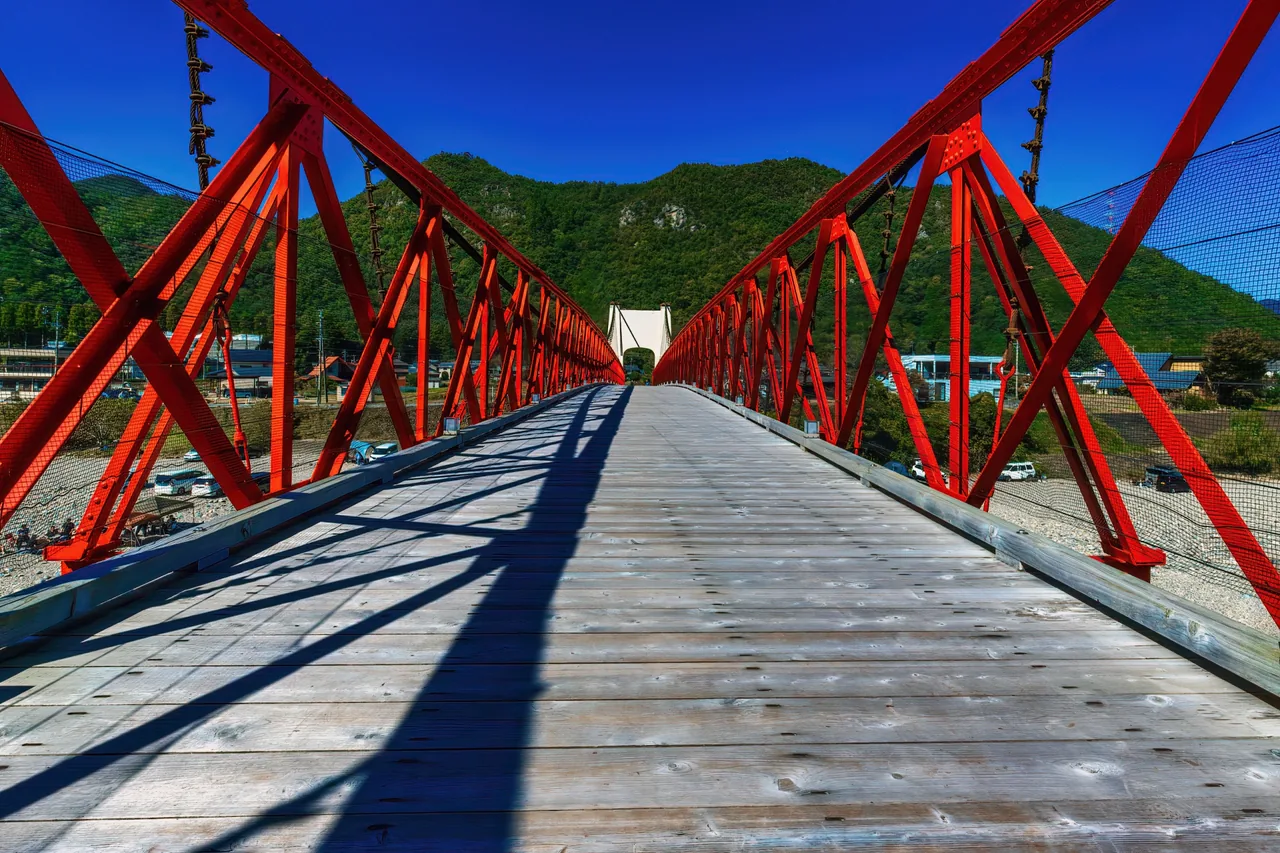
- 15:30 | Take commemorative photos at Mino Bridge (Japan's oldest surviving modern suspension bridge) and head home
6. Things to do after the experience! Nearby spots recommended for families
① Udatsu no Agaru Machinami (Historic townscape)
The main street of Mino sightseeing. "Udatsu" are firebreak walls built at both ends of a roofline. In the Edo period, only wealthy households could afford to build them elaborately, which gave rise to the Japanese phrase "udatsu ga agaranai" (can't get ahead in life).
Along the rows of beautiful latticed townhouses you'll find stylish cafés and washi gift shops, perfect for a leisurely family stroll with food and window shopping.
② Mino Washi Akari Art Museum (※ viewing & shopping)
A museum in the udatsu townscape showcasing beautiful washi lamp shades (akari art).
The ground floor is a shop where you can buy washi lighting products; the second floor recreates a nighttime townscape where fantastical akari artworks are displayed in a darkened space — a stunning photo opportunity. Perfect for browsing together with children and asking "Which lamp do you like best?"
③ Mino Bridge (Minobashi) and the Nagara River
A short walk (or drive) from the townscape, this is Japan's oldest surviving modern suspension bridge.
Beneath the bright red iron bridge flows the crystal-clear Nagara River — so clear you can see straight to the bottom! In summer, children flock here to play in the water and skip stones. It's the perfect spot to point out to your kids: "This beautiful clean water is why they can make such beautiful washi paper here" — connecting nature to industry in a single view.
7. From the washi village to a famous hot spring! Recommended family accommodations in Gifu
After enjoying washi-making and the historic townscape in Mino City, the golden route for a Gifu family trip is to drive about 30–40 minutes to the "Nagara River (Nagaragawa) Onsen" area and spend the night.
Take in the stunning views of the clear Nagara River and savor delicious Hida beef — creating even more precious family memories!
♨️ Nagara River Onsen area (Over 160 years of history! A leading traditional inn representing Gifu)
Nagaragawa Onsen Juhachirou
About 40 minutes by car from Mino City. A legendary inn standing on the banks of the Nagara River — arguably the most famous inn in Gifu Prefecture.
The historic interior is wonderfully family-friendly and immensely popular with families! Soak in the iron-rich, reddish-brown "Nagaragawa Onsen" while listening to the sound of the river, then enjoy exquisite Hida beef at dinner — the ultimate luxury awaits. Right next door is the atmospheric "Kawaramachi old townscape," ideal for a morning family stroll the next day.
🏨 Nagara River area (Resort hotel with spectacular views and a lavish breakfast buffet)
Miyako Hotel Gifu Nagaragawa
Absolutely recommended for families who think "With young children, we'd rather have beds at a hotel than a traditional tatami inn."
An international-class resort hotel with direct views of the Nagara River and Gifu Castle. Spacious and beautifully appointed rooms, plus a wildly popular breakfast buffet with an extensive selection! It's also conveniently located for a day trip the next day to "Gifu Castle (Kinkazan Ropeway)" or "Gifu City Science Museum."
8. [After You Get Home] Complete the experience with "letter education" to share your feelings
Coming home and just looking at the postcard you made would be a waste! The true purpose of paper is to "convey feelings."
Write a letter to grandma and grandpa
- Enjoy the feel of writing on it (Washi is different from regular paper — there is texture from the fibers. Try using colored pencils or a brush pen and enjoy the slight, pleasant resistance as you write)
- Say "I made this paper myself" ("I put that flower in the water myself," if written on the card, will delight any grandparent far more than any store-bought souvenir)
📝 Tip Keep one as a keepsake
The experience typically produces several postcards. Rather than using all of them, frame your best one and display it in your room. The soft texture of washi makes it a beautiful work of art on its own.
✒️ Lifelong pens that elevate the writing experience on washi
Beautiful Japanese pens to match beautiful washi. Here are some recommended Japanese-made writing instruments that turn letter-writing into a supremely relaxing experience.
Summary: The joy of creating a "tool for communication" from nature's gifts
"Swishing our hands in the cold water was so much fun!"
"When you hold it up to the light, you can see the leaf inside!"
Mino washi — born from boiled wood, beaten fibers, beautiful water, and the magic of "neri."
For today's children who take tablets and smartphones for granted, the experience of "making paper from a tree with your own hands" carries a powerful impact — a deep understanding of how things come to be.
Writing your heartfelt words on a single sheet of paper you made yourself.
This weekend, why not try an educational trip full of warmth — Japan's most beautiful papermaking experience, born from the pure waters of Gifu?