
You try on a hat from a beloved European brand and it looks… off. The crown floats above your head, the sides press
against your temples, and within ten minutes you have a headache.
"Hats just don't suit me," you tell yourself. And you give up.
But it isn't you — it's the last (the mold the hat was shaped on).
Western hat makers design for a longer, narrower oval head shape. Japanese heads — with their wider, rounder profile
— are simply a different category entirely.
The solution is a Japanese-made
hat, built on a last shaped for Japanese anatomy.
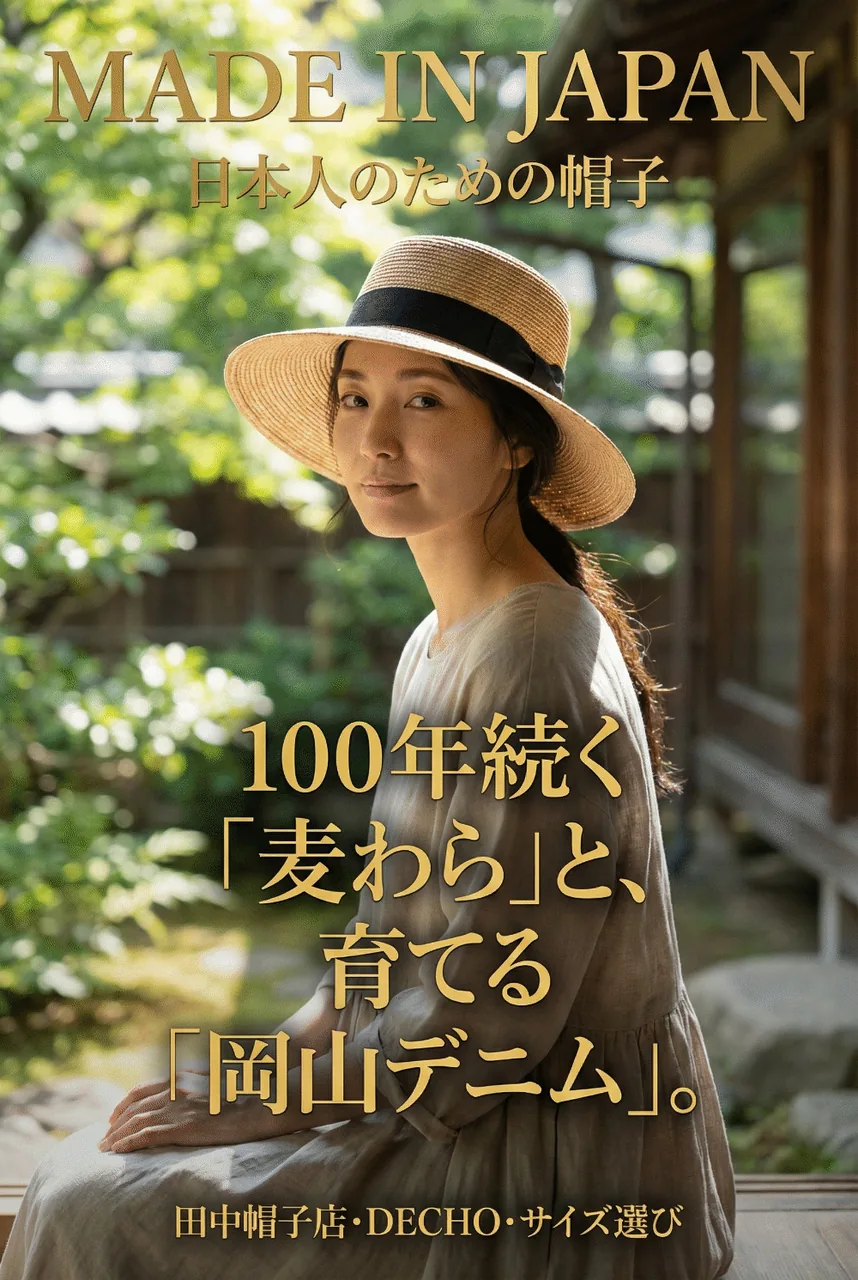
This guide covers two of the finest examples: Tanaka Boshi (田中帽子店), a 140-year-old straw hat maker from Kasukabe,
Saitama — and DECHO, an Okayama denim brand whose caps age like denim jeans. Once you find a hat that actually fits,
you'll wonder how you ever went without one.
Series: This article is part 9 of the "Wearable Japanese Masterpieces" series.
1. Why Imported Hats Don't Fit — The Round Head Problem
The most important factor in hat fit isn't size — it's the shape of the crown mold.
Oval vs. round: two completely different head shapes
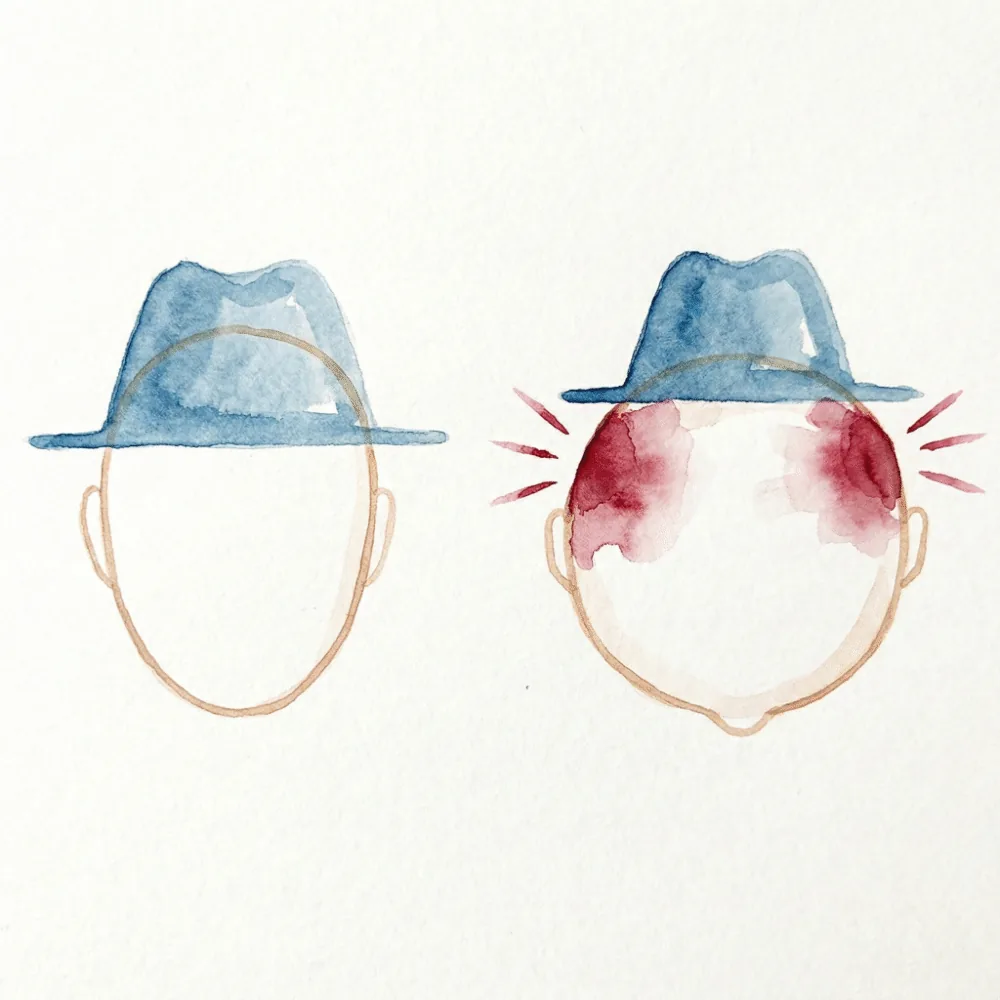
Viewed from above, most Western heads are an elongated oval — narrower front-to-back, wider side-to-side
compared to Japanese heads.
Japanese heads tend toward a rounder, wider shape — what hat makers call "wide at the temples." When you put a
hat built on a narrow oval last onto a rounder head, the fit at the sides is too tight while the front and back
are loose, causing the hat to float or tilt forward.
A hat built on a Japanese last sits flush and deep, distributing pressure evenly around the entire
circumference. The difference is immediate and startling — you forget you're wearing it.
2. Kasukabe Straw Hats — Tanaka Boshi's Natural Cool
The king of summer headwear is the straw hat (straw boater / sun hat) — and Japan's center of straw hat making is Kasukabe City, Saitama Prefecture.
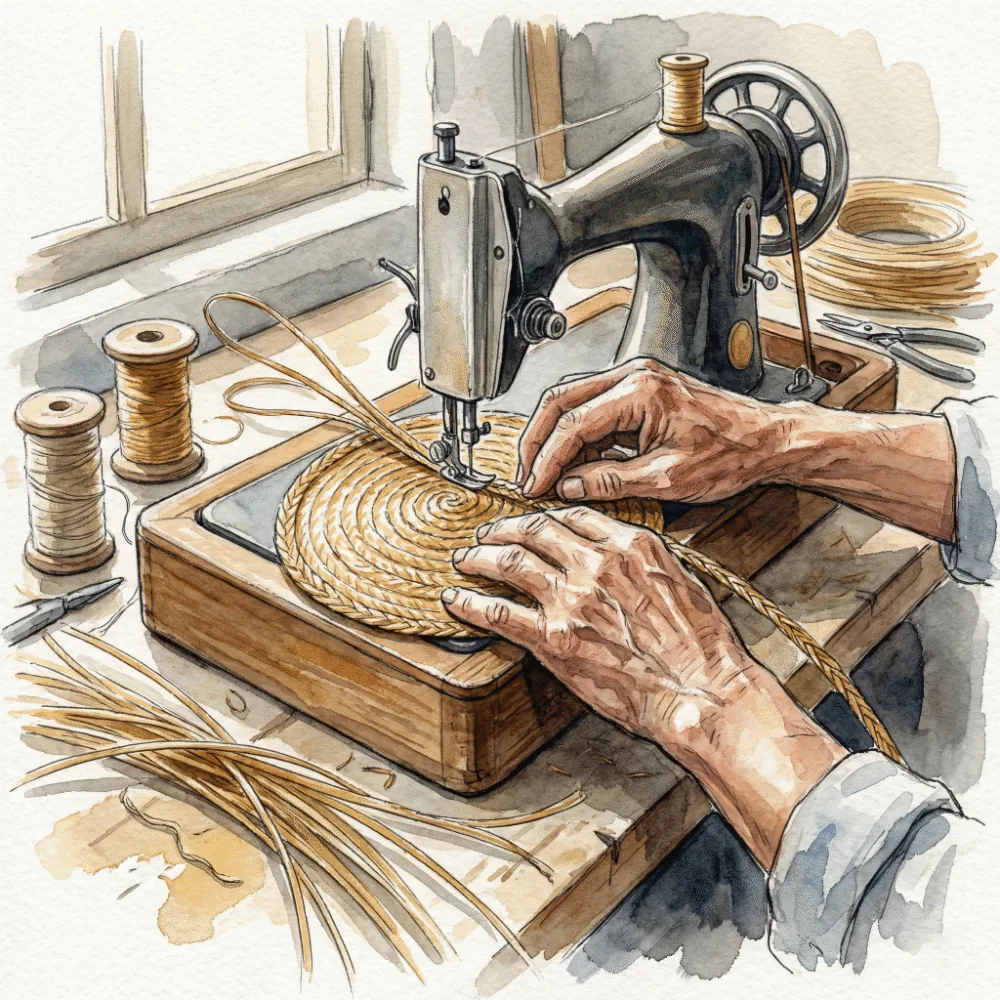
A craftsman's sewing machine, tracing perfect spirals
Kasukabe straw hats are made from mugiwara sanada — a flat braid woven from seven wheat stems — which a
craftsman then sews in a continuous spiral on a sewing machine, layer by layer, until the hat takes shape.
The hollow structure of natural wheat straw allows air to circulate through the hat rather than trapping heat
inside. Wearers often report that the hat feels cooler than no hat at all.
With use, the straw deepens from pale gold to warm amber — a natural aging process as honest and beautiful as
any leather good.
3. Okayama Denim Caps — Wash It, Wear It, Watch It Age
Straw hats can't be washed. If you want a summer hat you can actually launder and love for years, Okayama denim is the answer.
Like your best jeans, but on your head
The denim woven in Kurashiki and Kojima, Okayama Prefecture is among the most respected in the world. Caps made
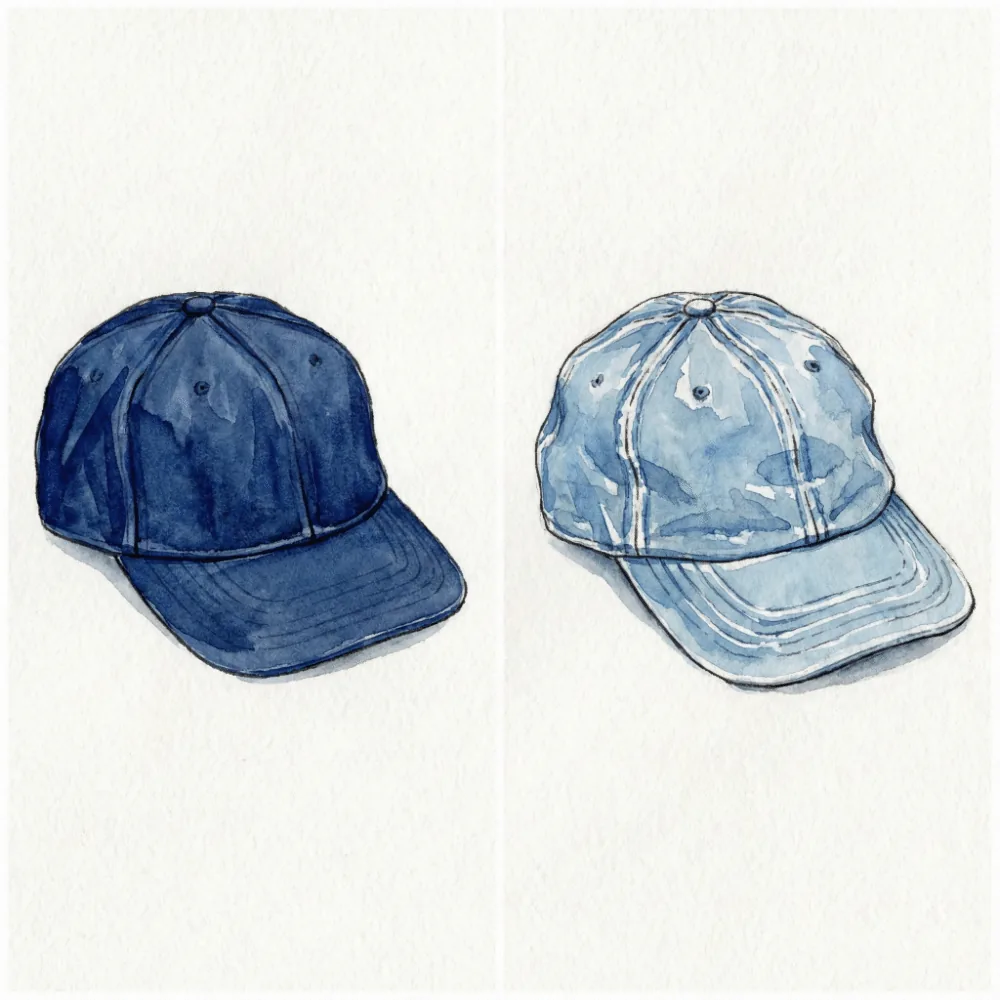
from this fabric start life in deep indigo and gradually fade through wash cycles, developing "atari" (highlight
creases) and color variations unique to your head and your life.
A denim cap worn soft and pale after years of use has a vintage gravitas that no new cap can replicate. It
becomes, quietly, a record of everywhere you've been.
4. Recommended Brand ①: Tanaka Boshi — 140 Years of Straw Craft
Founded in 1880 (Meiji 13). One of Japan's last remaining natural-fiber hat makers, and the undisputed master of Kasukabe straw craft.
Tanaka Boshi (田中帽子店)
The most comfortable hat you'll ever wear — because it was built for your head.
Every Tanaka Boshi hat is made on a last specifically designed for the Japanese head shape, by craftsmen who
have done nothing but make hats for generations.
The lineup covers classic fedoras, boater-style hats, wide-brimmed sun hats for women (capeline), and
children's styles — all with the same obsessive attention to fit.
Most models include an adjustable inner tape (hook-and-loop) that lets you fine-tune the circumference by up
to 1.5 cm, keeping the hat secure in a breeze without needing to grip it.
Tanaka Boshi also accepts repair and restoration inquiries — ribbon replacement, sweatband replacement —
making them a genuine lifelong partner rather than a seasonal purchase.
Tanaka Boshi Natural Straw Hat
Handcrafted in Kasukabe using traditional wheat-straw braid. Built on a Japanese last for a fit that stays comfortable all day. Adjustable inner tape included. Browse the full collection on the official site.
Visit Official Site5. Recommended Brand ②: DECHO — Handmade in Okayama
Based in Kurashiki, Okayama. A factory brand rooted in workwear, military, and vintage aesthetics, producing every hat in-house on antique shuttle looms.
DECHO
Crumple it in your pocket. It comes back to life. That's DECHO.
DECHO's guiding philosophy is "a hat that changes color as you wear it." Their denim and chino cloth is woven
on vintage-style power looms and sewn entirely in their own factory.
The signature "Kome Cap" (rice cap) and ball cap silhouettes run deep, fitting close to the crown rather than
perching on top — a shape that suits rounder Japanese heads naturally.
Unstructured brims (no internal stiffener) mean you can fold the hat flat and slip it into a pocket or bag
without leaving a crease. When you take it out, it springs back into shape.
For travel, hiking, and any situation where you want a hat that's genuinely out of the way, DECHO is the
answer.
DECHO Okayama Denim Cap
Handmade in Kurashiki using selvedge denim woven on vintage power looms. Deep fit, packable, and designed to age beautifully with every wash. Browse the full lineup on the official online store.
Visit Official Store6. How to Store Your Hat — Sweatband Care & Shape Preservation
How you treat your hat after wearing it is what determines how long it lasts. Straw hats in particular are surprisingly delicate.
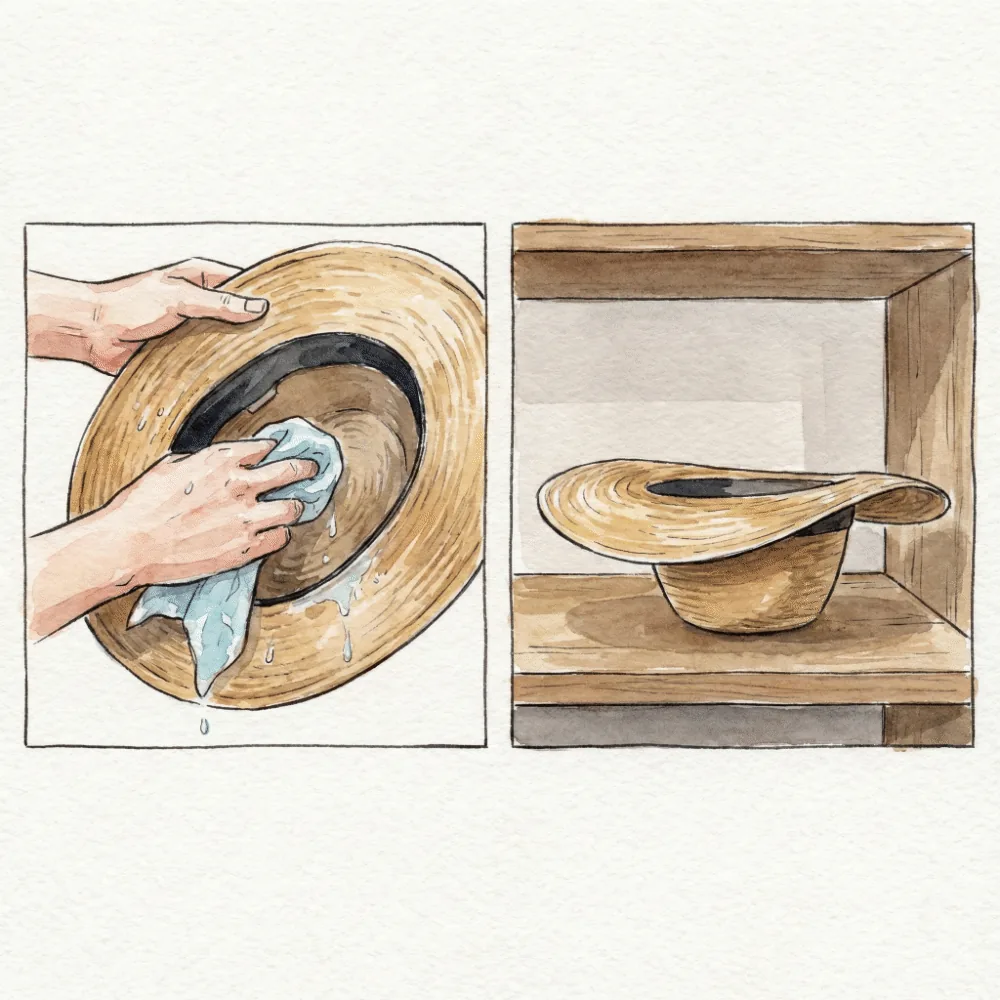
Wipe the sweatband; store crown-down or boxed
After a day's wear, the inner sweatband collects perspiration and foundation residue. Left untreated, this leads
to discoloration and odor. Wipe it gently with a well-wrung damp cloth before putting the hat away.
When storing, avoid hanging the hat by the brim — the weight deforms it over time. Instead, store it
crown-down on a flat surface, or place it in its original hat box.
Straw hats should never be compressed or folded. If you need to transport one, a rigid hat box is the only safe
option.
7. Frequently Asked Questions
How do I measure my head size for online shopping?
Measure at about 1 cm above the ears and add 1–1.5 cm to that number.
Use a soft tape measure (or a piece of string) and hold it level around your head, about one finger's width above
your ears. That measurement, plus 1–1.5 cm of ease, gives you your target hat circumference.
If you're between sizes, choose a model with an adjustable inner tape — Tanaka Boshi's standard fitting tapes
typically provide up to 1.5 cm of adjustment.
My straw hat has cracked. Can it be repaired?
Unfortunately, once straw cracks, it cannot be fully restored.
Natural wheat straw is vulnerable to dryness and can snap when bent sharply. Prevention is the only real solution:
air the hat out occasionally even during off-season storage, and always hold it by the crown (not the brim) when
putting it on and taking it off.
Tanaka Boshi accepts repair inquiries for some types of damage, so it's worth asking even if the damage seems
severe.
Can I wash a straw hat?
No — natural straw and water are not friends.
Soaking straw causes it to expand, and as it dries it contracts and deforms permanently. If your hat gets wet in
rain, blot off as much moisture as possible with a dry towel, reshape it by hand, and let it air dry away from
direct heat or sunlight.
If you know you'll be caught in rain or sweating heavily, a denim or washable straw-style synthetic hat (or
DECHO's cloth caps) is the more practical choice.
How do I keep my hat from blowing off in the wind?
Use the adjustable inner tape, or add a hat cord or hat clip.
Getting the fit right is the best windproofing. If the hat still feels insecure, a "hat elastic" (a thin cord sewn
inside and clipped to the hair or collar) or a simple hat clip keeps it on without sacrificing style.
Women can also pin the hat to their hair with a bobby pin slipped through the inner sweatband.
How long does a quality straw hat last?
Three to five years with normal use; ten-plus years with care.
Natural straw gradually deepens in color as it ages — that's expected and beautiful. Replace when the straw splits
and won't stay closed, or when the sweatband has deteriorated beyond cleaning.
Tanaka Boshi's sweatband replacement service can extend the life of a beloved hat significantly.
Final Thoughts: Find Your Hat, Find Your Summer
If hats have never worked for you, the problem almost certainly wasn't the hat style — it was the last it was
shaped on.
A Japanese-made hat built for a Japanese head fits differently from the first moment you put it on. It settles
into place. It doesn't shift. It doesn't squeeze.
Whether you choose Tanaka Boshi's handwoven straw for a breezy, classic look, or DECHO's Okayama denim for a cap
you'll grow into over years of wear, you're choosing something made to last — and made to fit.
This summer, your hat is out there.