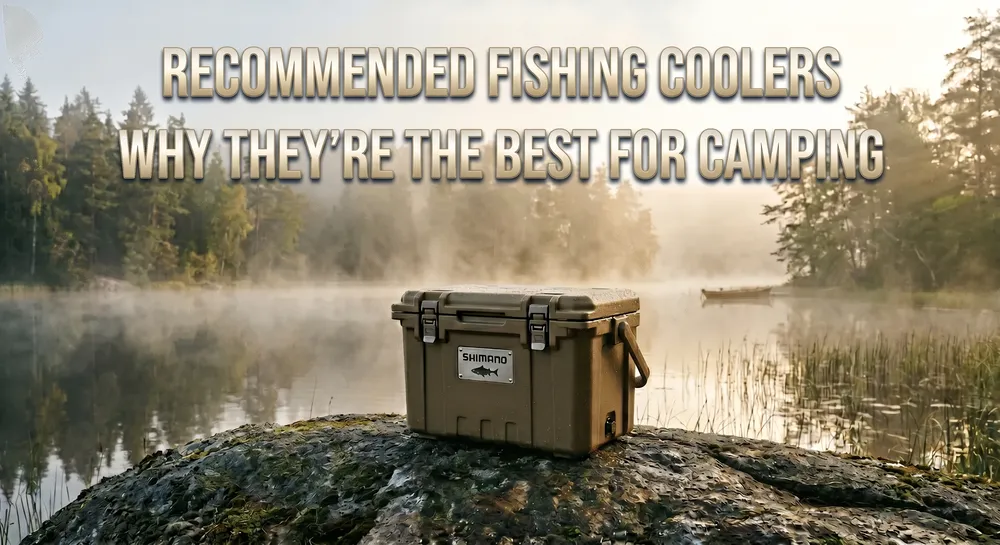
The best cooler boxes made in Japan are not sold by camping brands. They are sold by fishing tackle companies — Shimano and Daiwa — and the reason is plain enough: a cooler that loses its ice ruins a day's catch, so the one specification that matters got taken seriously. Instead of thicker foam, the top models use vacuum panels, and the box carries a number stating how many hours of ice the maker measured.
This guide covers what that number actually means, how many vacuum panels you are paying for, and — the part most articles skip — why these are genuinely hard to buy outside Japan.
Japanese Fishing Coolers vs. Standard Coolers
| Feature | Japanese Premium (Vacuum) | Standard Camping Cooler |
|---|---|---|
| Insulation | Vacuum panels (up to 6 sides) | Urethane or Styrofoam |
| Wall Thickness | Thin and space-efficient | Thick and bulky |
| Ice retention | Roughly 2 to 6 days, grade depending | Usually 1 to 2 days |
| Stated rating | Hours, printed on the box | Usually none |
| Buying outside Japan | Difficult — see chapter 4 | Easy |
1. Why Fishing Brands Make the Best Coolers
A camping cooler has to keep drinks cold for a weekend. If it fails, the beer is warm. A fishing cooler has to hold a catch near freezing on an open boat deck through a Japanese August, and if it fails the fish is not merely warm — it is refuse, after a day of work and a boat fee.
That difference in consequence is why the engineering went where it did. Shimano and Daiwa sell rods and reels worldwide, but the cooler boxes were developed for a domestic customer who fishes seriously and judges the box on a single axis. The result is a category where the marketing claim and the engineering happen to point in the same direction, which is not something you can assume in outdoor gear.
It also explains the shape. These are squared-off, upright boxes with flat lids, because they live in the footwell of a small boat and get sat on. They are not styled for a campsite photograph, and if that matters to you, this is the wrong category.
The Interior Lining Is Not an Afterthought
Most premium Japanese fishing coolers are sold with an antibacterial inner lining. Makers describe it as resisting the odours that soak into ordinary cooler plastic, and that is a reasonable thing to want in a box which holds raw fish — but treat it as a feature, not a guarantee. A lining does not remove the need to wash the box out.
The detail that matters more day to day is that the lid usually lifts off completely. A cooler you can scrub into the corners of, and dry properly, stays pleasant for years longer than one you can only reach into.
2. The Secret: Vacuum Insulation Panels
Thinner Walls, Colder Ice
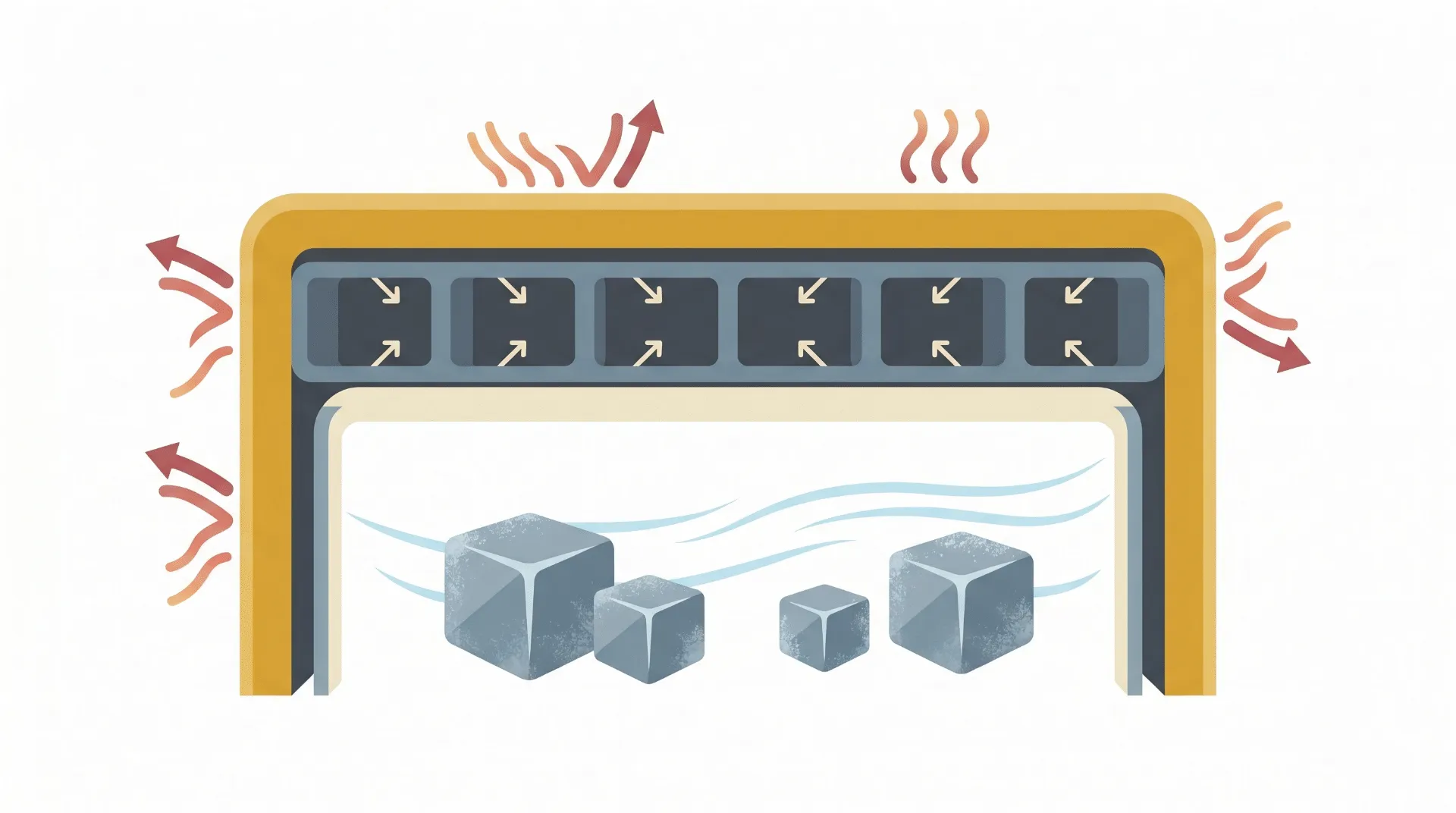
The top models use vacuum insulation panels — the same principle as a vacuum flask, flattened into a board. Heat crosses a material by conduction, and a near-vacuum has very little material to cross. So a thin panel does work that would otherwise need a thick slab of urethane foam.
What you are buying with it is interior space. Because the wall can be thin, a Japanese 25-litre cooler is noticeably smaller on the outside than a roto-moulded cooler of the same capacity. In a car boot, or in a small boat, that is the difference people notice first — before anyone has checked the ice.

Count the panels — that is the price ladder
A cooler is a box with six faces, and the vacuum panels do not have to be on all of them. Both makers sell an outwardly similar box in several grades, and the grade is simply how many faces got a panel. The remaining faces are ordinary foam.
The ladder runs roughly: one face at entry level, then two, then four, then five or six at the top, where the base and lid are included as well. Price climbs steeply along it. A six-sided box can cost several times its one-sided sibling, and the gap between them is far larger than the gap between the one-sided box and a good foam cooler.
⚠ The model name will not tell you this. Two coolers from the same series, in the same colour, with the same litre figure, can be different grades. The panel count sits in the spec table, and on a Japanese product page it is the line worth finding before anything else.
3. Built to be Sat On: Structural Integrity
A Cooler That Doubles as a Chair
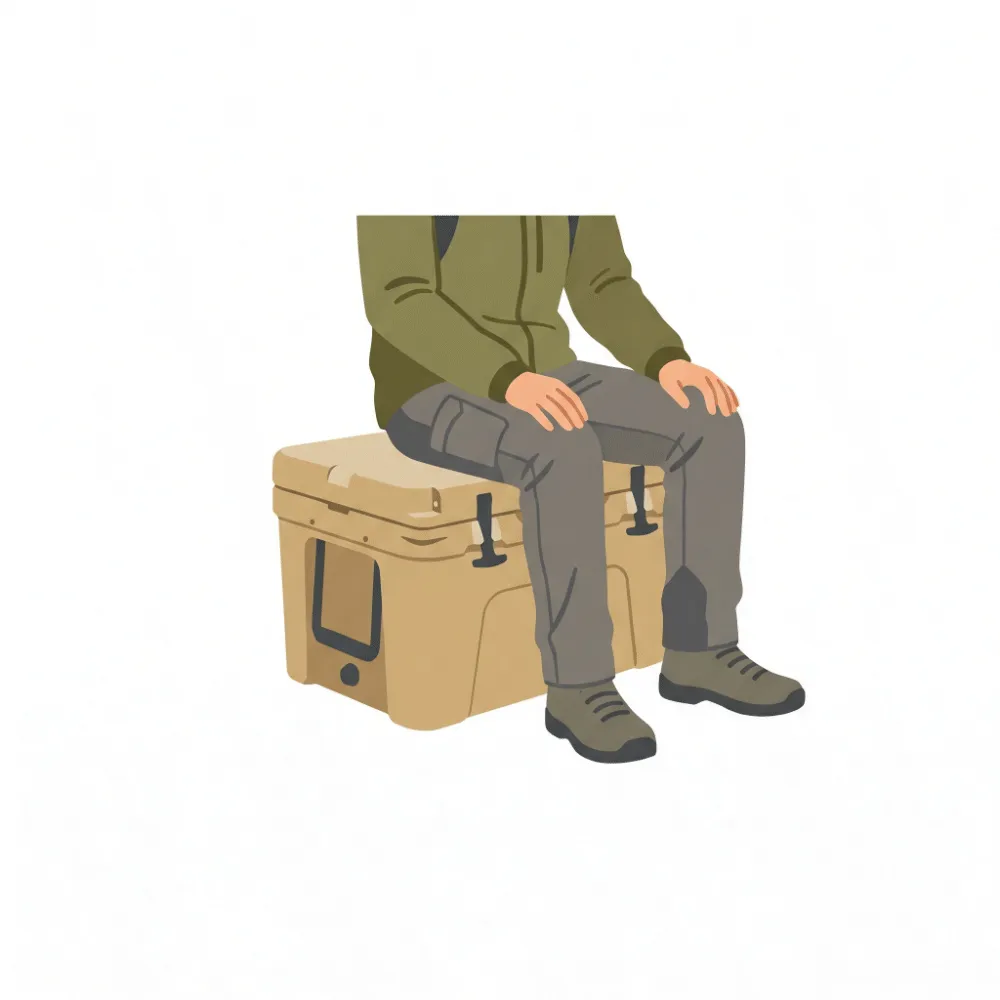
On a small boat or a breakwater there is nowhere to sit, so the cooler is the seat. Japanese fishing coolers are built for it: the lid and frame are ribbed so an adult can sit on a loaded box without the lid bowing or the seal deforming. Makers publish a load figure, and it is worth reading rather than assuming.
Most also have lids that open from either side, or lift off entirely — genuinely useful when the box is wedged against a gunwale and you can only reach it from one direction.
⚠ One weakness is worth knowing. A vacuum panel works because it is sealed. Deform it hard enough — a heavy drop onto a corner, a sharp impact against the wall — and the seal can fail, at which point that face quietly reverts to being ordinary foam. Nothing looks broken from the outside. The box simply stops holding ice as long as it used to, and there is no repair.
4. The Two Brands, and the Buying Problem
Two makers account for most of this category in Japan. Both will be familiar names if you fish — and both are far harder to buy a cooler from than that familiarity suggests.
Shimano (ICEBOX / Fixcel)
The range that goes all the way to six-sided.
Shimano's top grades put vacuum panels on every face, lid and base included, and the retention figures follow accordingly. The ICEBOX line is the one to know if you are camping rather than fishing: the same boxes in restrained colours, without the tackle-shop styling. Below the top grades the series steps down through four-, two- and one-panel versions at steadily lower prices.
We could not confirm an English-language route to this maker. It is straightforward to buy in Japan, and we would rather say so than send you to a search that returns something else.
Daiwa (Provisor / Light Trunk)
The one to look at if you will be carrying it.
Daiwa has pushed hardest on weight. The Light Trunk series is built around staying liftable when loaded, which matters more than it sounds — a 35-litre box full of ice and fish is heavy before you add the box itself. The Provisor line sits above it for longer trips.
We could not confirm an English-language route to this maker. It is straightforward to buy in Japan, and we would rather say so than send you to a search that returns something else.
Why you cannot simply order one
Shimano and Daiwa are global companies and their rods and reels are stocked everywhere. The cooler boxes are a domestic line. They are bulky, heavy, low-margin for the space they occupy, and abroad they would be competing with established local names — so they largely were not exported.
That leaves proxy buying and forwarding services from Japan. It works, but be clear-eyed about the arithmetic: a large cooler is close to the worst possible object to ship internationally. It is a big empty box and you pay by volume. Freight can approach the price of the cooler.
We would rather say that plainly than send you to a search that returns something else. If you are in Japan, or someone is travelling for you, this is straightforward. If not, a well-made foam cooler bought locally may simply be the better decision.
5. How to Choose the Right Size
Fishing coolers come in precise liter capacities. Choosing the right size is critical because empty air space melts ice faster.
- 12L to 17L: Perfect for solo day trips or carrying drinks only. Lightweight and highly portable.
- 22L to 25L: The sweet spot for a family day trip or a solo overnight camp. Fits tall bottles standing up.
- 30L to 35L+: Required for multi-day family camping or serious offshore fishing.
The number on the box, and what it is worth
These coolers are sold with a retention figure quoted in hours. It is the most prominent number in the marketing, and it is genuinely useful — provided you know what it is.
It is the maker's own measurement, taken under the maker's own test conditions: a stated ambient temperature, a stated quantity of ice, and a lid that stays shut. Those conditions are published, and they are not identical between brands.
Two consequences follow, and both matter when choosing:
- Compare within a brand, not across brands. Sixty hours from one maker and sixty from another were not necessarily produced by the same test. Within one maker's range the numbers rank the grades reliably, and that is what they are for.
- You will not see the rated figure in use. The test never opens the lid. You will, repeatedly, in the sun, to get a drink. Treat the number as a comparison tool rather than a promise about your weekend.
6. Pro Tips for Maximum Ice Retention
Even the best vacuum cooler needs proper usage to reach its maximum potential:
- Pre-chill the cooler: Put a cheap bag of ice in the cooler the night before your trip to bring the internal wall temperature down.
- Use block ice, not crushed: Block ice has less surface area and melts significantly slower.
- Don't drain the cold water: Unless you need things dry, meltwater sits close to zero and helps hold the remaining ice. Draining it replaces cold water with warm air, which is the opposite of what you want.
- Fill the empty space: Air is what you are cooling, and a half-empty cooler works harder than a full one. Towels, newspaper or spare bottles in the gaps will buy you hours.
- Keep the lid shut and the box shaded: Every opening costs you, and so does direct sun on a dark lid. Throwing anything over the box helps more than people expect.
7. Frequently Asked Questions
Are vacuum coolers heavy?
They are slightly heavier than standard foam coolers. The vacuum panels add a bit of weight, but they are generally much lighter than thick roto-molded coolers like Yeti.
Can I use dry ice in them?
Check the manual, but usually yes. However, you must never seal a cooler completely airtight with dry ice inside, as the expanding gas can cause the cooler to warp or burst.
Why are they so expensive?
The panels are expensive to make, and the top grades use several of them. That is most of the price. It is worth being honest that the step from a one-panel box to a six-panel one costs far more than the step from a good foam cooler to the one-panel box — the last few hours of retention are the expensive ones. Whether they are worth it depends entirely on whether you are camping for two nights or working a boat for four days.
Do they work for hot items?
No, they are strictly for cooling. Exposing the interior to high heat can warp the plastic housing and damage the vacuum seal.
Can I sit on the lid?
Yes. Both Shimano and Daiwa engineer their lids and frames to easily support the weight of an adult sitting on them.
How do I clean the fish smell out?
Wash with mild soap, then dry it in the sun with the lid off. Drying is the part people skip and the part that matters — a box put away damp will smell whatever its lining is made of. Get into the corners and the drain plug, which is where it actually starts.
8. Final Thoughts: What This Category Is Good For
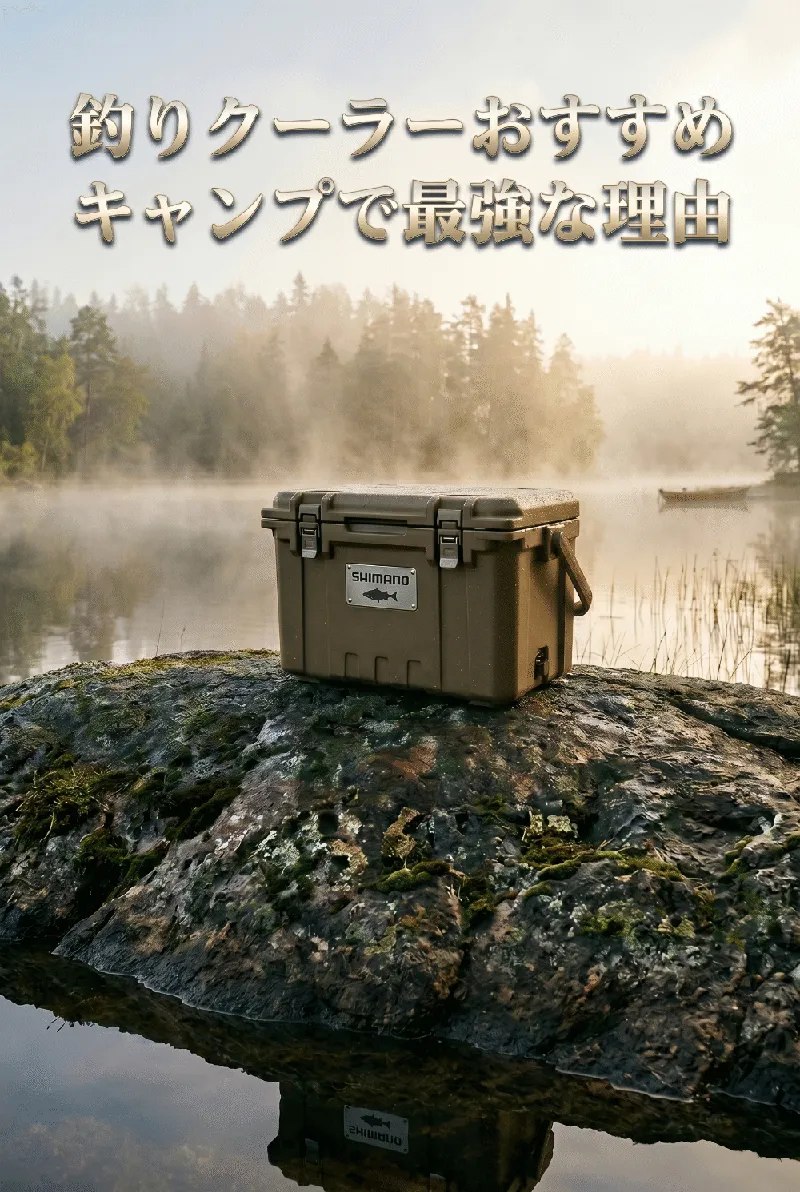
The useful summary is short. Vacuum panels buy you interior space as much as they buy you hours, the number of panels is the price ladder and it is not in the model name, and the figure on the box ranks grades within one brand rather than promising you a weekend.
The harder part is buying one. These were built for a domestic customer and mostly stayed there, and shipping a large empty box across an ocean costs enough to change the answer.
If you can get one, it is a serious piece of equipment that will outlast several foam coolers. If you cannot, that is better known now than after you have paid the freight.

Tsubame-Sanjo Camp Gear: Beyond Snow Peak — 4 Japanese Brands

Japanese Outdoor Knives: Nata, Higonokami, the Law