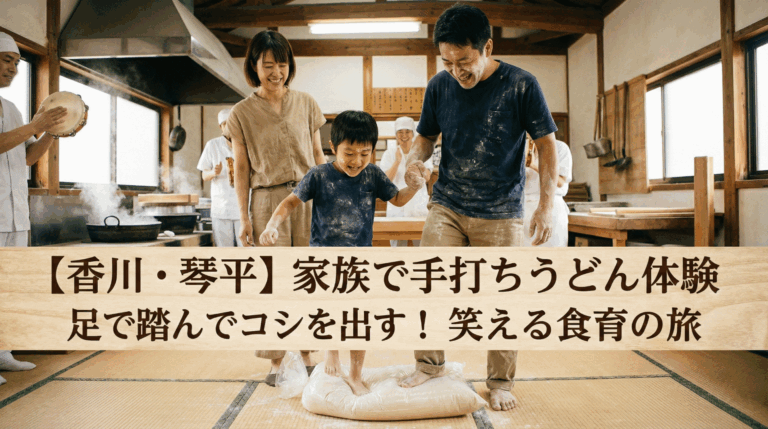
[Udon] "Chewy" or "Bouncy"? The Art of Texture
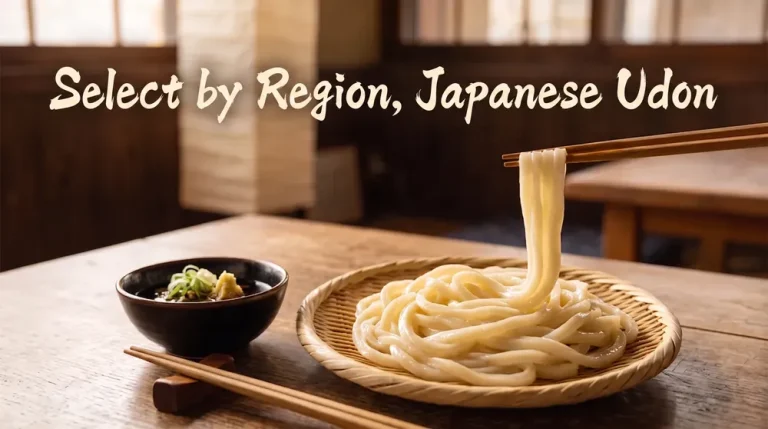
Precisely because udon is simple, the quality of both wheat and artisan skill is conveyed directly. Completely different cultures of manufacturing methods and textures coexist in Japan.
・The Rigid "Sanuki (Kagawa)", The Soft "Hakata (Fukuoka)":
Contrastingly to Sanuki Udon, enjoyed for its strong chewiness and throat-feel seemingly saying "udon is a beverage"; Hakata Udon is characterized by a fluffy texture even dubbed "losing its spine." Soft noodles that have absorbed dashi to their limits are a cluster of gentleness.
・An Island Masterpiece "Shodoshima Hand-Stretched Udon (Kagawa)":
Udon-Prefecture Kagawa possesses another hidden star. In Shodoshima, also famed as a somen producing area, high-level noodle factories are scattered. It's produced via a "hand-stretched method" drawing them out one by one without knifing, all while applying the local specialty sesame oil. The "robust chewiness" precisely because they aren't cut, and the "smooth cylindrical tongue-feel" born of somen techniques, present a food experience you won't forget once eaten.
・Silk-like "Inaniwa (Akita)", Ultra-wide "Himokawa (Gunma)":
Inaniwa Udon, one of Japan's Three Great Udons, charms with an elegant throat-feel so translucent in its flat noodles. On the other hand, Gunma's Himokawa Udon features bolt-of-cloth-like noodles stretching over 10cm wide, allowing you to enjoy overwhelming wheat flavors filling your mouth.
[Soba] Savoring Chic. The Equation of Aroma and Throat-feel
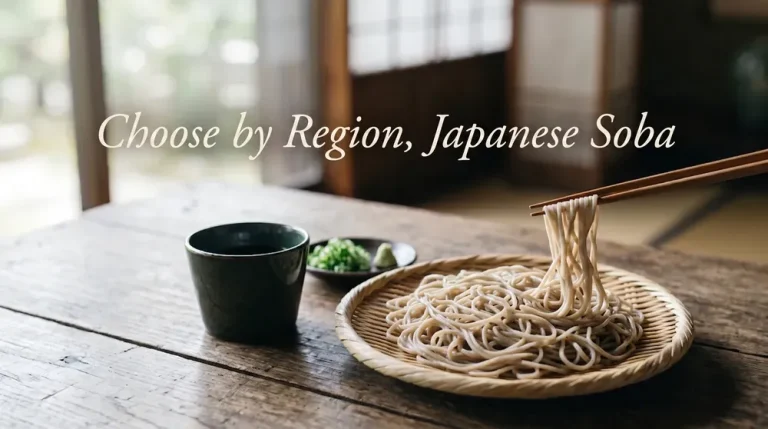
Soba is the noodle that lets you enjoy the aroma of grains the most profoundly. Its expression completely transforms based on the balance of "how it's milled" and "binders."
・Rustic "Inaka Soba" vs. Pure White "Sarashina":
"Hikigurumi (Inaka Soba)," milling the whole buckwheat seed including the hull, features a dark, remarkably wild aroma. Conversely, "Sarashina Soba" luxuriously utilizing only the seed's core, possesses an original transparent whiteness, faint sweetness, and crisp bite.
・The Pride in "Ju-wari (100%)" and the Throat-feel of "Ni-hachi (80/20)":
"Ju-wari Soba" utilizing zero binders (wheat flour) requires high noodle-making techniques and allows you to directly taste the original flavor of soba. Meanwhile, "Ni-hachi Soba" mixed with 20% wheat adds a smooth throat-feel and suppleness, embodying the "chic texture" loved by Edo period urbanites. During the autumn new-harvest soba season, try enjoying the aroma with just salt first.
[Somen] The Miracle of "Threads" Born from Aging
Do you think "somen is a summer food"? Originally, it is the king of preserved foods made in severe cold and aged in storehouses.
・The Artisan Skill of "Hand-Stretching" (Tenobe):
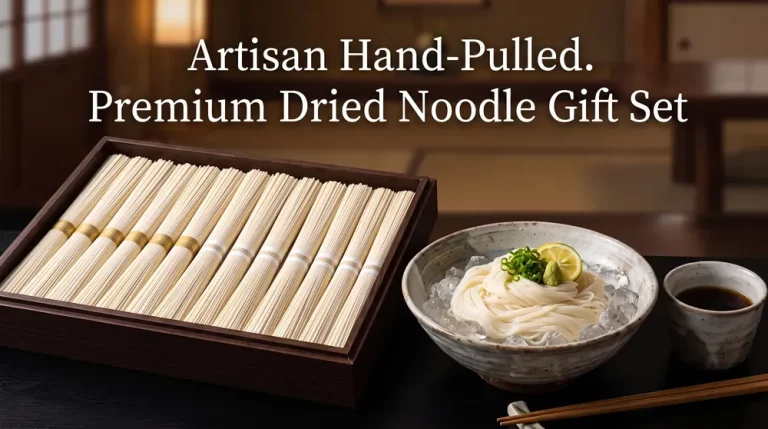
Unlike cheap machine-made noodles, hand-stretched somen is drawn out to extreme thinness while applying cooking oil, twisting it like rope, and sandwiching aging (resting) times over and over. Because it isn't cut with a knife, the gluten structure isn't broken, birthing a strong chewiness that resists breaking apart even boiled.
・Vintage Somen "Kobutsu (Hinemono)":
Somen put to sleep through the rainy season for one to several years is called "Kobutsu" (old object). Enzymatic action removes oil, strengthens the chew, and increases flavor. Special grade items of "Ibonoito (Hyogo)", or the extremely thin noodles of "Miwa Somen (Nara)" hailed as threads of the gods, are masterpieces moving beyond the mere boundaries of noodle dishes.
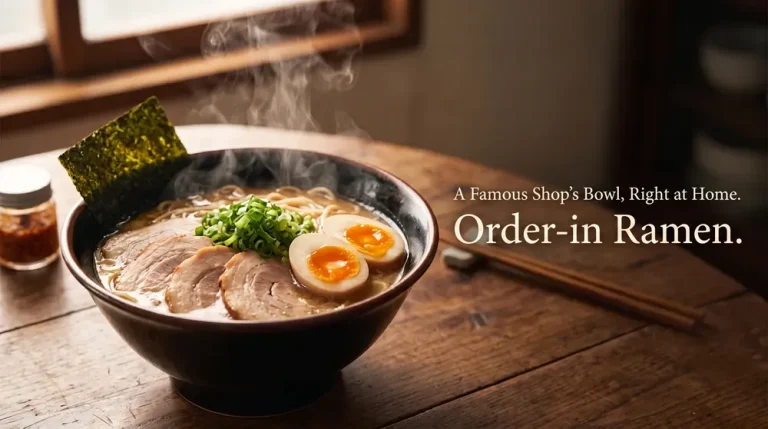
[Ramen] Your Home Becomes a Famous Restaurant. "Ordering" Evolves
An e-commerce revolution is occurring in the world of Japan's national food, ramen. It's on a different dimension from the "souvenir ramen" of the past.
・"Straight Soup" Freezing the Shop's Taste as is:
Products straight-freezing the shop's simmered soup, rather than condensed versions, are becoming mainstream. Containing chashu and menma (bamboo shoots), you can replicate 100% of the queued shop's taste simply by boiling the bag and cooking the noodles.
・Pairing Noodles and Soup:
Hakata's low-hydration ultra-thin noodles for powder aromas, Kitakata's high-hydration curly noodles for a bouncy texture, Jiro-style's rugged ultra-thick noodles for the guilty pleasure of devouring clumps of wheat. The diversity of noodles optimized to match the soup type can be called the tenacity of Japanese monozukuri (craftsmanship).
[Tsuyu / Dashi] The Brilliant Supporting Role Liberating the Noodle's Potential
The ultimate noodles require the ultimate attendants. Let's obsess over the "tsuyu (dipping/pouring sauce)" supporting noodle culture.
・West's "Kelp/Sardines", East's "Bonito/Soy Sauce":
Kansai-style clear dashi utilizes Rishiri kelp and Setouchi iriko (dried sardines), highlighting the noodle's color and flavor. Kanto-style features the strong aroma of dried bonito (Hongare-bushi) and the sharpness of dark soy sauce. Recently, elegant and powerful "Ago-dashi" using flying fish is also surging in popularity. Using different tsuyu matched with the noodle type is the enjoyment of a connoisseur.
Your Kitchen Transforms into a Noodle Factory. The Secret to "Boiling"
No matter how premium the noodle, it is ruined if boiled incorrectly. Observing professional teachings will dramatically change your usual noodles.
1. With the Largest Pot and Maximum Heat:
If the water temperature drops the moment you put the noodles in, the surface melts and feels powdery. Boiling plenty of water in the largest pot at home and letting the noodles "swim" is paramount.
2. Adding Cold Water (Sashi-mizu) is Strictly Prohibited:
If it's about to boil over, the ironclad rule is to "lower the heat" instead of adding water. Added water lowers the temperature and robs the noodle's chewiness.
3. "Sharpening-Wash" with Cold Water:
Once boiled, lift them into a colander, and intensely wash away the sliminess under running water. By washing away surface slime and tightening them acutely with cold water, the ultimate throat-feel is completed. (Even when eating warm noodles, tightening with water once and then reheating in hot water yields remarkably different textures)