
The moment you pour cold beer into a pure copper tumbler, the entire vessel chills in an instant. Japanese pure copper tumblers and mugs — especially those made in Tsubame-Sanjo, Niigata Prefecture — deliver an extraordinary coldness that no glass or stainless steel can match.
Pour in beer and the specially polished interior generates dense, creamy foam that rises naturally. Bring it to your
lips and the cold hits you immediately, straight through the metal. Once you've experienced it, ordinary glasses
feel like a downgrade.
This guide introduces the 4 best Japanese pure copper tumbler and mug brands — Shinko Metal, Asahi,
Wadasuke, and Shimakura-do — along with how to choose and care for them. They also make exceptional
gifts.
Quick Reference: Japanese Pure Copper Tumblers at a Glance
| Brand | Origin / Signature Style | Best For | Details |
|---|---|---|---|
| Shinko Metal (COPPER100) |
Niigata, Tsubame-Sanjo Rich color finishes, wide lineup |
Classic pure copper beer mugs and tumblers. | ↓ See below |
| Asahi (Shokuraku Kobo) |
Niigata, Tsubame-Sanjo Hand-hammered tsuchime texture |
Artisan design or gift sets. | ↓ See below |
| Wadasuke | Niigata, Tsubame City Professional coffee-shop style |
Iced coffee and cocktails like Moscow Mule. | ↓ See below |
| Shimakura-do (Intangible Cultural Heritage) |
Niigata, Tsubame City Hand-hammered tsuiki douki |
A collector-grade piece you own for life. | ↓ See below |
1. 3 Scientific Reasons Copper Tumblers Feel Different
Glass, stainless, and ceramic all have their merits — but pure copper offers physical advantages that no other material can replicate.
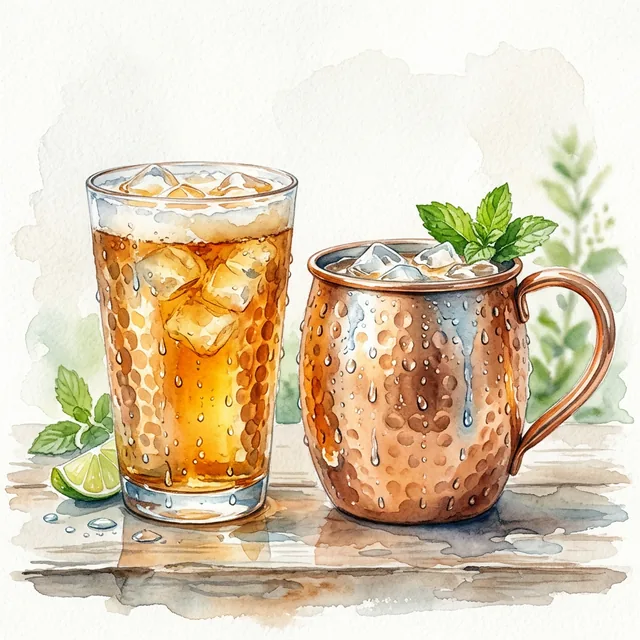
① Extreme Thermal Conductivity: Cold You Can Feel Instantly
Copper's thermal conductivity is 398 W/m·K — roughly 25× that of stainless steel and nearly 400× that of glass.
The moment you pour cold beer or an iced drink in, the chill transfers to the entire vessel in an
instant. Your lips feel the cold the moment they touch the rim, and the sensation runs all the way
down as you drink.
This is the pure copper experience — impossible to replicate with any other drinkware.
② Creamy Foam and the Oligodynamic Effect
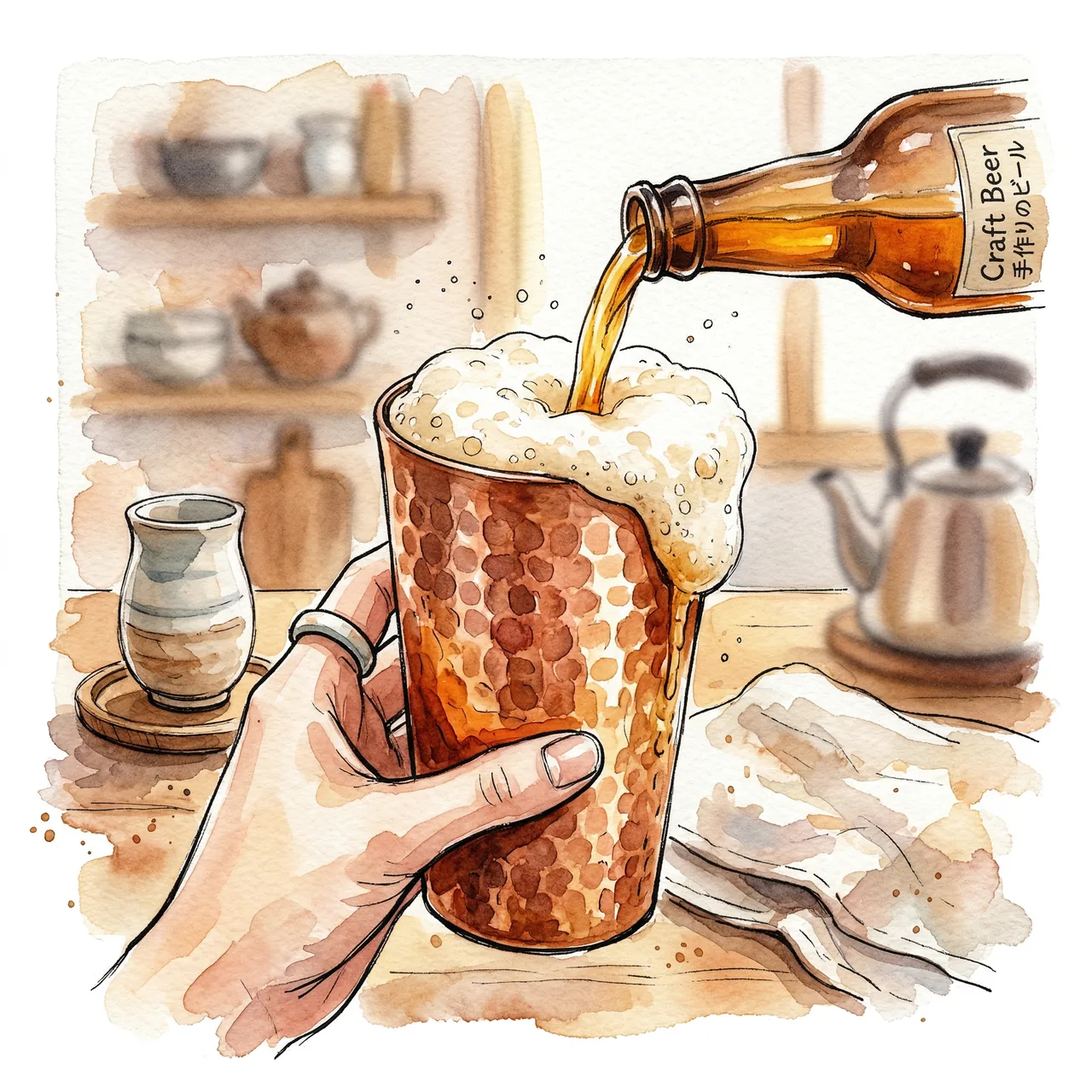
High-quality Japanese copper tumblers feature micro-spiral polishing on the interior. As liquid flows across
these microscopic ridges, it creates localized turbulence (fluid dynamics) that generates dense, fine-bubbled
foam in beer — the kind you'd find at a specialty bar.
Beyond foam, trace copper ions dissolving into the liquid (the oligodynamic effect) have documented
antimicrobial properties and may subtly soften the flavor of your drink.
③ Aging: From Gold to Amber Over Years of Use
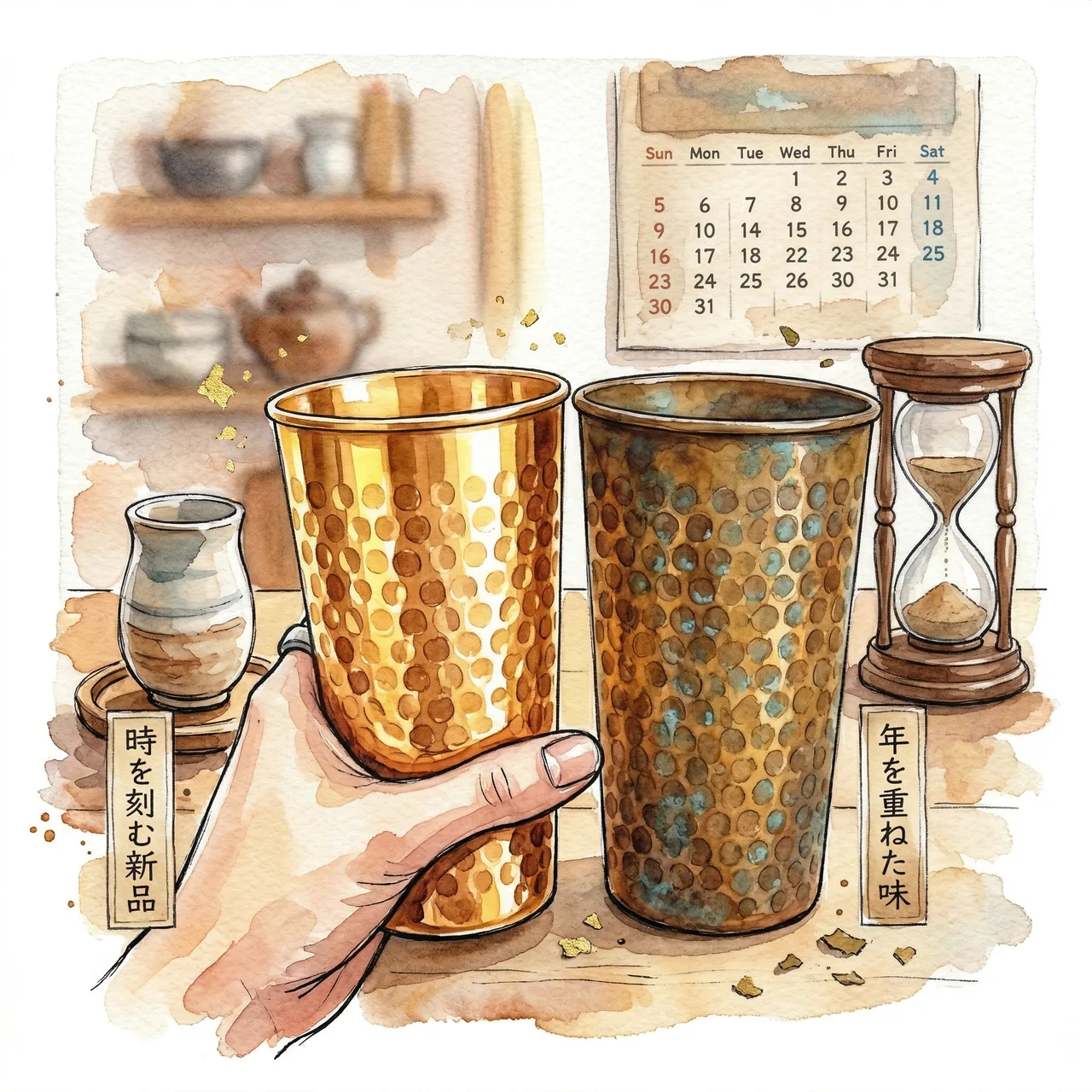
Pure copper reacts with oxygen in the air and the oils from your hands to form a thin copper oxide (Cu₂O) layer.
Over time this deepens the surface from bright gold to a rich amber-bronze — the same aging process seen in
leather goods or denim.
You can encourage this patina by using the tumbler regularly, or restore the original shine at any time with a
copper polishing cloth or metal polish like Pikal.
2. Top 4 Japanese Pure Copper Tumbler Brands
For the highest quality pure copper drinkware, the Tsubame-Sanjo metalworking region of Niigata Prefecture is the place to look. Here are the four brands that stand above the rest.
1. Shinko Metal (COPPER100): Rich Color Finishes and a Broad Lineup
Founded in 1959 in Tsubame City, Niigata, Shinko Metal's COPPER100 series has become a globally
recognized name in pure copper drinkware.
Their signature strength is color: proprietary finishing techniques produce deep red-copper and black-copper tones
that are stunning in person. The lineup spans beer mugs, rock cups for shochu, and even copper wine glasses.
Interior surfaces are lined with tin or nickel plating for safety.
- Origin
- Tsubame City, Niigata Prefecture — founded 1959
- Signature feature
- Red-copper and black-copper color finishes, widest product range
- Interior lining
- Tin or nickel plating for food safety
2. Asahi (Shokuraku Kobo): Japanese-Modern Tsuchime Hammered Texture
Asahi Co., Ltd. of Tsubame City produces the Shokuraku Kobo copper series, distinguished by its tsuchime
(hand-hammered) surface texture. Each dimple is struck by a craftsperson to create a pattern that scatters light
beautifully and gives the surface a deeply tactile quality.
The hammering also reduces fingerprint visibility. Gift sets in wooden boxes are extremely popular for weddings,
milestone birthdays, and other occasions.
- Origin
- Tsubame City, Niigata Prefecture
- Signature feature
- Hand-hammered tsuchime pattern — elegant and functional
- Gift options
- Two-piece wooden box sets available; ideal for special occasions
3. Wadasuke: Professional Coffee Shop Copper Mugs
Founded in 1923, Wadasuke primarily supplies hotels and restaurants with professional banquetware. Their copper
mugs are the ones you'd find in a classic Japanese kissaten (coffee house) serving iced coffee — unmistakably
professional, quietly handsome.
Clean lines, a satisfying heft, and a wide stable base make these the default choice for Moscow Mule and other
copper cocktails.
- Origin
- Tsubame City, Niigata Prefecture — founded 1923
- Signature feature
- Refined professional silhouette; standard-bearer for kissaten-style iced coffee service
- Best drinks
- Iced coffee, Moscow Mule, beer, and cold cocktails
4. Shimakura-do (Tsuiki Douki): The Pinnacle of Intangible Cultural Heritage
If you want something truly extraordinary, tsuiki douki (hand-hammered copper forming) is the answer.
This technique — designated an intangible cultural heritage of Tsubame City — involves striking a flat copper
sheet with a hammer thousands of times to coax it into a three-dimensional vessel without any seams or molds.
Shimakura-do is one of the workshops carrying this tradition forward. The countless hammer marks left on each
piece, combined with traditional chemical coloring, produce objects of unmistakable presence and depth. No two are
alike.
- Origin
- Tsubame City, Niigata Prefecture (Intangible Cultural Heritage)
- Technique
- Tsuiki douki — single copper sheet, hand-hammered into form with no joints
- Price range
- Premium; considered collector-grade artisan copperware
🍷 Also into quality metal tableware?
3. Frequently Asked Questions
Can I put hot drinks in a copper tumbler?
No — never put hot liquids in a pure copper tumbler. Copper's thermal conductivity is so high that the vessel will reach the same temperature as the liquid almost instantly. Hot water means a cup too hot to hold, and a burn risk for your lips. Pure copper tumblers are cold-drink only.
How much will it sweat with ice inside?
Significantly. The chill from the drink transfers to the outer surface immediately, and condensation forms quickly. Always use a coaster. The heavy condensation is proof of how cold the drink is — and a charming visual cue on a summer evening.
Why is the inside a different color from the outside?
Most copper tumblers are lined on the interior with tin or nickel plating. This prevents acidic drinks from leaching too much copper into the liquid and eliminates metallic taste. Tin plating also has a mildly flavor-softening effect on drinks.
Can I use the dishwasher or microwave?
No to both. Microwaving metal is dangerous. Dishwashers' high pressure and alkaline detergents will rapidly degrade the exterior finish and the interior plating. Always hand-wash with a soft sponge and mild dish soap.
Green-blue verdigris is forming on my tumbler. Is it harmful?
No — verdigris (rokusho in Japanese) is harmless. It was once thought toxic but has been scientifically confirmed safe by Japan's Ministry of Health. If the appearance bothers you, wipe it away with a cloth dampened with a mixture of equal parts vinegar and salt, or use a commercial metal polish like Pikal.
What else can I put in a copper tumbler besides beer?
Any cold drink works well — iced tea, water, highball, Moscow Mule, cold sake. Just avoid leaving highly acidic drinks (e.g., straight citrus juice) sitting in the tumbler for extended periods, as acids can accelerate wear on the interior plating. Rinse promptly after use.
4. Final Thoughts: A Lifelong Companion for Cold Drinks
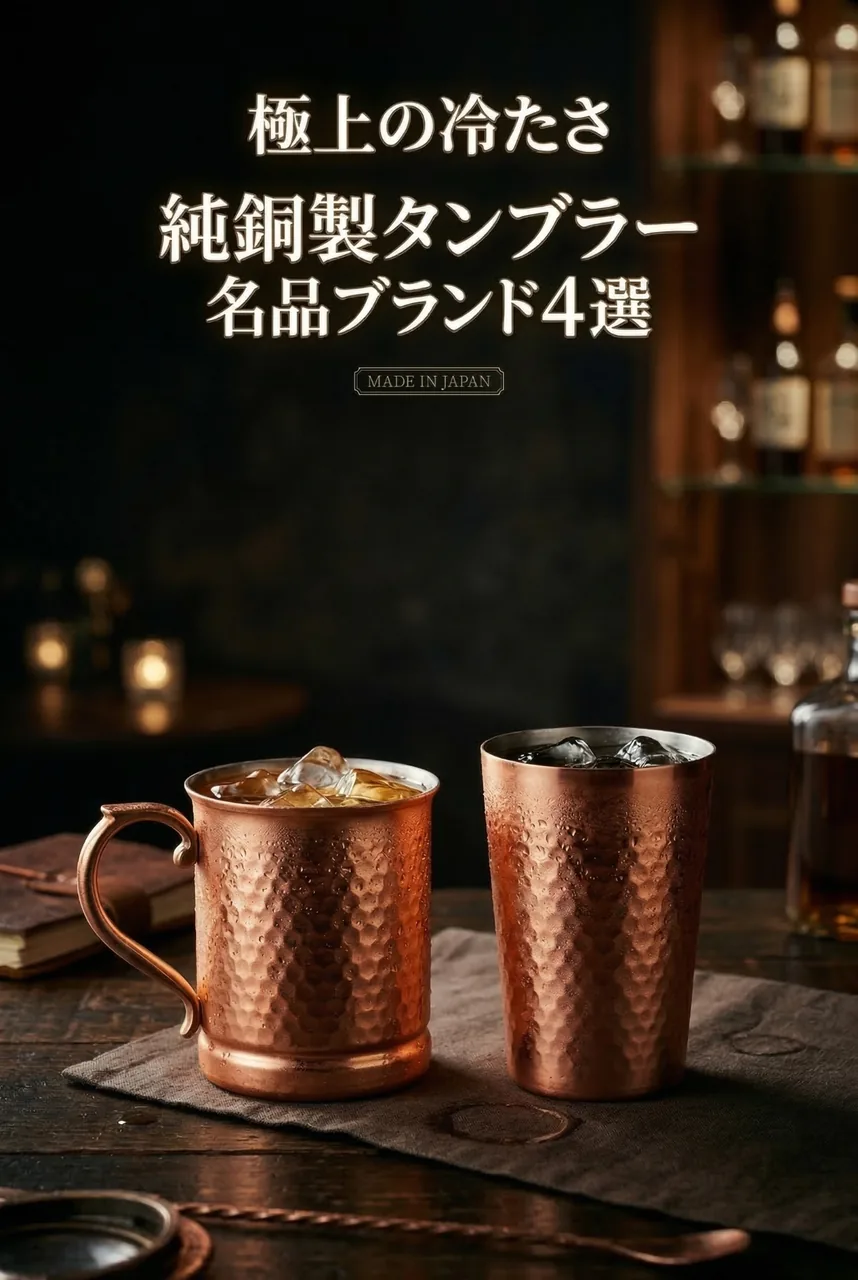
The pure copper tumblers made by Japan's metalworking craftspeople are vessels that deliver a drinking
experience simply not available in glass or stainless steel. The instant, enveloping cold, the creamy beer foam,
the aging patina that develops over years of use — these are qualities that compound over time.
The weight in your hand and the cold against your fingertips make every pour feel like a small, considered
pleasure.
They're not inexpensive, but they don't break — and that makes them one of the most cost-effective purchases in the long run. A great gift for yourself or someone who already has everything.