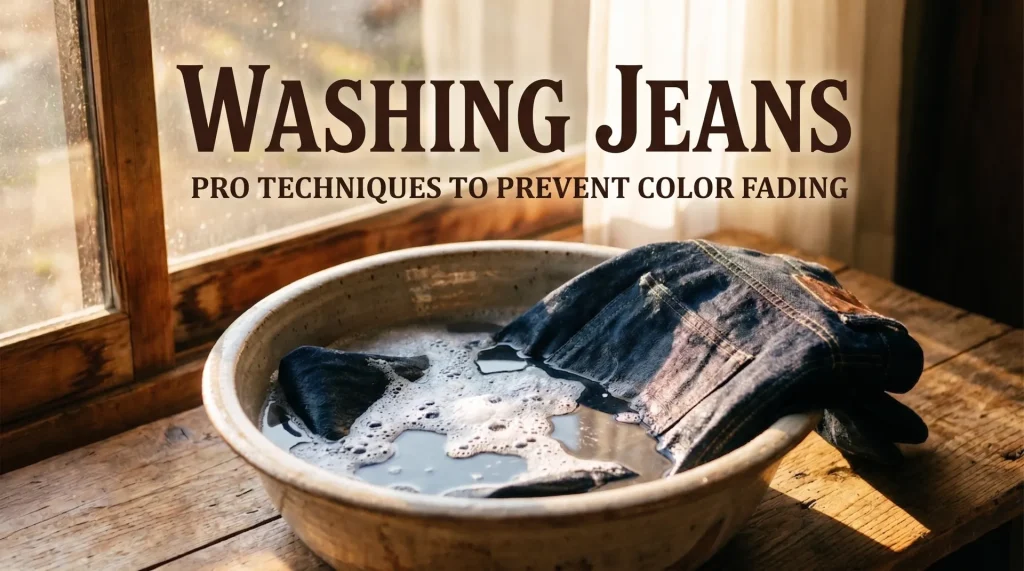
"Jeans look better unwashed." That was the old wisdom — and it was wrong.
Leaving sweat and body oils untreated causes the fabric to oxidize and weaken, the crotch to tear, and the pair to develop an odor that's frankly unpleasant.
The current consensus is clear: washing at the right frequency actually produces cleaner, more beautiful fades — whiskers and honeycombs included.
The catch is that throwing your jeans in a regular wash with standard detergent can strip the indigo dye in one go. In this guide — written by someone who has worn through dozens of pairs of raw denim since their twenties — we'll walk through how to wash away grime while keeping color loss to the absolute minimum, including the vinegar trick and how to choose the right detergent.
1. How Often Should You Wash Jeans? The "Grit Wear" Risk
"I hate washing them — the color will just fade." That feeling is completely understandable.
But knowing when to wash is the secret to keeping a pair you can wear for years.
Summer vs. winter washing frequency
● Summer: every few wears (once a week to biweekly)
Heavy sweating in warm weather feeds bacteria rapidly. The salt in sweat draws moisture and makes fabric sticky and uncomfortable.
● Winter: about once a month
When you're barely sweating, a monthly reset is sufficient.
That said, if you've been to a barbecue restaurant or a smoky bar and the smell is noticeable, wash them right away.
The risk of "grit wear" (never washing your raw denim)
Some denim enthusiasts wear a new pair for six months to a year without washing to produce intense whiskers (hige) and honeycombs (hachi no su). It's a real technique — but it comes with real risks:
1. Fabric tears: Body oil buildup combined with friction accelerates wear at the crotch and knees.
2. Hygiene issues: Simply put, it smells bad.
The current trend leans toward washing at reasonable intervals and enjoying fades that are dramatic and clean at the same time.
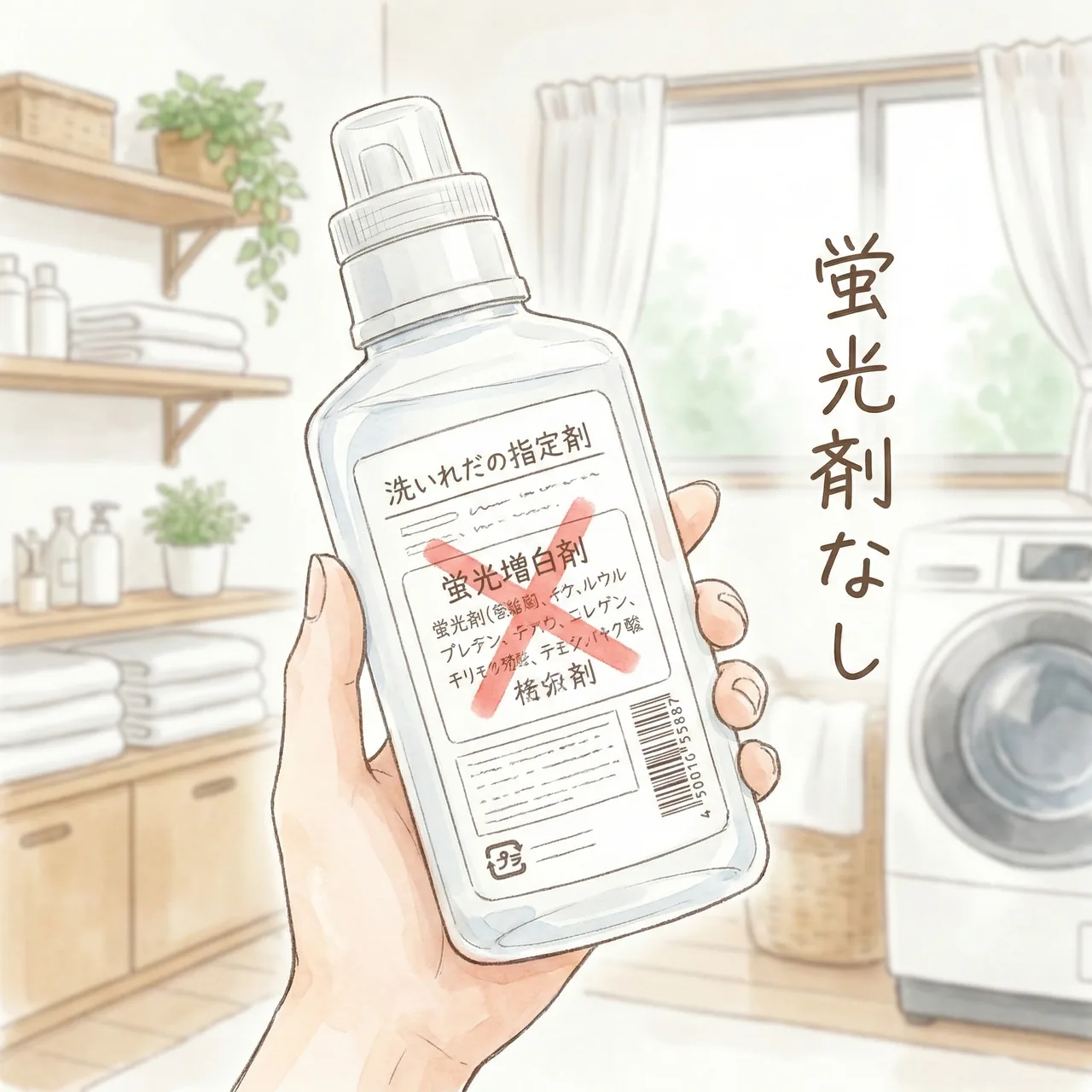
2. The Most Important Step: Use a Detergent Without Optical Brighteners
Detergent choice matters more than technique.
Check the back of your regular laundry detergent (powder or liquid).
Does it contain "optical brighteners" (keiro zohaku-zai)?
Why optical brighteners are harmful to denim
Optical brighteners are a type of dye used to make white shirts appear whiter and brighter.
When used on jeans, this compound layers over the indigo, producing a faded, chalky pallor that looks cheap and washed out.
For denim, always choose a neutral delicate detergent (woolens/fine fabric formula) or a denim-specific detergent.
[Recommended] Samurai Jeans "Raiden Soap" (Kaminari Sekken)
The ultimate denim detergent, made from soybeans.
Developed by Samurai Jeans — one of Japan's premier heavy-oz denim brands — this powder soap contains zero bleach, optical brighteners, or enzymes.
The active ingredient is 99% pure soap derived from soybean oil.
It cleans effectively while keeping indigo fading to an absolute minimum. A genuine gem made by denim lovers, for denim lovers.

3. Machine Washing: 4 Steps to Minimize Fading
With the right approach, a washing machine can clean your jeans without destroying their color.
① Close all buttons and the zipper
Leaving them open allows metal hardware to snag and abrade the fabric during the spin cycle, and the waistband can distort without support.
If your jeans have a button fly, fasten every single button.
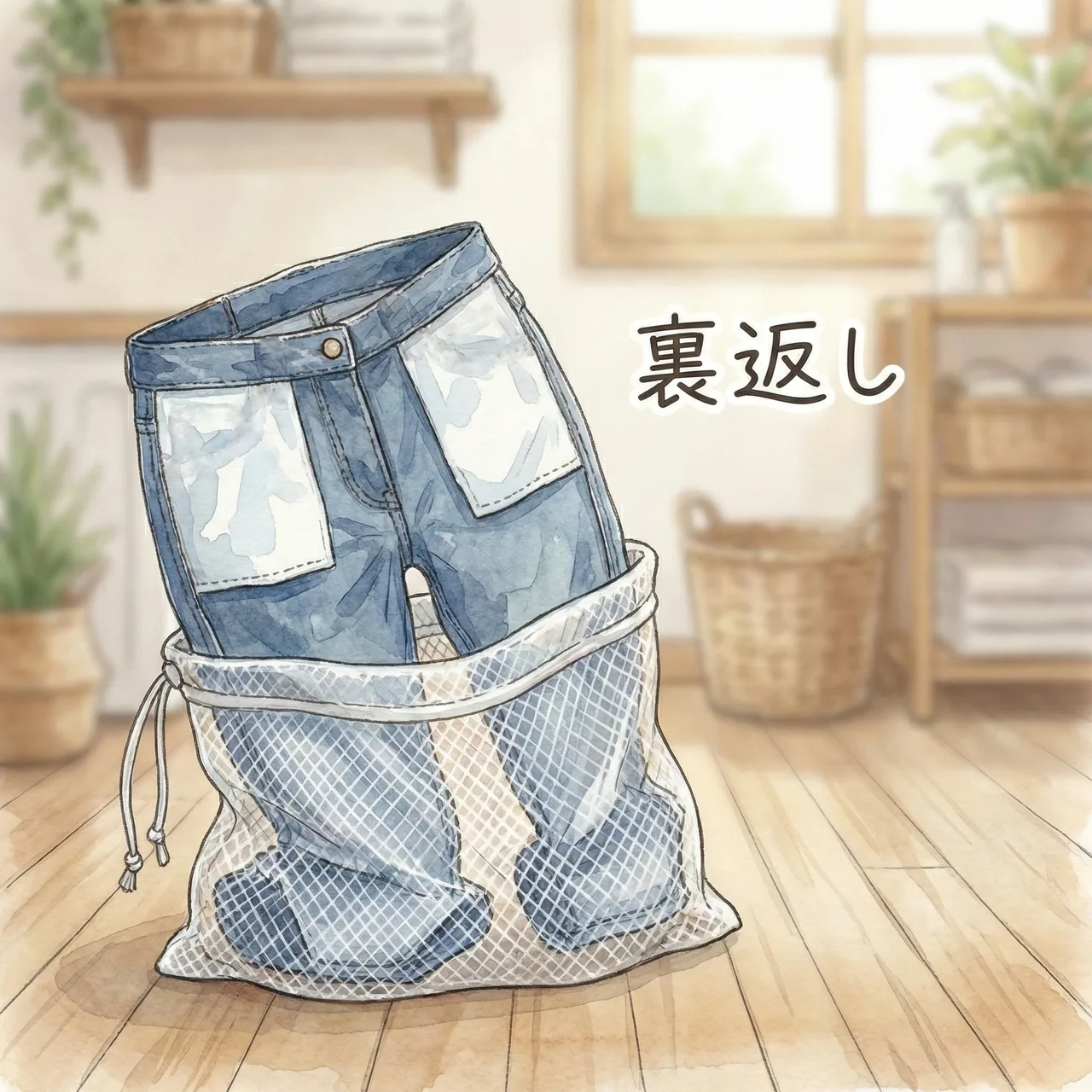
② Turn inside out, then place in a laundry net
This is the cardinal rule.
Turning inside out keeps the indigo face from rubbing against the drum walls or other garments. Placing inside a laundry net minimizes friction even further.
③ Use the "delicate" or "quick" cycle
The standard cycle is too aggressive.
Choose a gentle water flow: a delicate/handwash cycle, or a short/quick cycle. Water temperature should be room temperature to 30°C (86°F) — hot water pulls out indigo faster than anything else.
④ Spin for 1 minute only
This is the pro's signature tip.
Over-spinning creates deep, stubborn creases from centrifugal force.
Set the spin cycle to 1 minute (or your machine's shortest available setting).
Even if the jeans are still dripping, their weight will naturally pull wrinkles out as they hang dry.
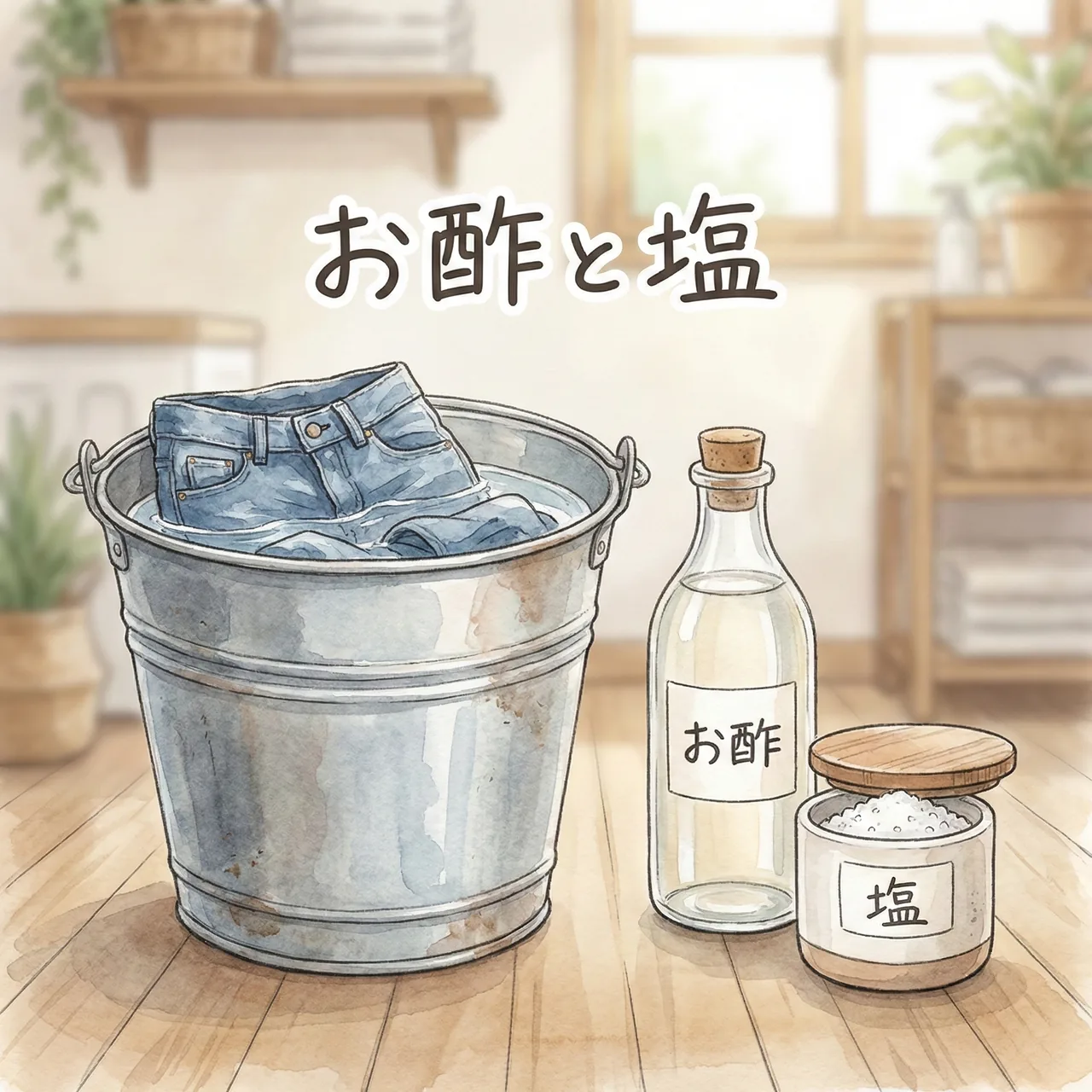
4. Myth or Fact? The Color-Setting Power of Vinegar and Salt
You may have heard that soaking jeans in vinegar stops the color from fading.
It's not just folklore — there is some science behind it.
How vinegar and salt actually work
● Salt (sodium chloride):
Acts somewhat like a mordant — a substance that helps bind dye to fiber.
● Vinegar (acetic acid):
Indigo dye is sensitive to alkaline conditions but stable in acidic ones. Adding vinegar slightly acidifies the water, which can slow color loss and also inhibit bacterial growth.
[How to use]
Per 10 liters (about 2.5 gallons) of water, add 1 tablespoon of salt and 1 tablespoon of vinegar. Soak your jeans for about 1 hour.
Don't expect a dramatic difference — but if you want to hold onto every last shade of indigo, it's worth trying.
5. Hand Washing: The Gentlest Method Is Bucket Soaking
"I don't trust the washing machine with this pair." "It's a vintage piece and I want to be careful."
For situations like these, hand washing — specifically bucket soaking — gives you the most control and puts the least stress on the fabric.
It takes a bit more effort, but it's the ultimate care method for preserving indigo.
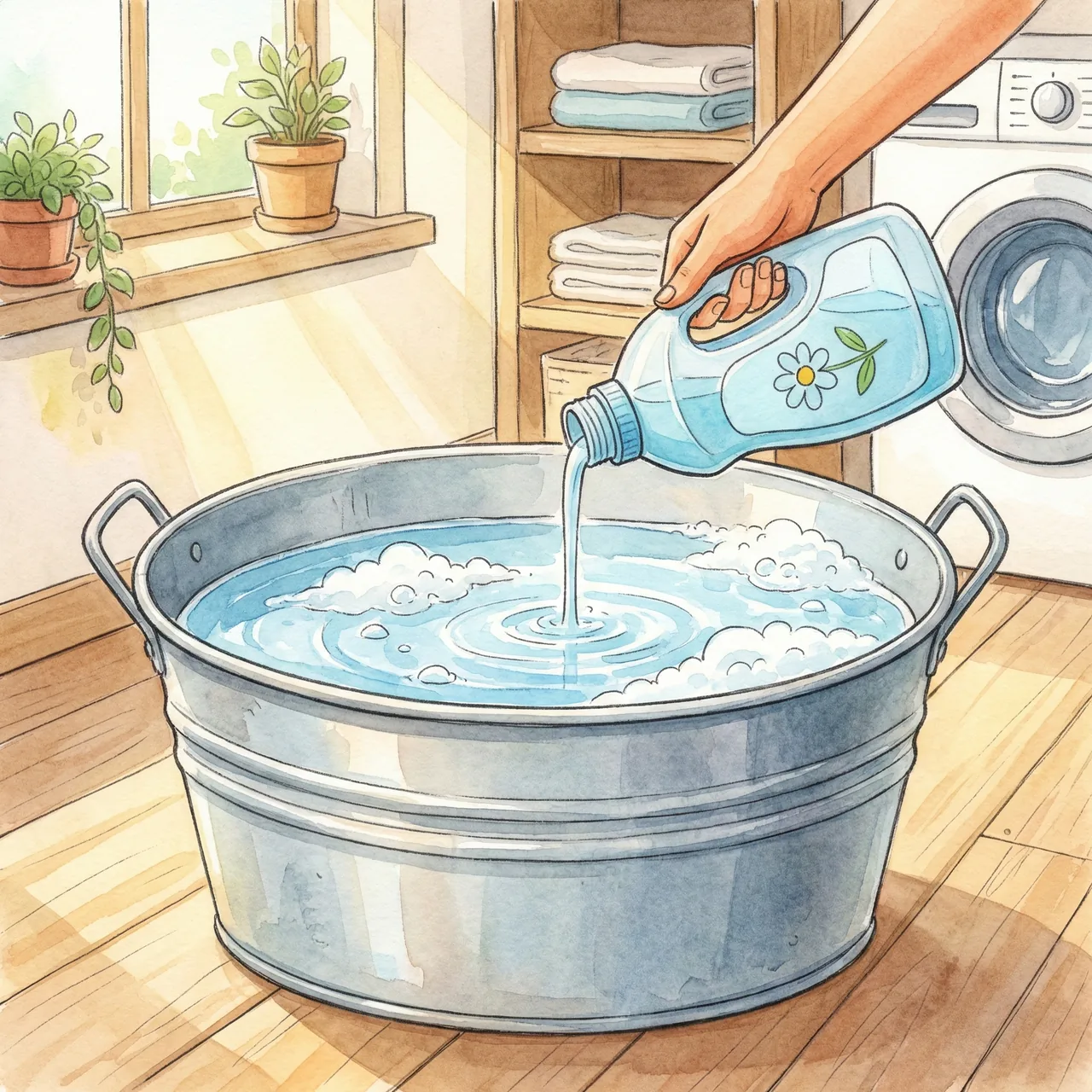
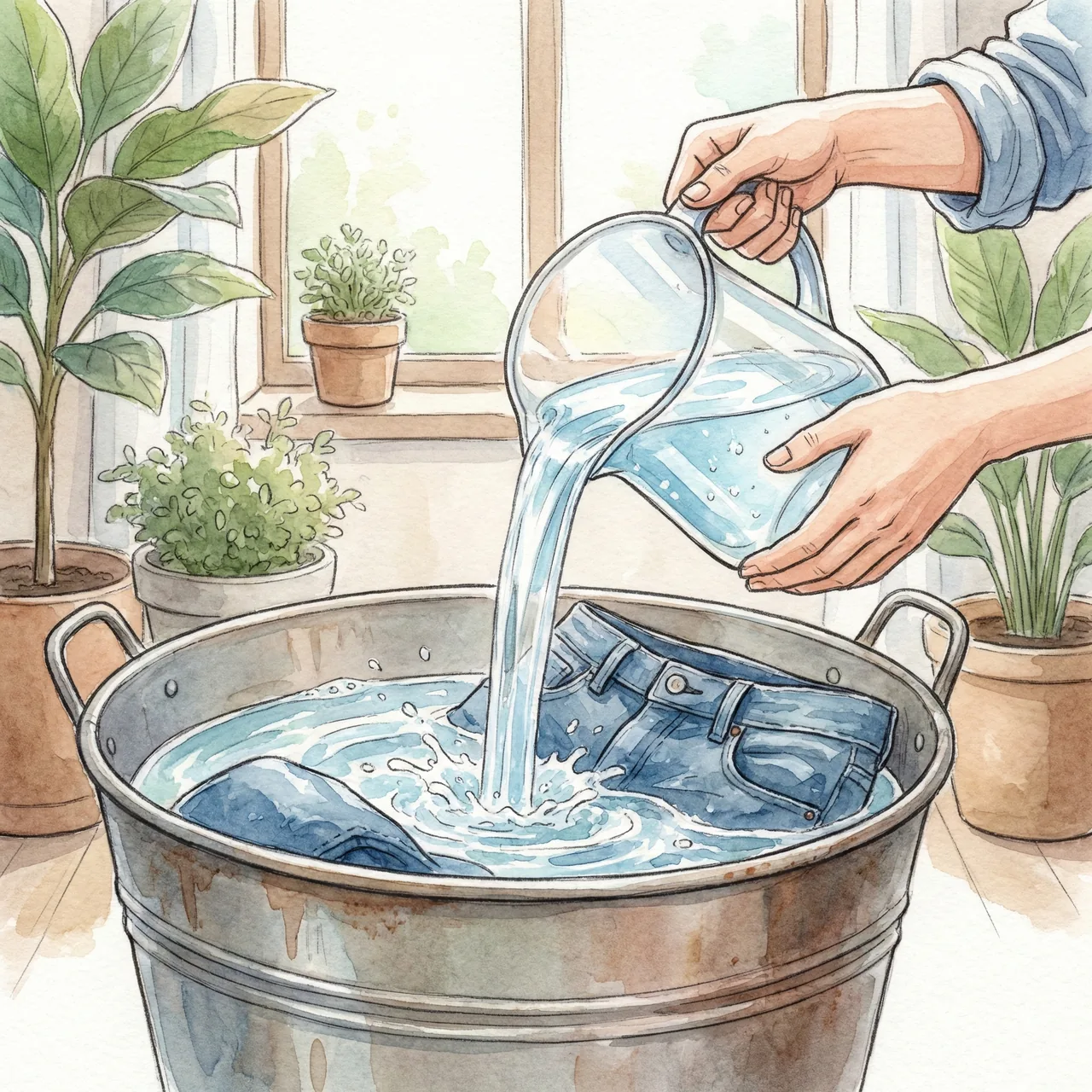
Step 1: Prepare the wash solution
Fill a large bucket or basin with room-temperature or lukewarm water (no hotter than 30°C / 86°F).
Add a measured amount of neutral delicate detergent or denim-specific soap, then mix by hand until lightly foamy.
※ Hot water accelerates color loss — avoid it.
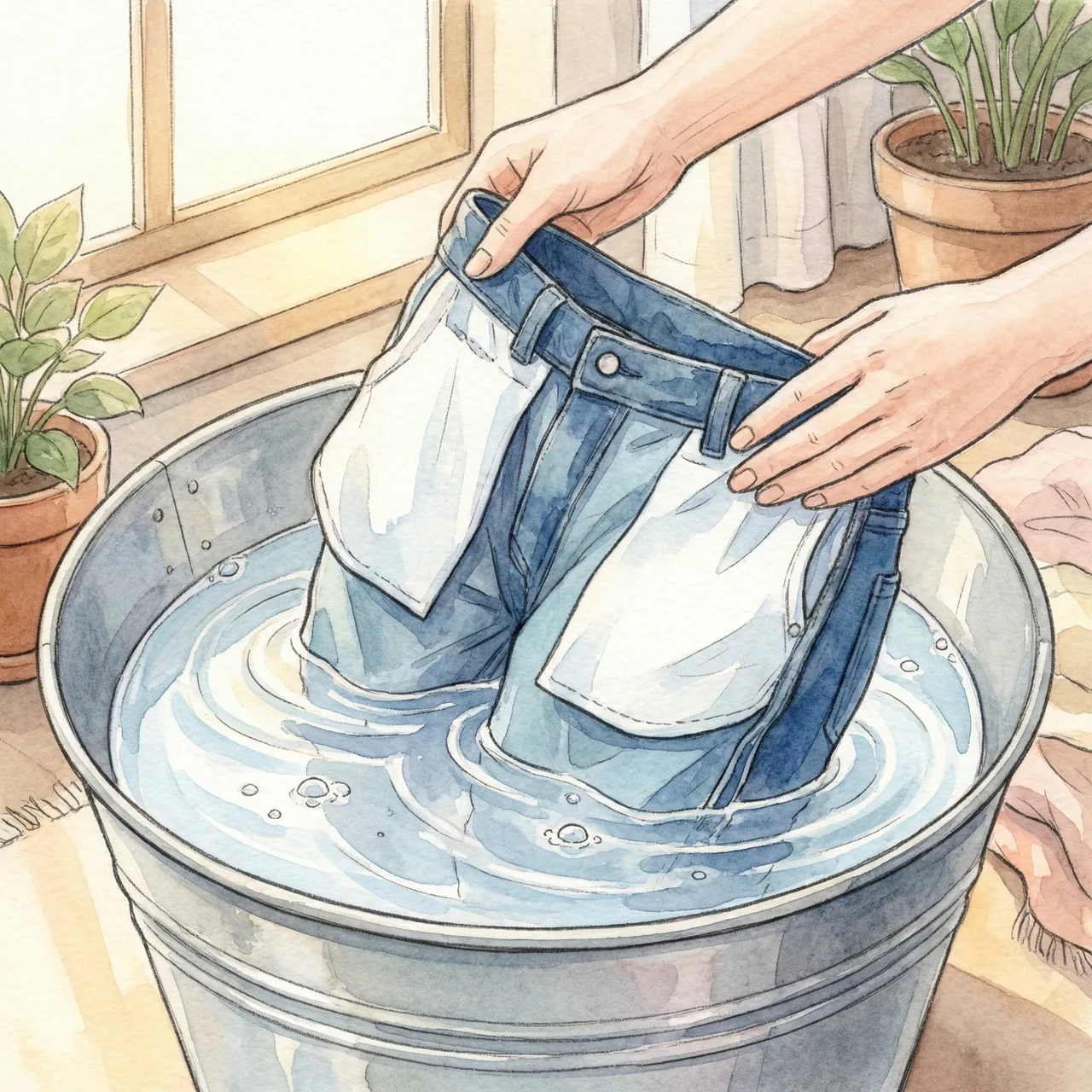
Step 2: Turn inside out and submerge
Close all buttons and the zipper, then turn the jeans inside out.
Fold gently to fit the bucket and press down until fully submerged.
If air pockets cause the fabric to float up, press down several times with your hands to allow water to fully saturate the denim.
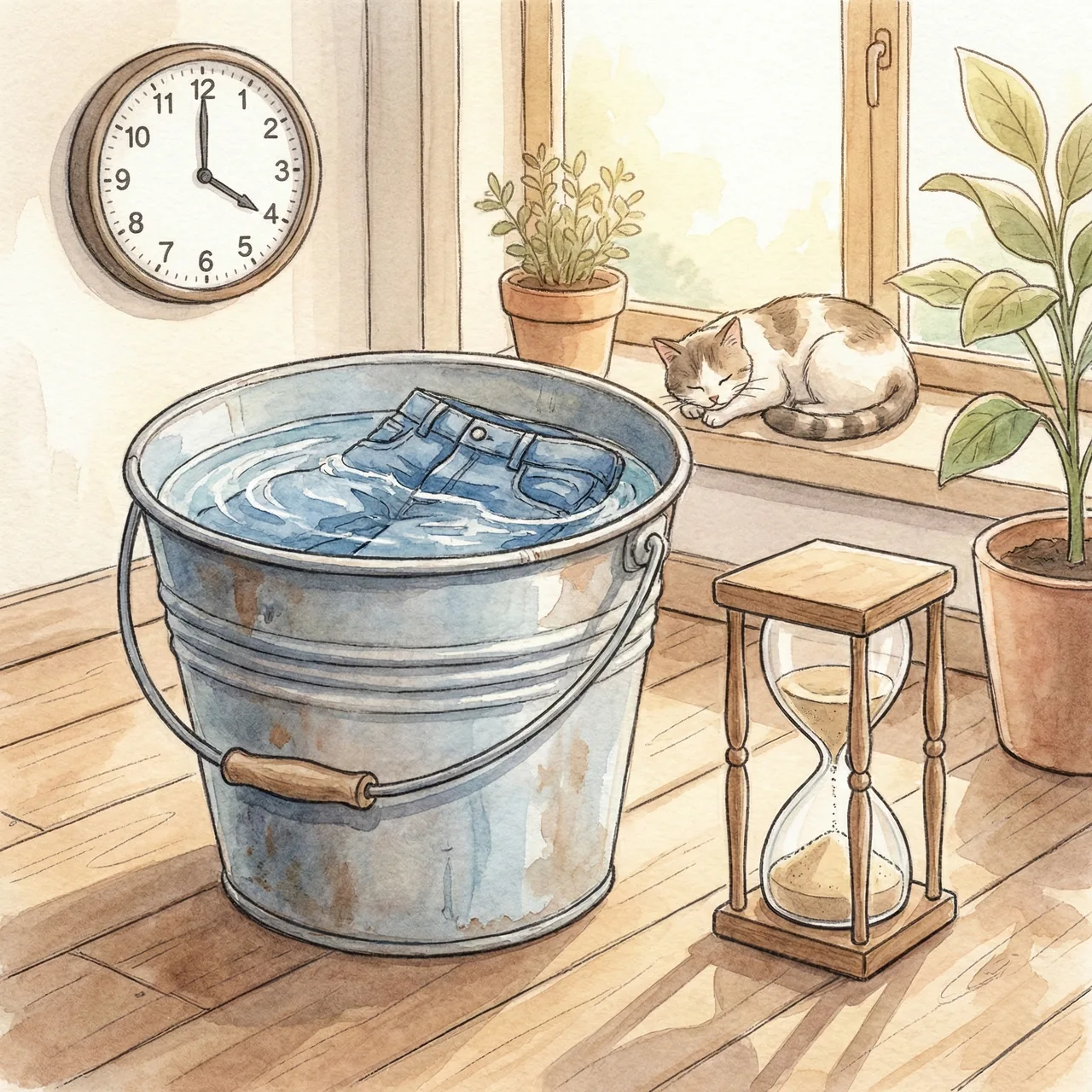
Step 3: Soak for 15–20 minutes
Leave undisturbed for 15–20 minutes.
During this time, the surfactants in the detergent penetrate deep into the fibers and begin breaking down and lifting body oils.
※ Soaking for more than 1 hour risks excessive indigo bleed and permanent creasing — don't overdo it.
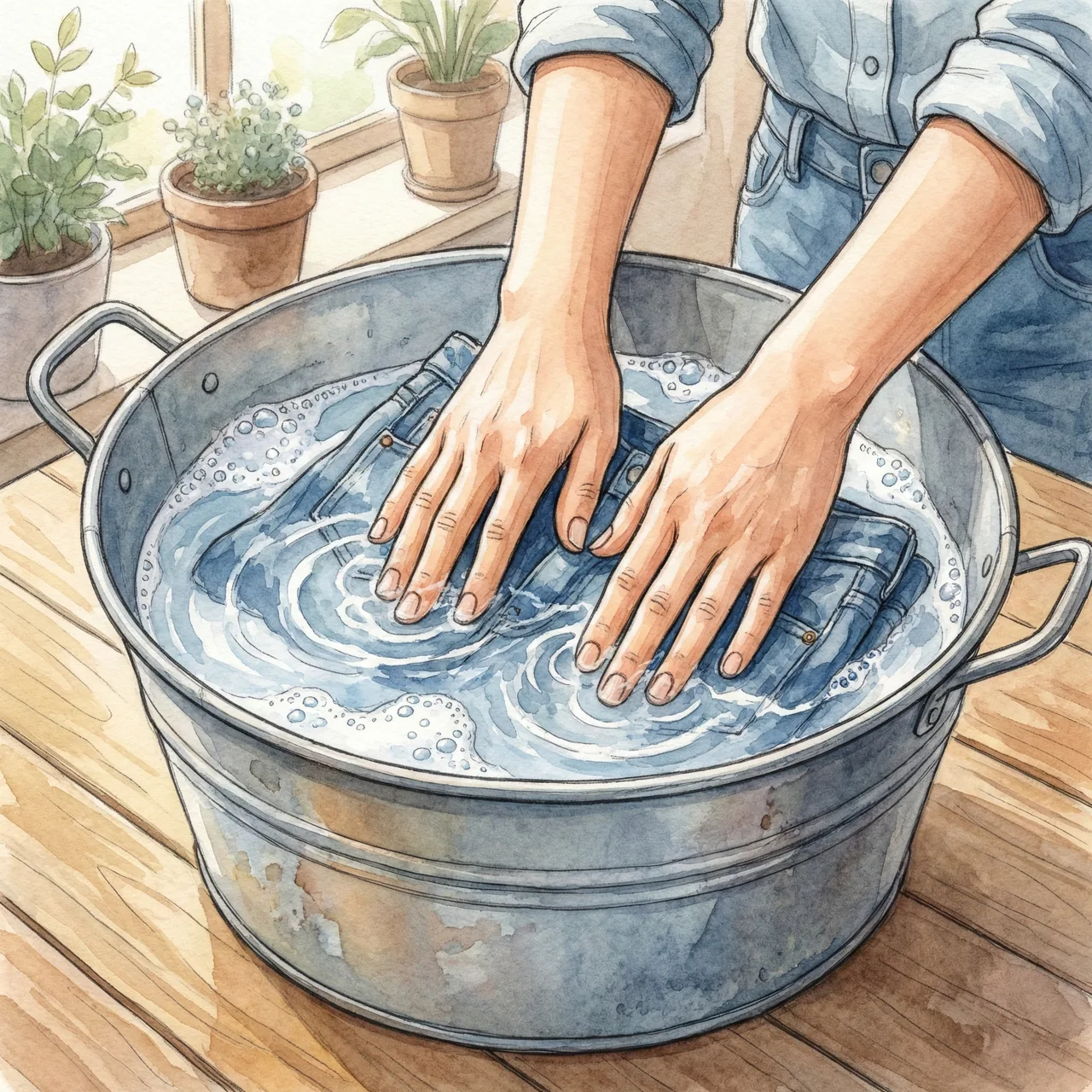
Step 4: Gentle pressing — no rubbing
This is the most important part of hand washing.
Never rub the fabric together or wring it.
Instead, press both hands straight down into the fabric, then release. Repeat steadily.
Think of it as pushing water through the weave to carry dirt out of the fibers. When the water turns murky, the dirt is coming out.
Step 5: Rinse until no foam remains
Discard the dirty water and refill the bucket with clean water.
Press-rinse using the same motion as Step 4.
Change the water 2–3 times until suds are completely gone.
※ For extra color protection, add a small splash of vinegar to the final rinse water.
Step 6: Spin in the washing machine for 1 minute
Wringing by hand distorts the shape.
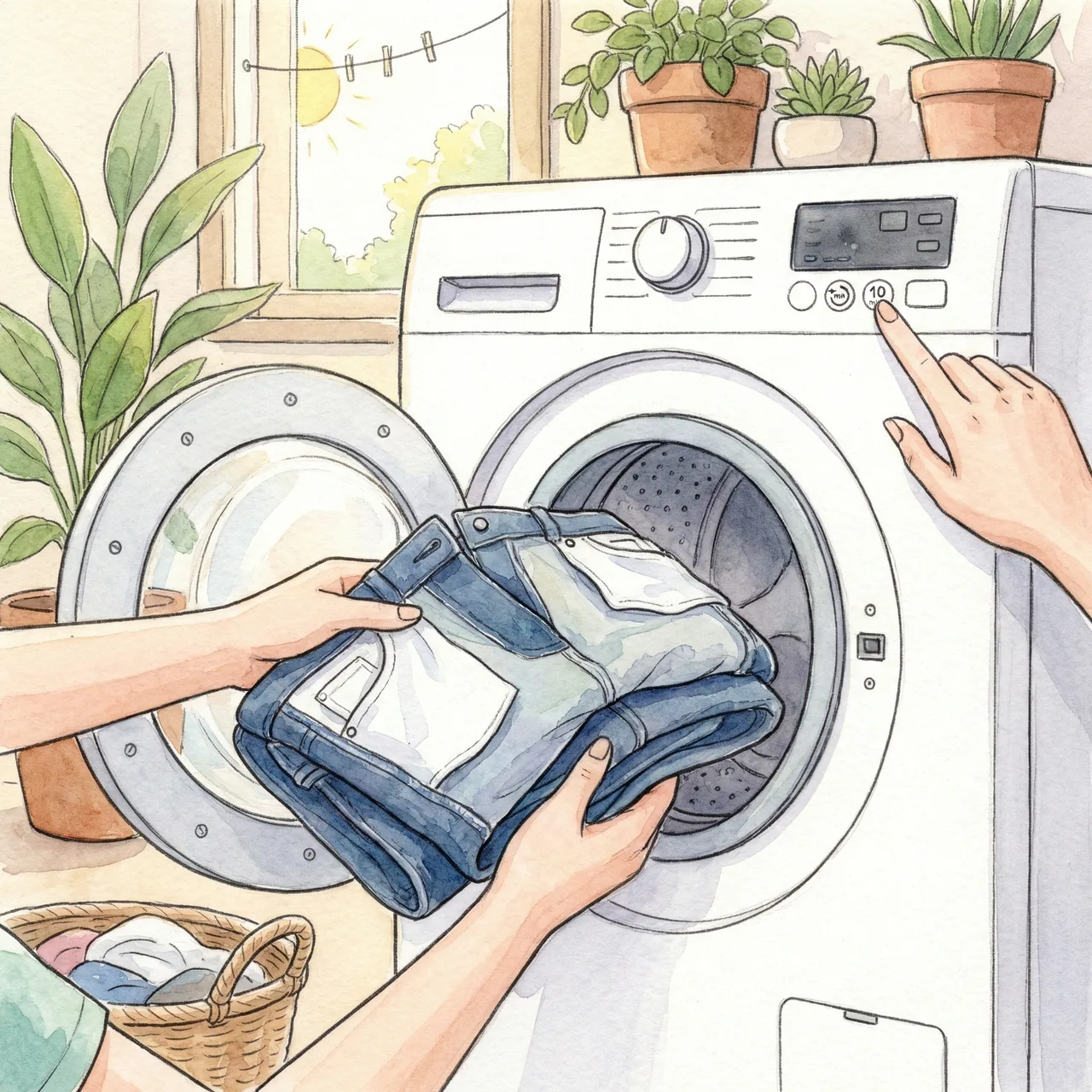
Transfer the jeans to your washing machine (placing them in a laundry net is safer), then run the spin-only cycle for exactly 1 minute.
Once the jeans have stopped dripping, take them out immediately and hang them to dry.
6. Drying Without Distortion: Upside-Down and Tube Drying
Freshly washed denim is heavy. How you hang it determines whether it dries perfectly shaped or permanently distorted.
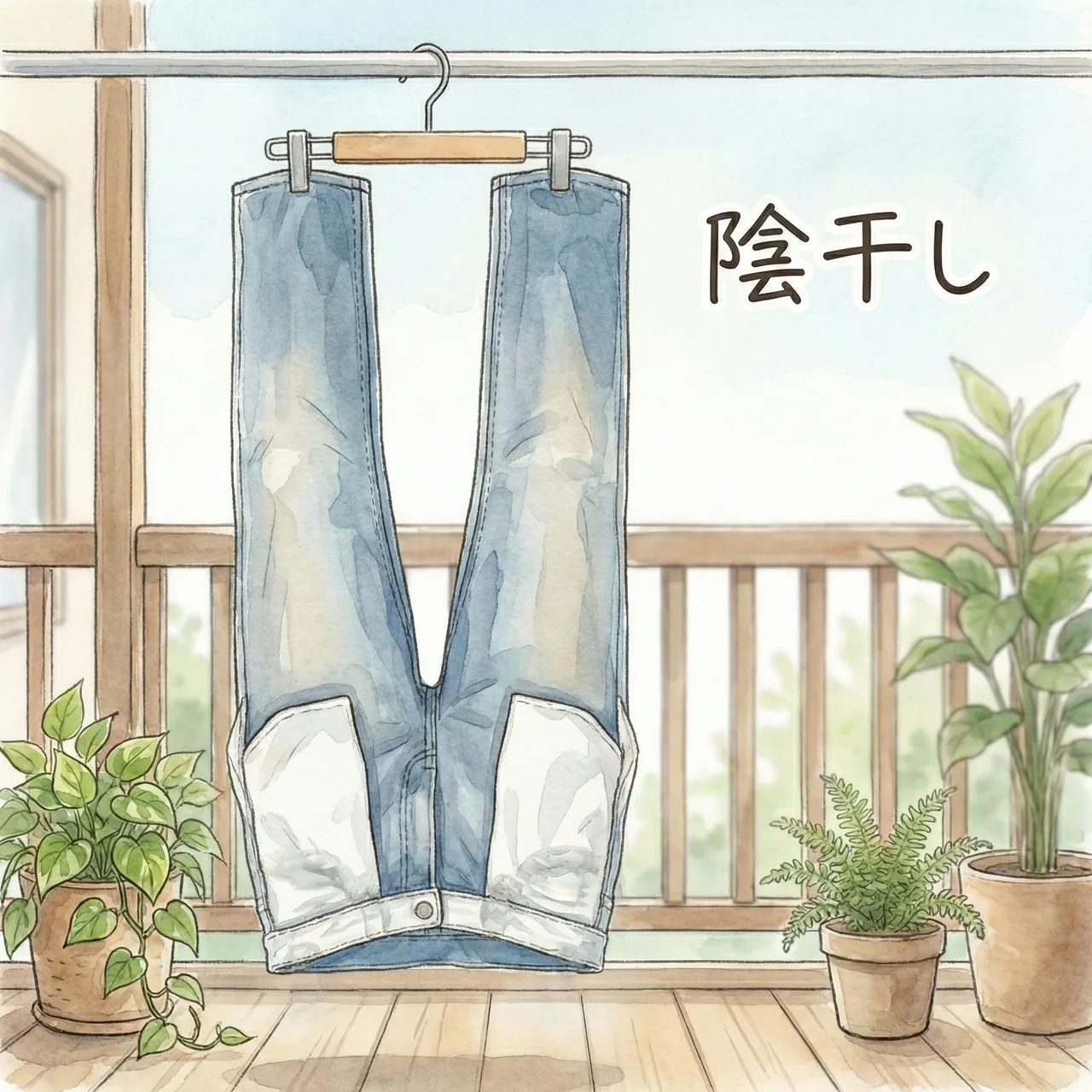
No direct sunlight — shade and airflow only
Line drying in full sun might feel satisfying, but UV rays cause indigo to yellow and the fabric to break down over time.
Always choose a shaded, well-ventilated spot.
Pro techniques: upside-down drying and tube drying
● Upside-down drying:
Instead of clipping the waistband, clip the cuffs (ankle hem) with clothespins and hang the jeans inverted.
The weight of the waistband pulls the fabric downward, naturally smoothing out wrinkles and counteracting shrinkage.
● Tube drying:
Hang the jeans so the legs form open tubes rather than lying flat against each other.
Air flows through both legs simultaneously, drying faster and preventing musty odors from forming inside the fabric.
Frequently Asked Questions
Can I wash jeans with the rest of my laundry?
Absolutely not.
Dark indigo jeans bleed far more than you'd expect.
White t-shirts or light-colored towels washed in the same load will come out tinted pale blue.
Always wash jeans alone or only with other deep-colored garments that can handle picking up some dye.
Can I use a tumble dryer?
Generally, no.
The heat from a dryer rapidly shrinks denim — you can lose 3–5 cm (1–2 inches) or more in length, and leather back patches can harden, crack, or peel from the heat.
The one exception is deliberately shrinking an oversized pair. Otherwise, always air dry.
I bought non-washed (rigid) jeans — do I need to wash them first?
Yes — a "first wash" is strongly recommended.
New raw denim contains starch sizing that stiffens the fabric. Wearing without washing can cause the fabric to crease at stress points and eventually tear.
1. Soak in warm water (40–50°C / 104–122°F) for about 1 hour to dissolve the sizing.
2. Rinse and spin in the washing machine.
This "first wash" ritual sets the final size and begins the process of the jeans conforming to your body.
How do I handle a spot stain (food spills, etc.)?
Spot-treat without washing the whole pair.
If ramen broth or sauce has splashed onto the fabric, dampen only that area, apply a small amount of bar soap or neutral detergent, and gently pinch-wash with your fingers.
Running the full pair through the machine for a single stain accelerates overall fading — keep it local whenever you can.
Final Thoughts: Wash with Care, Build Your Own Vintage

Washing your jeans isn't just about removing dirt — it's a step that resets the fabric and prepares it for the next round of beautiful, natural fading.
Inside out. No optical brighteners. Shade drying.
Get these three fundamentals right, and there's nothing to be afraid of.
Wash consistently, keep your denim clean, and let the fades develop at their own pace — into something that's entirely yours.