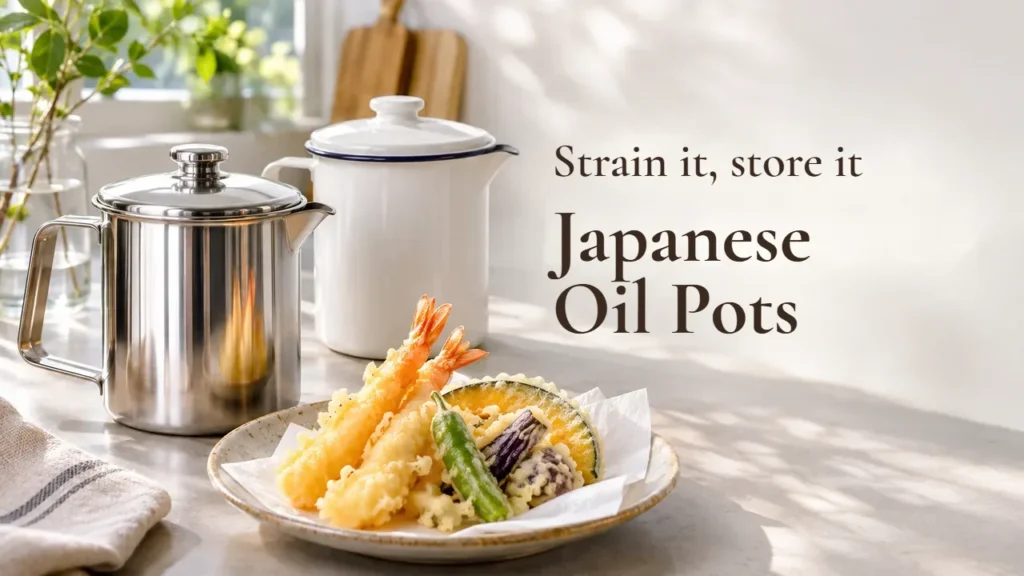
After deep-frying, does the oil have to go? Not if you strain it and store it well.
One reason frying oil spoils is what is left in it: crumbs of batter and other bits. Strain them out with an oil pot, keep the oil away from light and air, and you can use it again for stir-frying or the next batch of frying. In Japan, where tempura and karaage are everyday home cooking, the oil pot (abura-koshi, "oil strainer") is a standard kitchen tool. The thing to look at is what it strains with: activated carbon catches fine particles and odors too, while a mesh screen simply removes the bits.
This guide covers five made-in-Japan oil pots you can buy on Amazon.com: Noda Horo's enamel Rokapo, Takagi Metal's small carbon pot, Arnest of Tsubame, plus stainless pots from Yoshikawa and Wahei Freiz. Then how to store oil and when to replace it.
Quick Reference: Japanese Oil Pots at a Glance
| Oil pot | Material, size | What stands out | Best for |
|---|---|---|---|
| Activated carbon filter | |||
| Noda Horo Rokapo ▾ | Enamel, filters 800 ml at once | Doesn't take on oil smells | Regular deep-frying |
| Takagi Metal KWPS-0.55 ▾ | Fluorine-coated, 0.55 L | Small, with an anti-oxidation sheet | Shallow-frying for one or two |
| Stainless, no cartridges | |||
| Arnest Mini Oil Pot ▾ | Tsubame stainless, 600 ml | Drip-resistant spout | Everyday use, no cartridges |
| Wahei Freiz Ajido AD-540 ▾ | Stainless, 1.1 L | Room for a full pot of oil | Families who fry often |
| Yoshikawa Cooking Iroha Mini ▾ | Stainless, 300 ml | Tiny footprint | Small kitchens, seasoning oil |
Tap a name to jump to its review.
1. Why Japanese: Frying at Home, Every Week
Tempura, karaage, tonkatsu and croquettes are everyday home cooking in Japan, so Japanese kitchens have long had a container for the oil afterward. The makers below build them the way they build cookware: Noda Horo, an enamelware maker founded in 1934, in glassy white enamel; the metalworkers of Tsubame-Sanjo in Niigata, Japan's metal-goods town, in seamless stainless with spouts shaped not to drip.
The idea is simple and thrifty: strain, store away from light, use the oil for a stir-fry or the next round of frying, top up with fresh oil, and replace it when it shows the signs in section 6.
2. Choose by What It Strains With
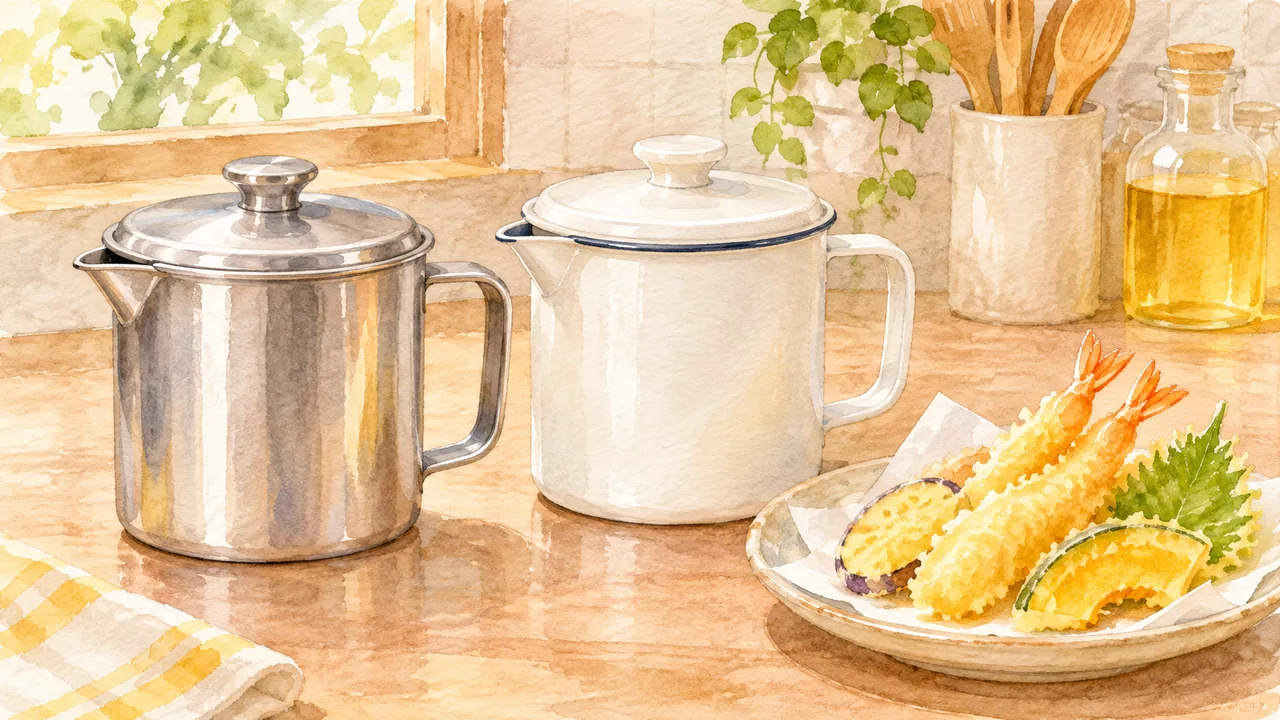
Leftover crumbs make oil spoil faster
Oil slowly deteriorates as it reacts with oxygen. According to the Saitama City Institute of Health Science and Research, that oxidation speeds up when oil is heated for a long time, left in the sun, or mixed with impurities. After frying, the oil is full of batter crumbs. Straining them out is the step that makes oil last.
Activated carbon or mesh
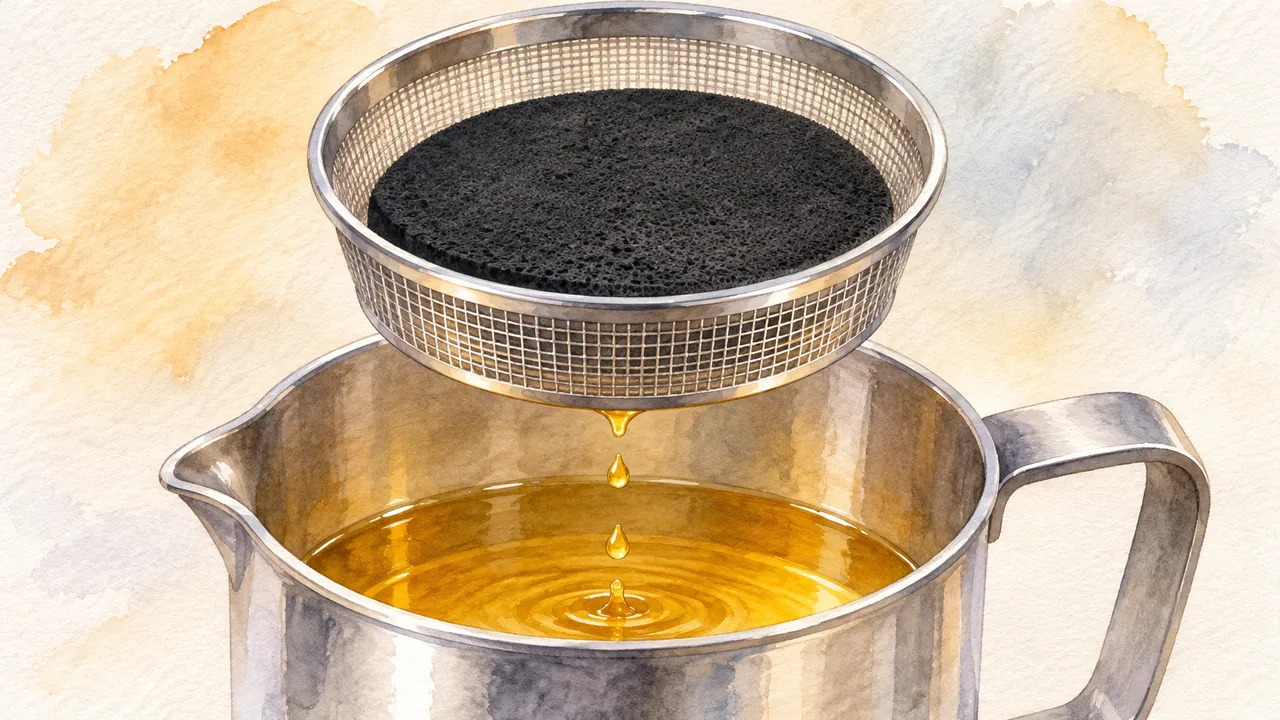
Carbon-filter pots catch the crumbs on a screen, then pass the oil through an activated carbon cartridge or sheet that takes out fine particles and odors. Good if you want cleaner oil, but the cartridges are consumables you replace every so often.
Mesh pots catch the crumbs on a stainless screen. No parts to replace and everything washes; fine particles and odors stay in the oil, though.
3. Activated Carbon: Particles and Odors Too
Noda Horo Rokapo NOL-800: filters 800 ml at once, in white enamel
An enamel oil pot from Noda Horo, founded in 1934. Its big selling point is a filter that takes 800 ml of oil in one go, so you don't strain in batches. An activated carbon cartridge removes particles and smells, and lasts about 10 to 15 uses.
Enamel has a glassy surface, so the oil's quality and flavor change less and smells don't cling. Oil wipes off with a paper towel. Turn the lid upside down and it holds the filter unit, so nothing drips on the counter.
Noda Horo Rokapo Enamel Oil Pot NOL-800
Loading product details…
Takagi Metal Activated Carbon Oil Pot 0.55 L: small, with an anti-oxidation sheet
A small pot that strains with a "double" sheet: activated carbon plus an agent that slows oxidation. The sheet removes impurities, odor and color from used oil and helps keep it from oxidizing, so you throw away less.
It measures 13.8 x 10.3 x 11.7 cm and holds 0.55 L. The fluorine-coated body resists stuck-on oil and is easy to clean. Right for anyone who mostly shallow-fries or fries for one or two.
Takagi Metal Fluorine-Coated Activated Carbon Oil Pot 0.55 L KWPS-0.55
Loading product details…
4. Stainless Pots: Simple and Refill-Free
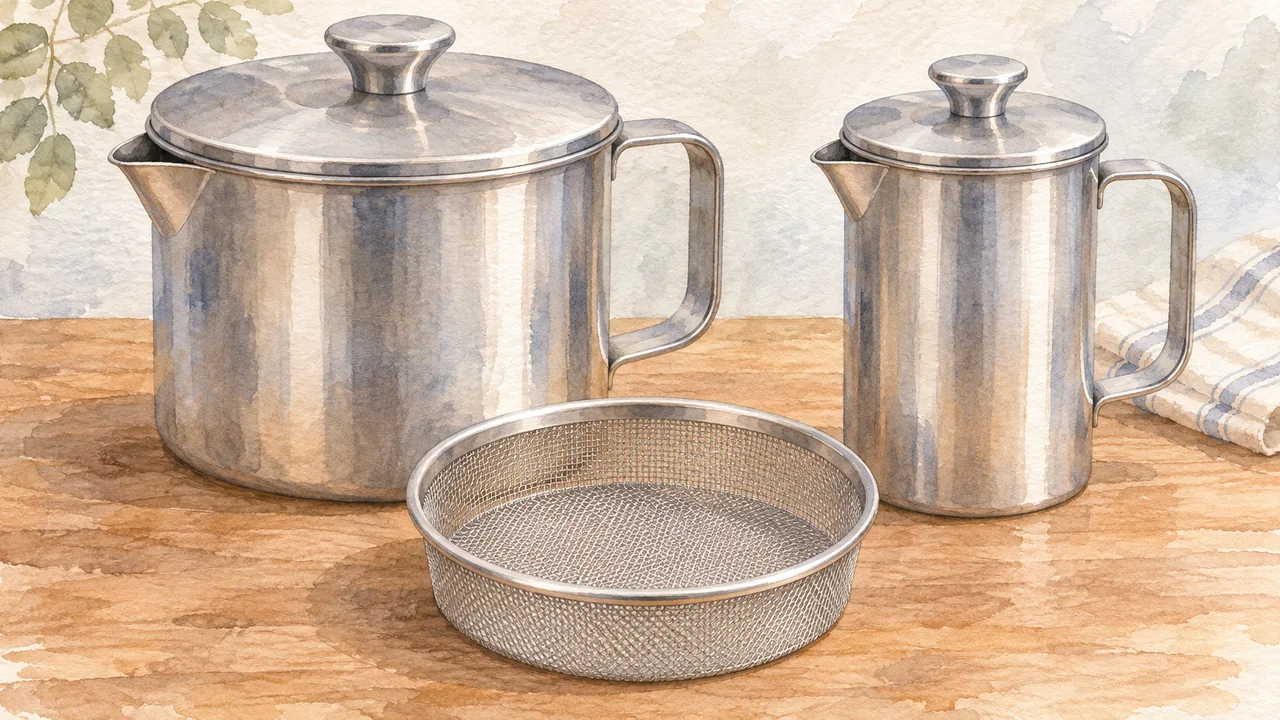
A stainless oil pot without cartridges is simple, so how well the body is made is what makes it pleasant to use: whether the spout drips, whether the lid sits well, how easily it cleans.
Arnest Mini Oil Pot A-77105: Tsubame stainless, drip-resistant
A small stainless oil pot from Arnest of Tsubame, Niigata. About 600 ml, with a spout shaped to resist drips and a mesh screen to catch crumbs. Small enough to live next to the stove. In Japan, Arnest also makes a larger carbon-filter version, For-Abura 900.
Arnest Mini Oil Pot A-77105, Stainless, 600 ml
Loading product details…
Wahei Freiz Ajido AD-540: 1.1 liters of stainless
A 1.1 L stainless oil pot from Wahei Freiz of Tsubame-Sanjo, big enough for the oil from a full pot of frying. No cartridges to replace; made in Japan.
Wahei Freiz Ajido Stainless Oil Pot AD-540, 1.1 L
Loading product details…
Yoshikawa Cooking Iroha Mini Oil Pot: 300 ml for tight spaces
A tiny stainless oil pot from Yoshikawa of Tsubame-Sanjo. At 300 ml it fits in a corner and suits the small amount of oil left from shallow-frying, or oil kept for seasoning an iron pan. Stainless keeps light off the stored oil.
Yoshikawa Cooking Iroha Mini Oil Pot YJ2786, 300 ml
Loading product details…
5. How to Store Frying Oil
Keep out light, heat and air
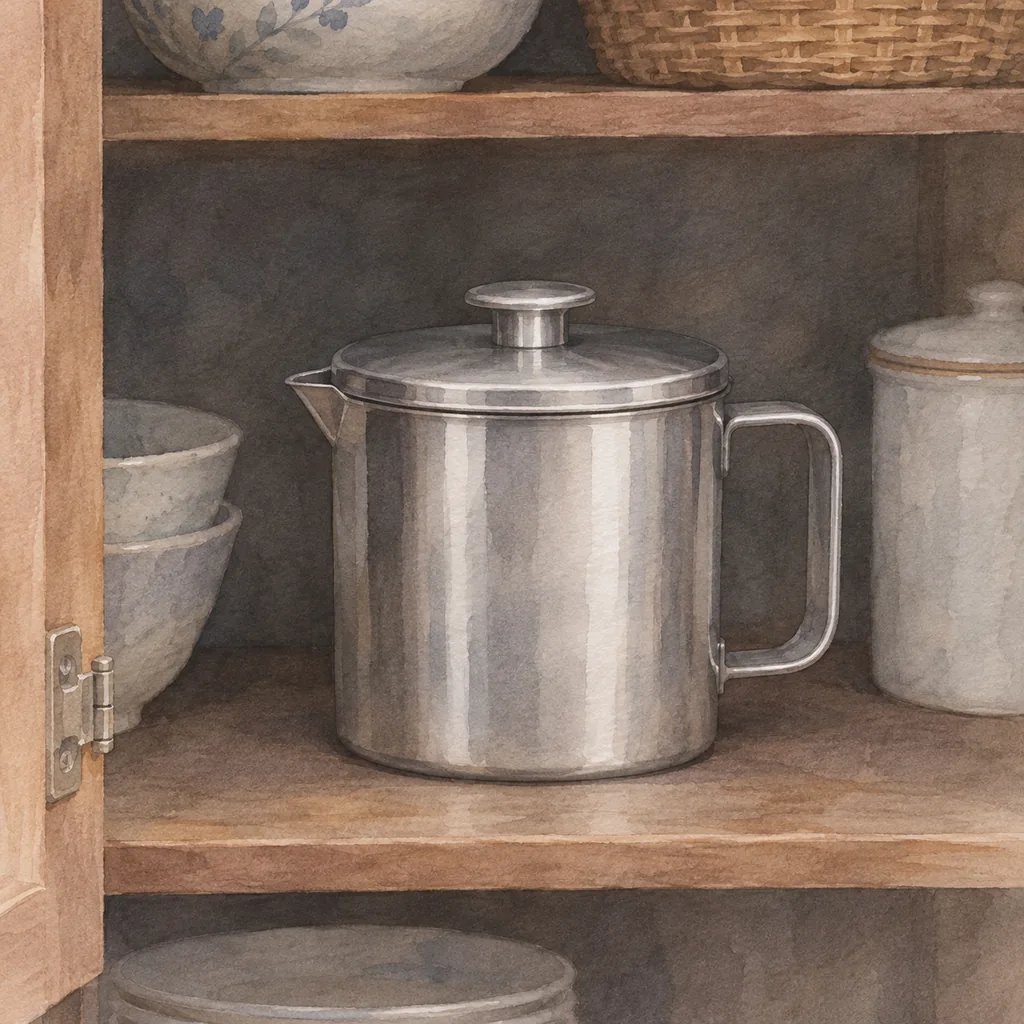
What spoils oil is light, high temperature and humidity, air and impurities. Keep strained oil in a lidded pot, somewhere cool and out of direct sun and fluorescent light.
Strain it once it has cooled a little, taking care not to burn yourself. With carbon cartridges, wait until the oil is below the temperature the maker specifies.
Use strained oil for stir-frying first
Use strained oil a little at a time for stir-fries and shallow-frying, topping up with fresh oil as it goes down, and none of it goes to waste.
6. When to Replace the Oil
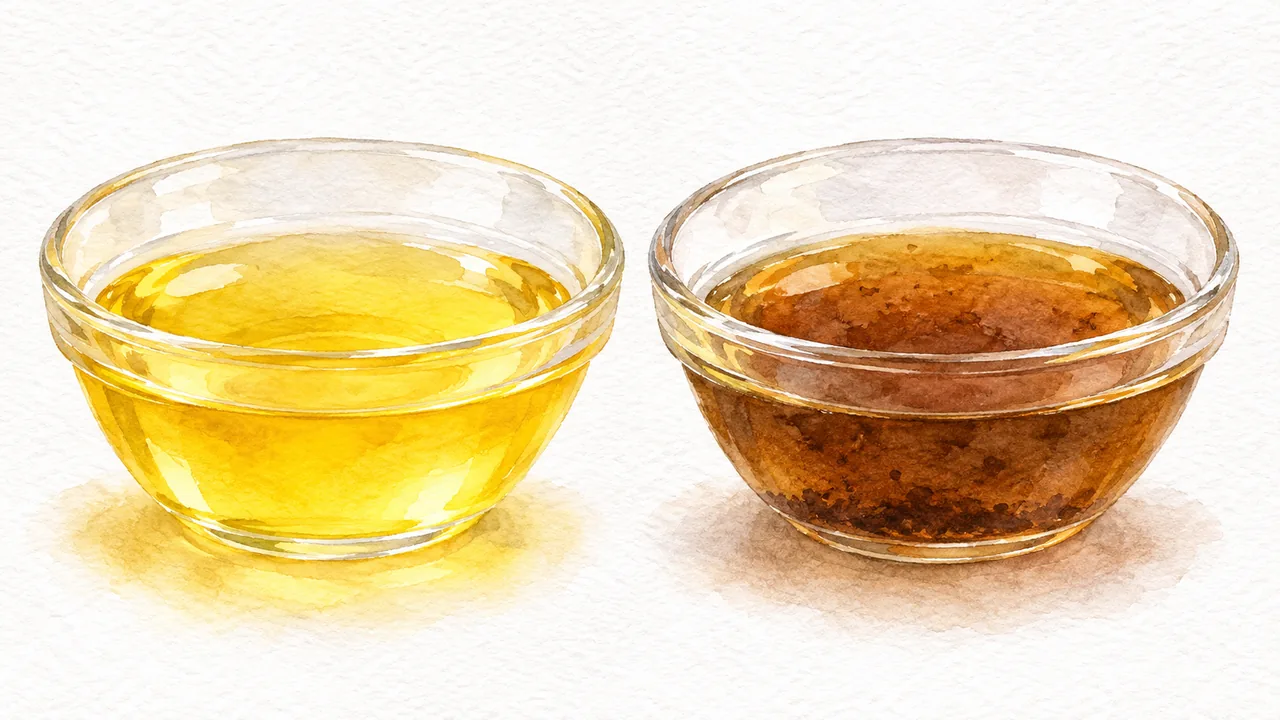
Even strained and stored, oil deteriorates a little with each use. The Saitama City institute lists these signs:
- The color darkens.
- It smells unpleasant when heated.
- Foam lingers. Fresh oil's bubbles vanish quickly; tired oil throws up fine foam that doesn't go away.
- It turns sticky as it cools.
If any of these apply, switch to fresh oil. An oil pot isn't for stretching oil forever; it's for using it up while it still tastes good.
7. Frequently Asked Questions
Activated carbon or mesh: which is better?
Carbon if you want cleaner oil and fewer smells; mesh if you want simplicity and nothing to replace. Carbon takes out fine particles and odors, but its cartridges are consumables. Mesh only catches the crumbs, but it lasts and washes easily.
Stainless or enamel?
Enamel resists smells and wipes clean; stainless is tough and blocks light completely. Noda Horo's Rokapo is enamel; Arnest, Wahei Freiz and Yoshikawa are stainless.
How often do carbon cartridges need replacing?
Follow each maker's guide. Noda Horo's Rokapo cartridge is rated for about 10 to 15 uses. Replacement cartridges and sheets are sold separately.
Can I strain the oil while it's hot?
Let it cool somewhat first to avoid burns. Carbon-filter pots have a maximum oil temperature; check it.
What size for one or two people?
A small pot of about 0.3 to 0.6 L. Takagi Metal's 0.55 L, Arnest's 600 ml mini or Yoshikawa's 300 ml fit a small kitchen. If you deep-fry a full pot for a family, look at Noda Horo's Rokapo or the 1.1 L Wahei Freiz.
Where should I keep strained oil?
Somewhere cool and dark, out of direct sun and fluorescent light, with the lid on. Not right beside the stove, where it gets hot.
8. Final Thoughts: Use Your Oil to the Last Good Drop
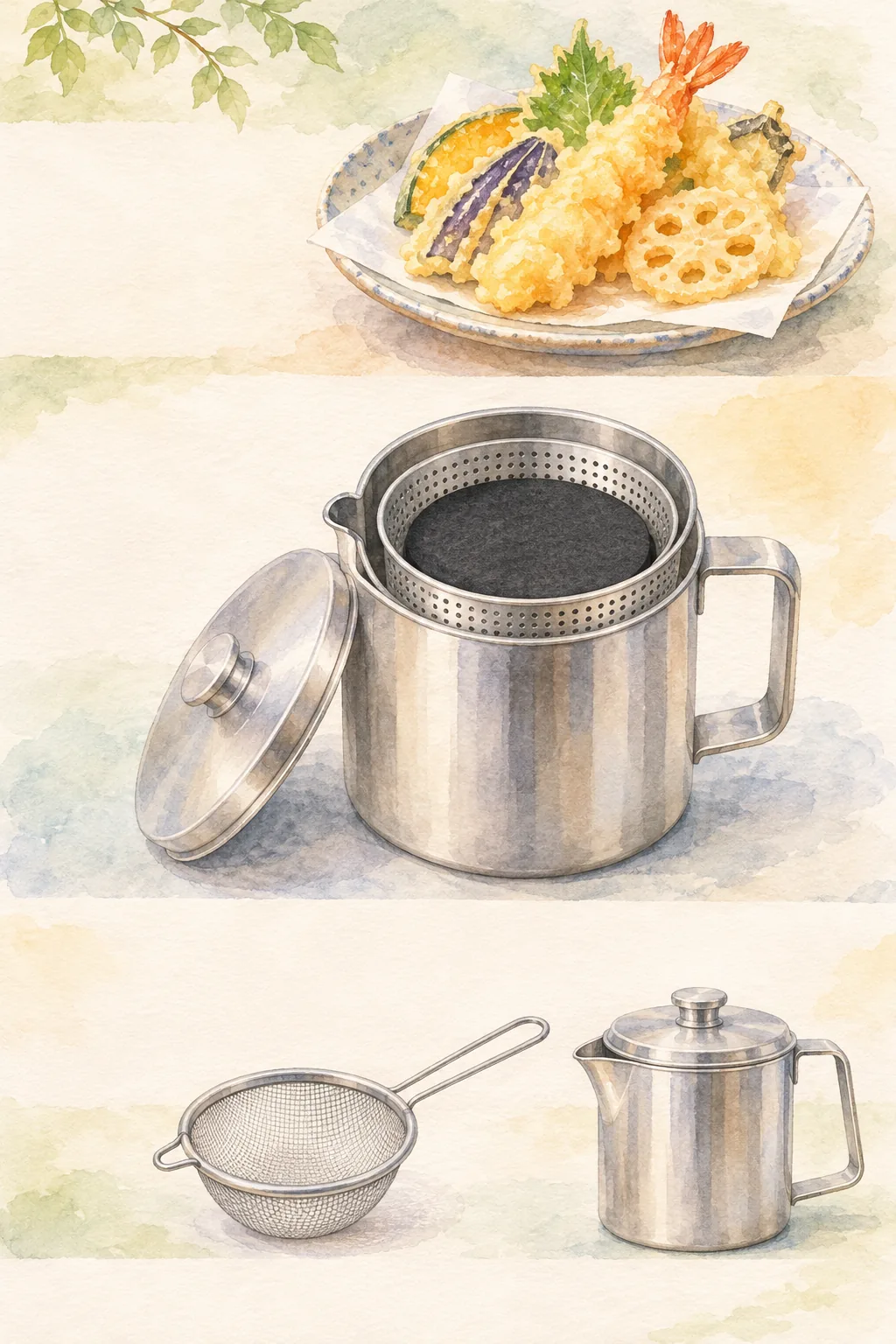
An oil pot is chosen by what it strains with.
Noda Horo's enamel Rokapo that filters 800 ml at once, and Takagi Metal's small pot with a carbon sheet. Arnest's drip-resistant Tsubame stainless, Wahei Freiz's roomy 1.1 L and Yoshikawa's tiny 300 ml. All made in Japan, for kitchens that fry at home.
Strain, store in the dark, and use it up while it's good.
Tempura Pot: 7 Japanese Deep-Frying Pots That Hold Heat
Japanese Woks: Yamada Hand-Hammered Iron and 9 More