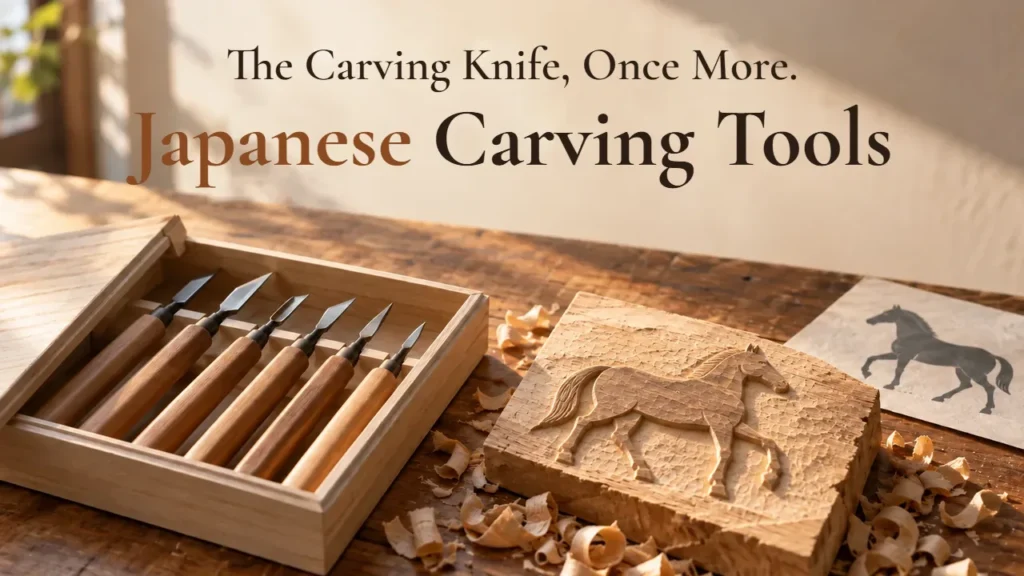
Many people in Japan first hold a carving chisel at school — and it makes a fine tool to come back to as an adult. Woodcarving, woodblock printing for New Year cards, carving a wooden spoon: the same small tools, chosen again as real tools.
Japan has two great towns for these blades. In Seki, Gifu, Yoshiharu makes the carving chisels many Japanese schoolchildren use. In Miki, Hyogo, Michi Hamono specialises in chisels of high-speed steel, used by professional Buddhist sculptors and mask carvers. This guide explains the four basic blade shapes and which tools suit carving, printmaking and spoons.
Quick Reference: Which Carving Tools?
| To carve… | Choose | Made in |
|---|---|---|
| A first try | Yoshiharu Sanyu set ▾ | Seki, Gifu |
| Woodcarving, for the long run | Michi Hamono HSS chisels ▾ | Miki, Hyogo |
| Woodblock prints | Michi Hamono print-cutting tools ▾ | Miki, Hyogo |
| Wooden spoons | Michi Hamono extra-shallow gouge ▾ | Miki, Hyogo |
1. Why Japanese: Four Shapes, Two Blade Towns
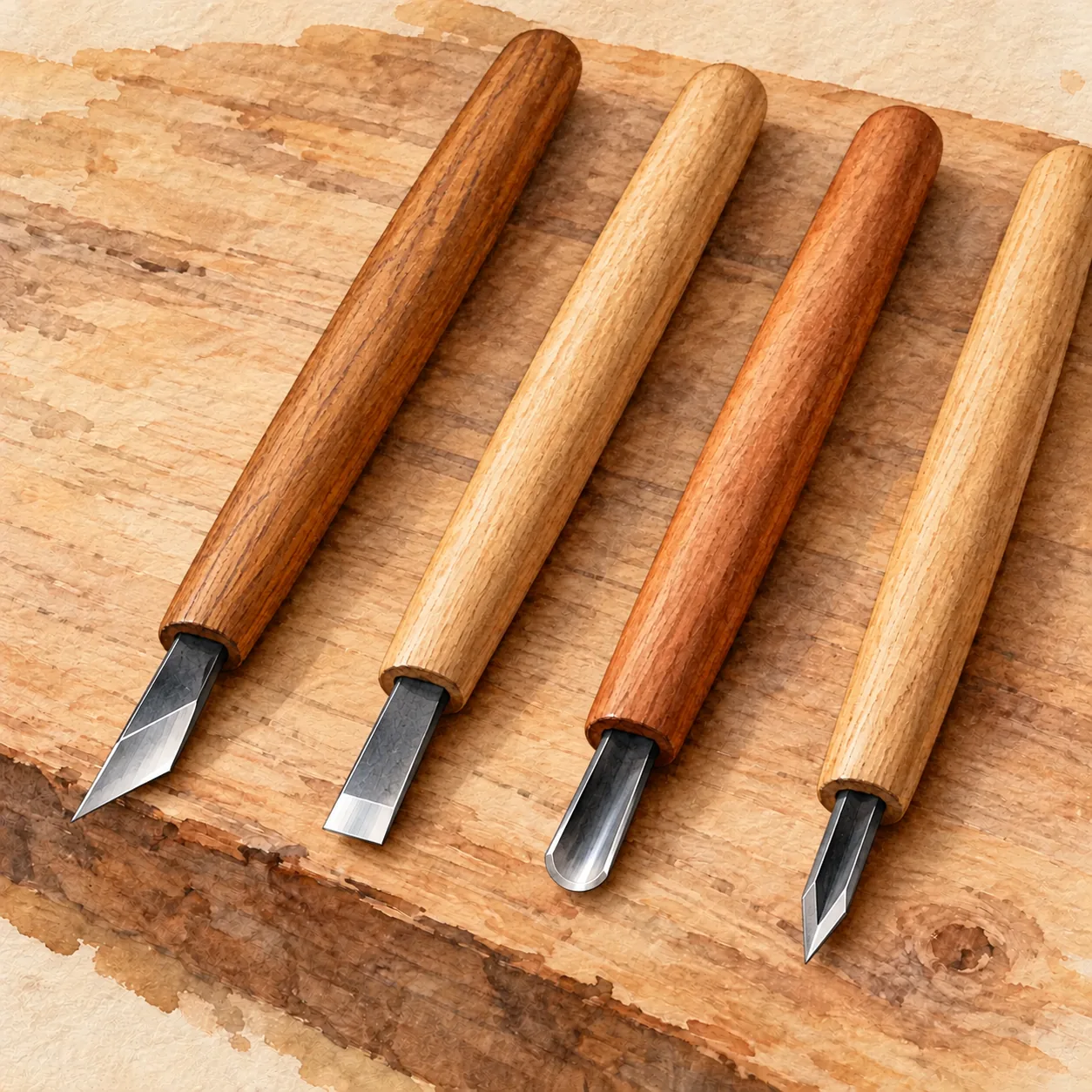
Intō, hiratō, marutō, sankakutō
Japanese carving chisels come in four basic shapes. Michi Hamono's beginner guide sets them out:
- Intō — a skewed knife edge for cutting in and shaving surfaces.
- Hiratō — a flat chisel.
- Marutō — a round gouge.
- Sankakutō — a V-tool, with a basic angle of 60 degrees.
For a beginner, Michi Hamono suggests three: a flat chisel, a knife and a round gouge, around 6 or 9 mm.
2. The School Chisel: Yoshiharu of Seki
Founded in Kyoto, moved to the blade town of Seki
Yoshiharu Hamono was founded in Kyoto more than a hundred years ago and moved to Seki, Gifu — Japan's knife town — about eighty years ago, according to Seki's open-factory programme. It is described there as Japan's number-one maker of carving chisels by market share.
At its Seki factory, the blades are punched from metal sheet, pressed, hardened in the fire, sharpened on whetstones, buffed to remove the burr and polished, then fitted to their handles and inspected. Its Sanyu sets are semi-professional: 180 mm handles and two-layer blades of high-tungsten chrome steel, with knives, flat chisels, round gouges and a V-tool in a range of widths — including a left-handed knife.
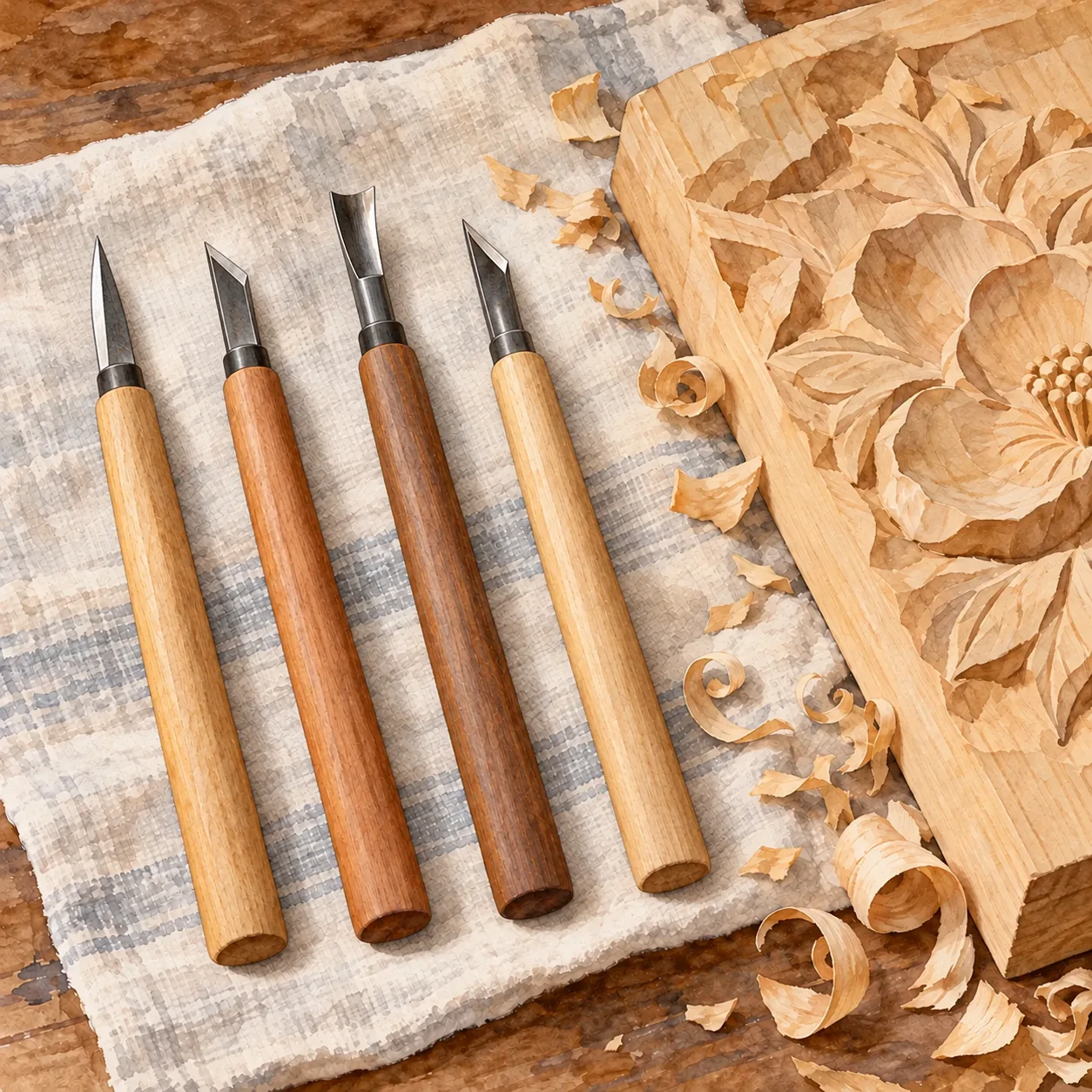
Yoshiharu Sanyu carving chisels, set of 5
The first set to try. Made by the Seki maker of Japan's school chisels, in the semi-professional Sanyu line.
Yoshiharu Sanyu Carving Chisels, Set of 5
Loading product details…
Yoshiharu Sanyu carving chisels, set of 7
Two more shapes for more detailed work. A good set once you know you'll keep carving.
Yoshiharu Sanyu Carving Chisels, Set of 7
Loading product details…
3. For Adult Woodcarving: High-Speed Steel From Miki
The blade Buddhist sculptors use
Michi Hamono makes carving chisels in Miki, Hyogo, another of Japan's blade towns. It specialises in high-speed steel (HSS), which it says holds its edge longer than ordinary steel — hard and tough, resistant to chipping — and each one is finished by a craftsperson to a perfect edge. Its history records chisel-making from 1977 and high-speed-steel chisels from 1982.
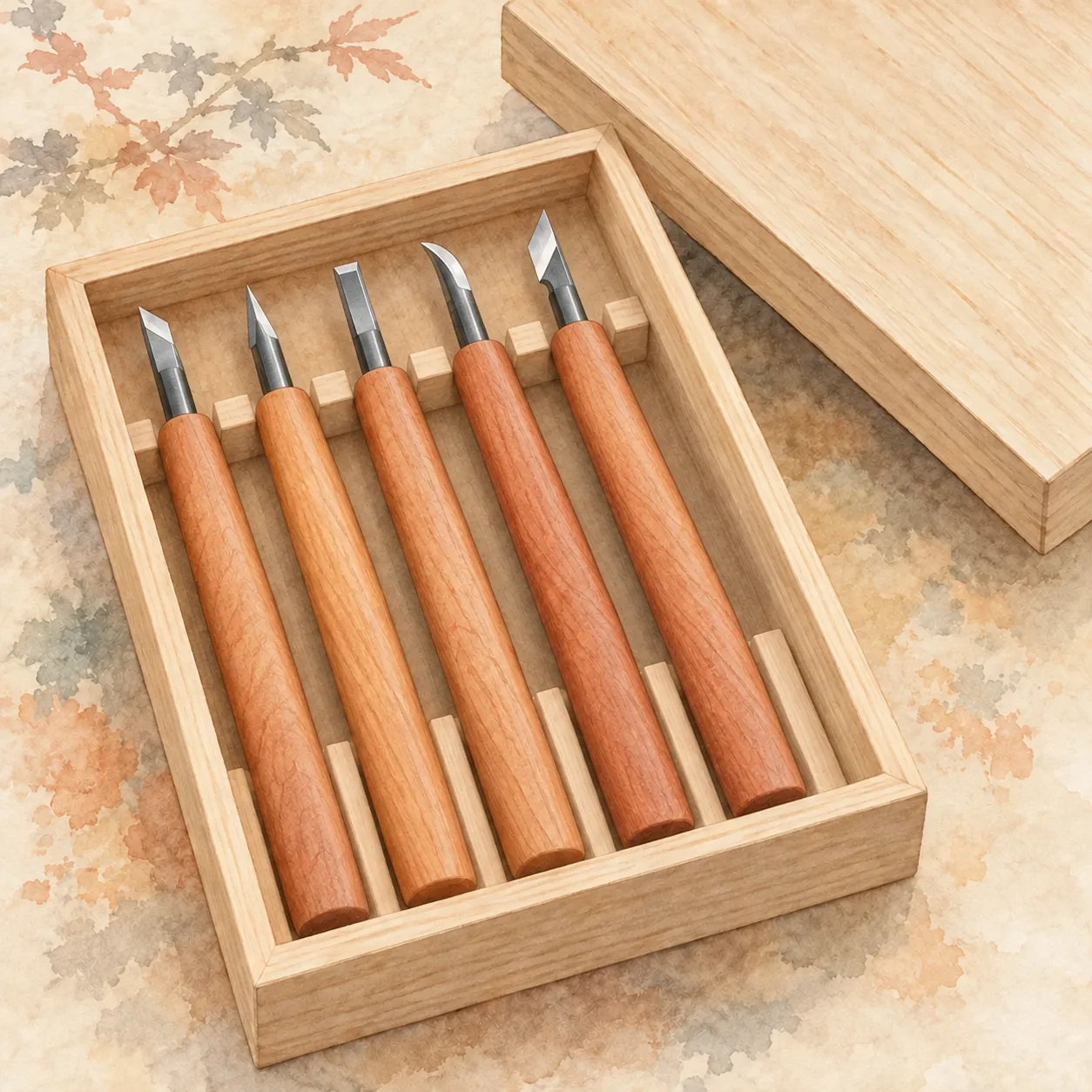
Its users range from professional Buddhist sculptors, Noh mask carvers and Kamakura-bori lacquer carvers to seal engravers, rubber-stamp carvers, leatherworkers, figure sculptors and instrument makers — and, it says, it draws attention from overseas as well as in Japan. Its five-chisel set in a paulownia box has cherry handles and blade caps.
4. For Woodblock Prints: Print-Cutting Tools
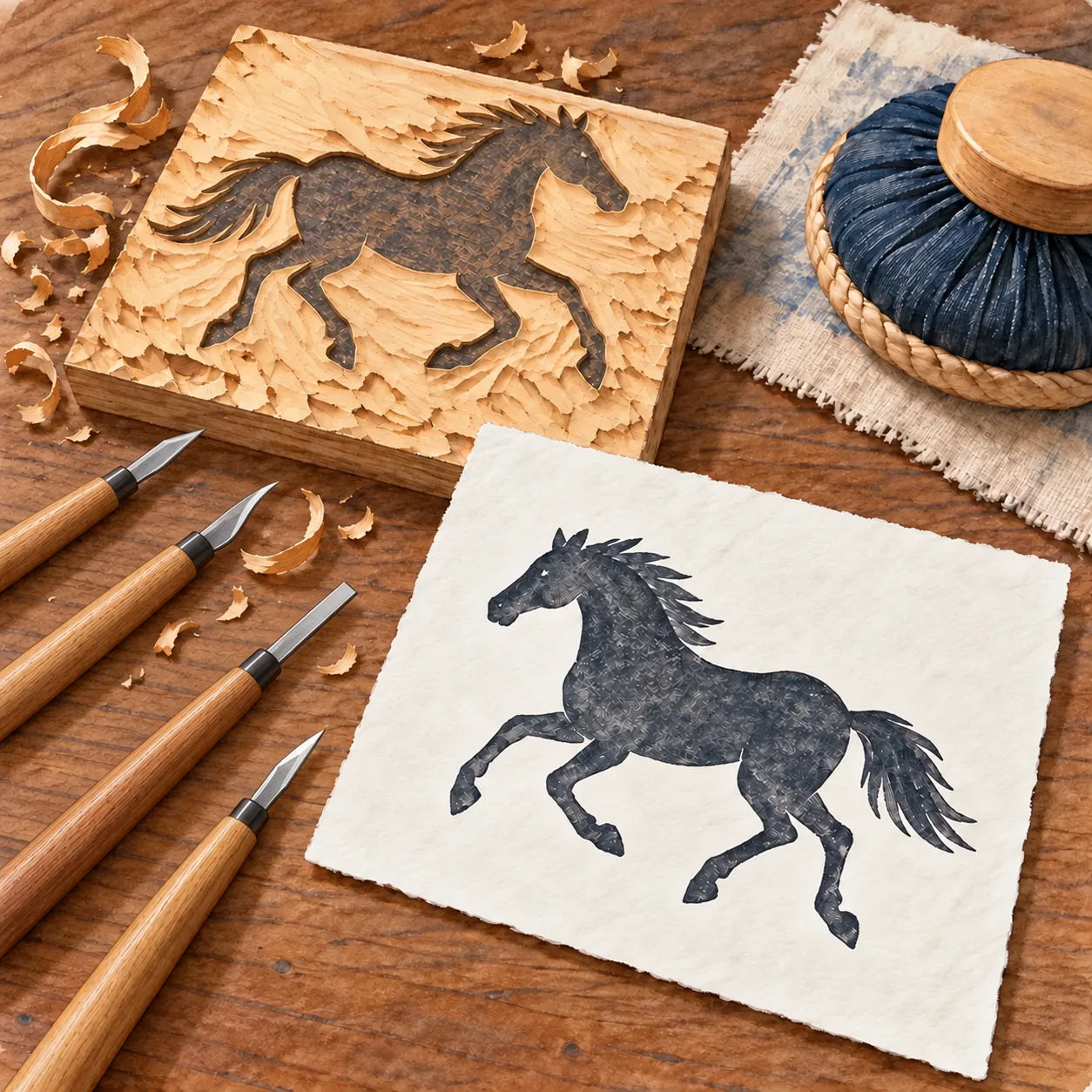
Some people in Japan still carve woodblocks to print their New Year cards. Michi Hamono began making print-cutting tools (hangatō) in 1984. Its seven-tool set uses SKH-51 high-speed steel suited to plywood such as shina (linden) plywood; you can slide the handle to adjust how far the blade protrudes. The HSS layer is thin, laminated to very soft iron, so it can be sharpened like any edged tool. Overall length is 130 mm, and the smallest sizes are slim and break easily — handle them gently.
5. For Carving Wooden Spoons
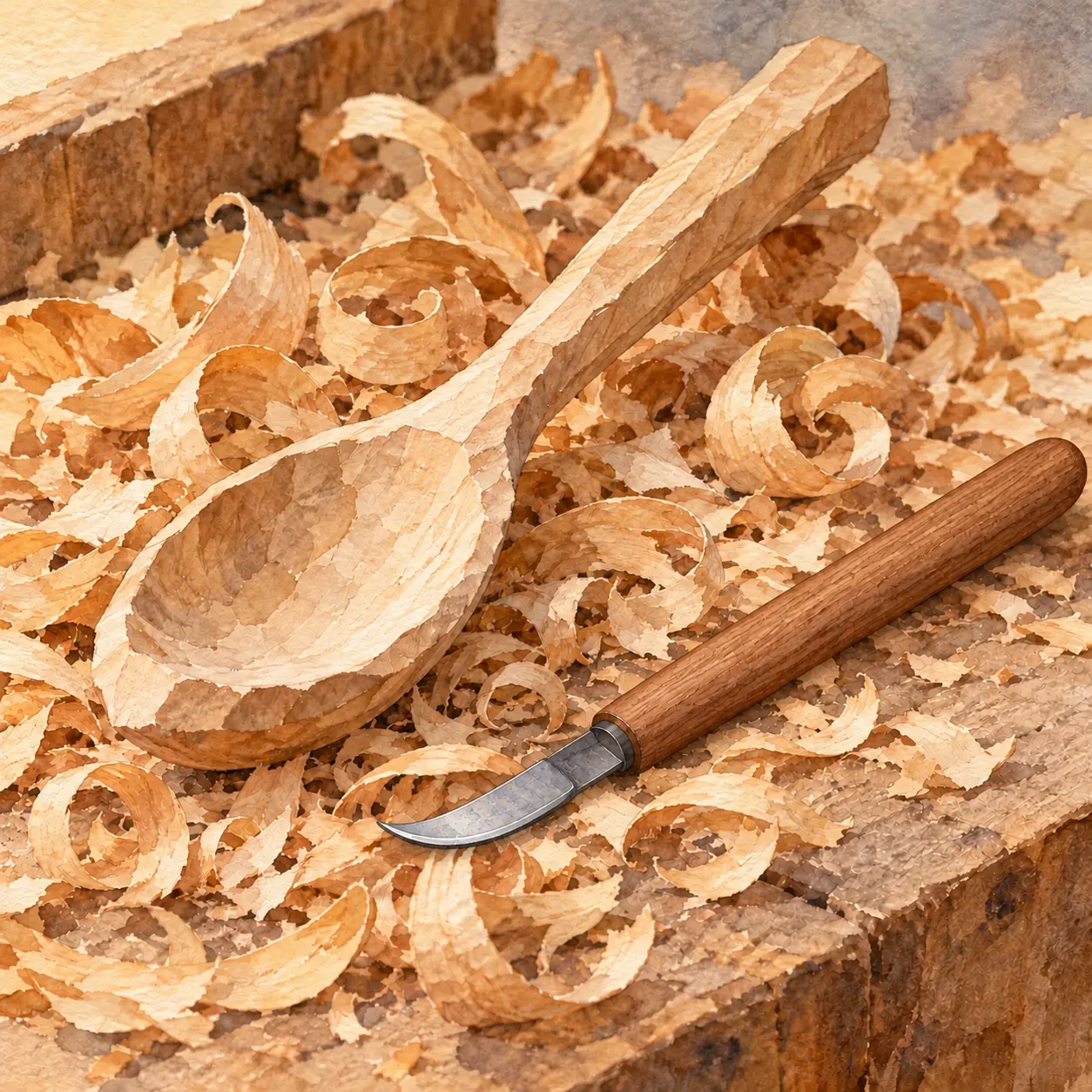
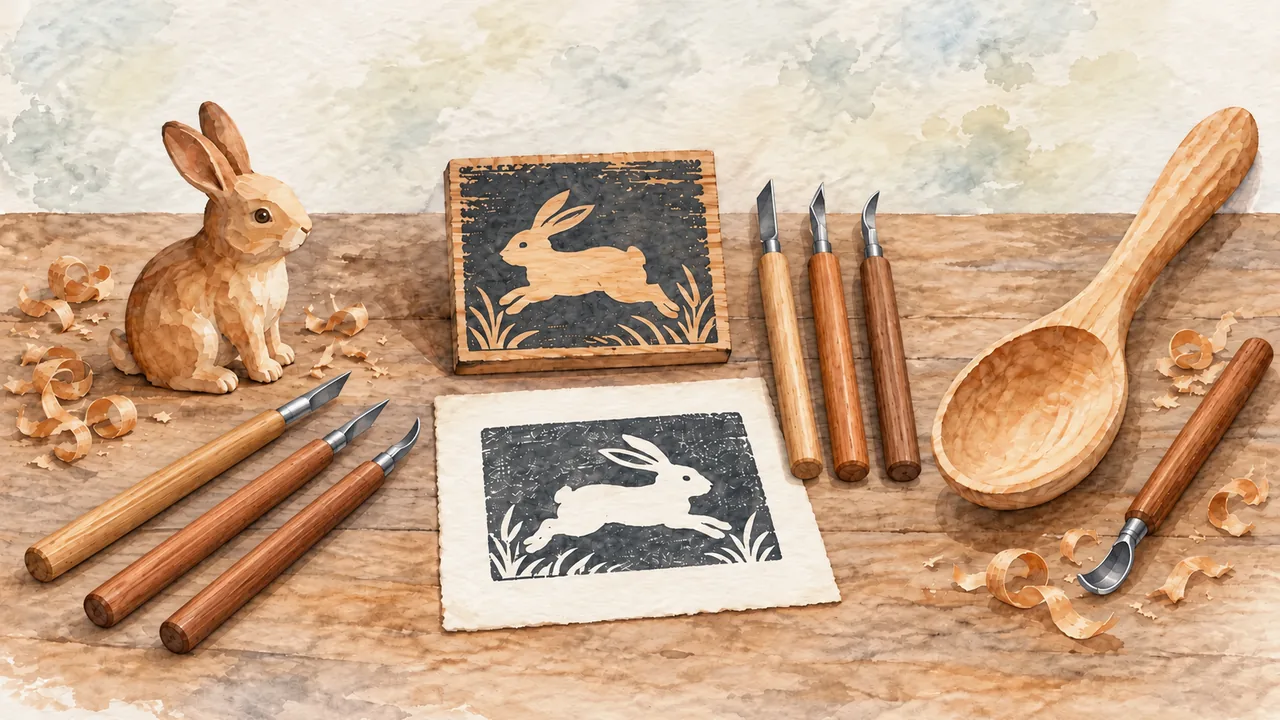
Michi Hamono even lists cutlery making as a category. For the bowl of a spoon, its extra-shallow gouge (gokuasa sukui), 12 mm, has a very gentle curve that scoops wood cleanly — with the same 180 mm cherry handle as its other HSS chisels.
6. Buying From Outside Japan
- Yoshiharu: the Sanyu sets in section 2 are on Amazon.com.
- Michi Hamono: sold through Japanese shops; as of November 2026 we didn't find its chisels on Amazon.com or an English shop.
- Check the maker and the steel. Look for the maker's name (Yoshiharu, Michi Hamono) and the blade steel on the listing.
7. Frequently Asked Questions
How many chisels do I need to start?
Three: a flat chisel, a knife and a round gouge, around 6 or 9 mm, as Michi Hamono suggests for beginners. A five-piece set covers that and more.
What's good about high-speed-steel chisels?
They hold their edge longer. Michi Hamono describes HSS as hard and tough, resistant to chipping and slow to dull.
What's the difference between print-cutting tools and carving chisels?
Print-cutting tools are smaller and made for plywood woodblocks. Michi Hamono's let you adjust how far the blade protrudes.
Are there left-handed carving chisels?
Yes. Yoshiharu's Sanyu range includes a left-handed knife (intō).
Can high-speed-steel chisels be sharpened?
Yes. Michi Hamono's print-cutting tools laminate a thin HSS layer to soft iron so they can be sharpened like ordinary edged tools, and the company publishes sharpening guides.
Which brand do Japanese schools use?
Yoshiharu is described as Japan's number-one maker of carving chisels by market share, and its chisels are a familiar sight in schools.
Final Thoughts: The School Chisel, as a Grown-Up Tool
Four shapes, two blade towns. Yoshiharu of Seki makes the chisels Japanese children learn with; Michi Hamono of Miki makes high-speed-steel chisels that Buddhist sculptors use.
Start with a flat chisel, a knife and a round gouge. Add print-cutting tools for woodblock cards, or an extra-shallow gouge for spoons.
Pick up the tool you first held at school — and see what you carve now.
Japanese Hanko: Hand-Carved Seals and How to Choose One
Japanese Chisels and Planes: Why a Kanna Needs Setting Up