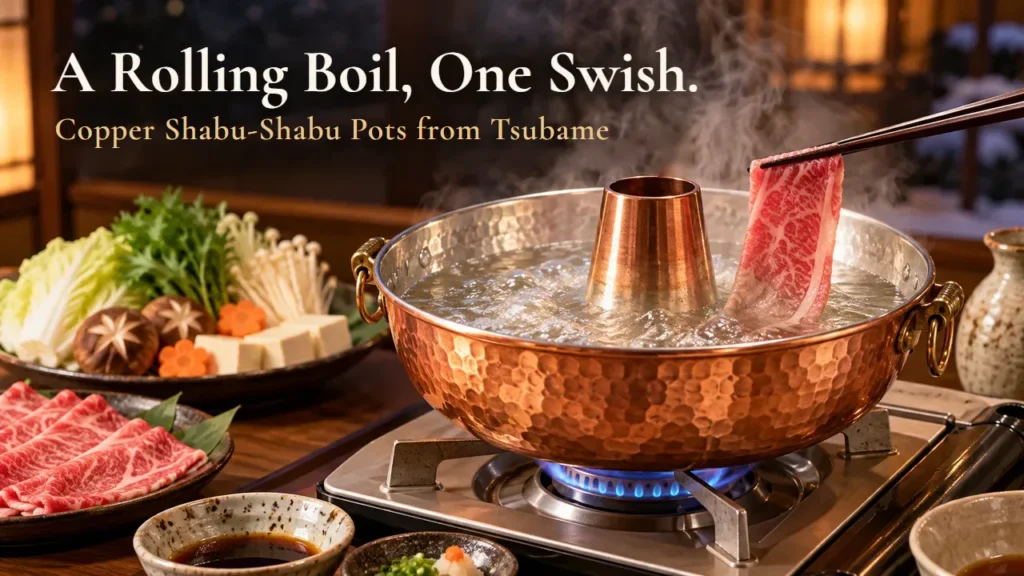
Shabu-shabu is a single swish of thin beef through a rolling boil — and the water has to stay at a boil. Japan's answer is a copper pot, often with a chimney in the middle, from Tsubame in Niigata, the country's great metalworking town.
This guide introduces two Tsubame makers: Shinko Kinzoku (COPPER100), whose pots are engineered to boil on a home tabletop burner, and Tanabe Kanagu, a maker of temple and altar fittings that makes its chimney pot entirely in-house. It also answers two questions everyone has about copper pots: why the inside is silver, and how to keep green verdigris away.
Quick Reference: Copper Shabu-Shabu Pots From Tsubame
| Pot | Size | Heat source |
|---|---|---|
| COPPER100 hammered pot ▾ | 27 cm (10.6 in), 3.5 L | Gas / tabletop burner — not induction |
| COPPER100 wooden-handle pot ▾ | 26 cm (10.2 in), 3.5 L | Gas / tabletop burner — not induction |
| Tanabe Kanagu chimney pot ▾ | 30 cm (12 in), 3 L | Check with the seller |
1. Will It Work on Your Stove?
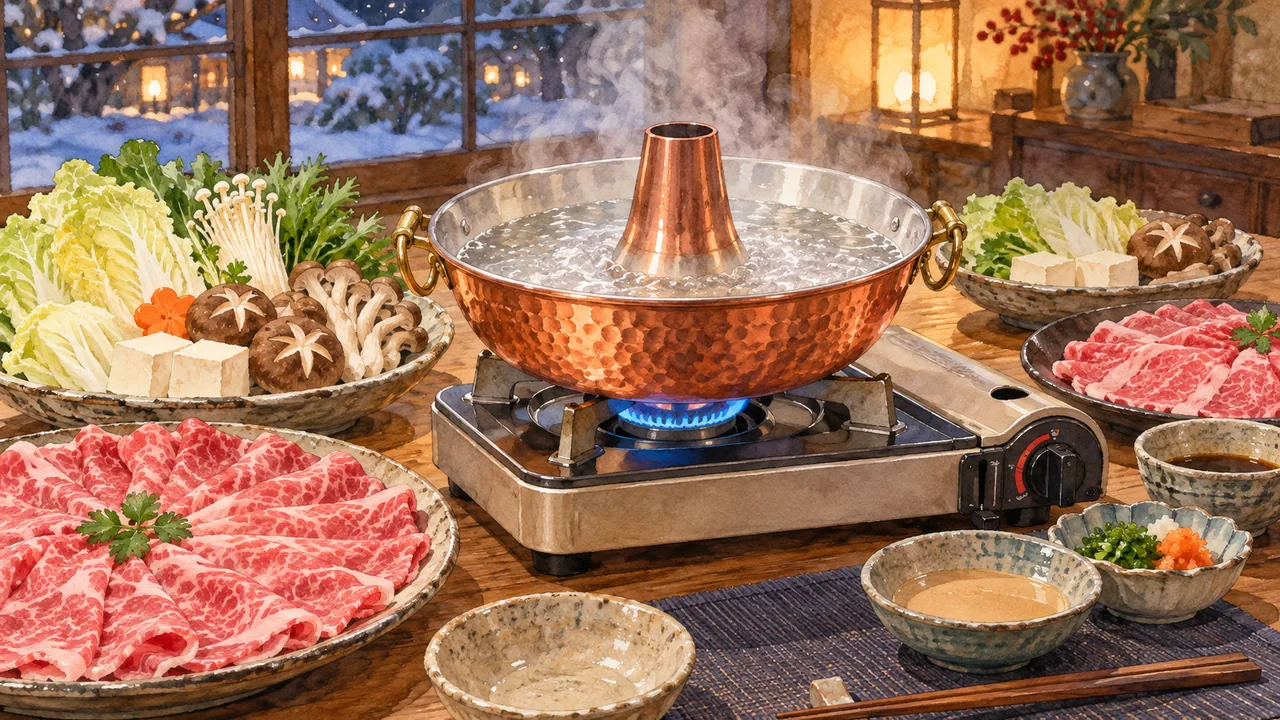
Short answer: on gas, yes; on induction, no. COPPER100 states plainly that its copper pots can't be used on an induction cooktop. In Japan, shabu-shabu is cooked at the table on a portable gas burner, and these pots are designed for exactly that. If your kitchen is induction-only, a copper pot isn't the right choice — or pair it with a tabletop gas burner.
2. Why Japanese: Tsubame, the Town That Hammers Copper
Tsubame in Niigata is Japan's metalworking town, and copperware is one of its traditional crafts. A copper pot heats quickly and evenly, which is exactly what shabu-shabu needs: the water comes back to the boil fast after each slice of meat goes in.
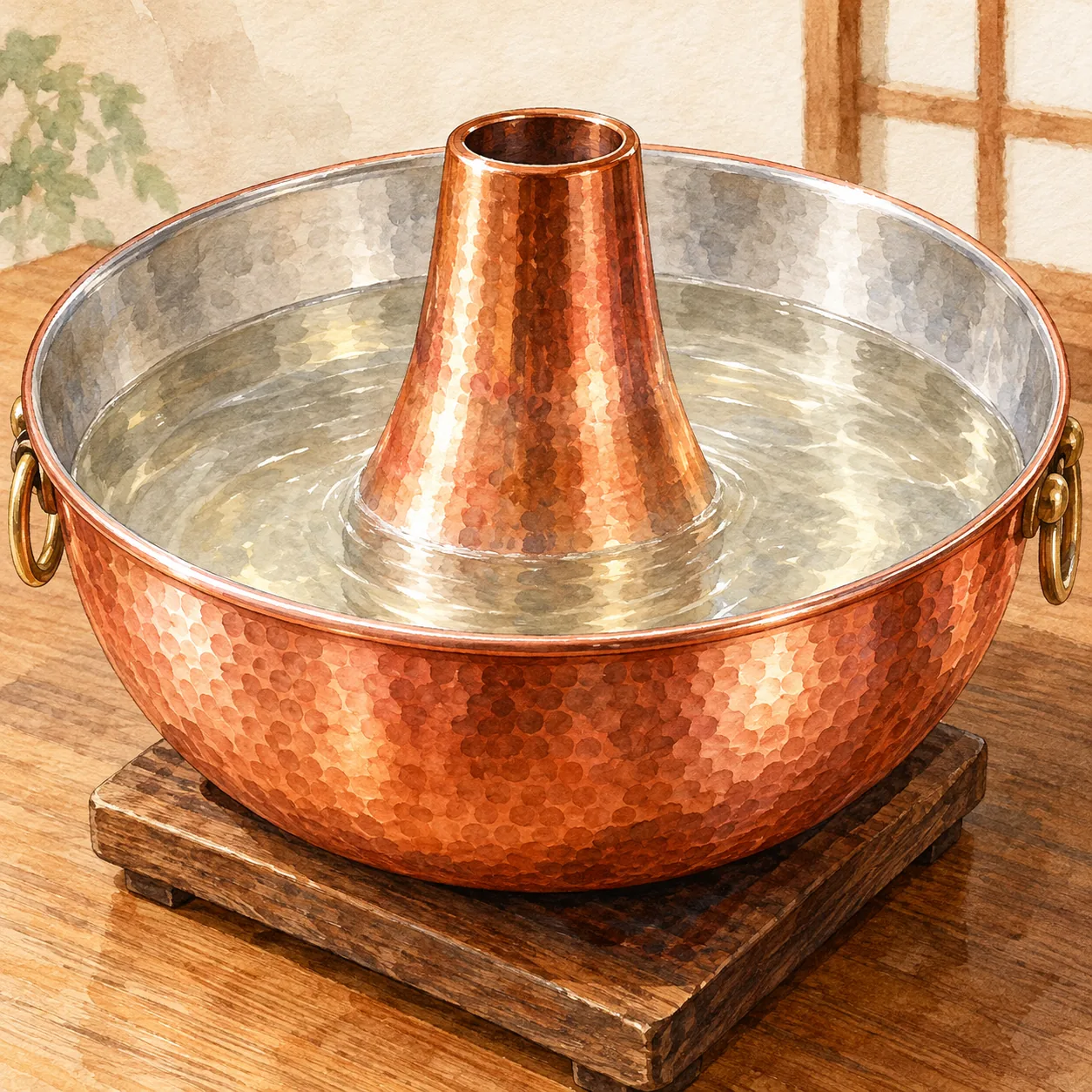
The hammered texture you see on many Tsubame pots is called tsuchime — the marks of a hammer, catching the light. Both makers in this guide are Tsubame companies making their pots in Japan.
3. COPPER100: Built to Boil on a Tabletop Burner
Shinko Kinzoku was founded in Tsubame in 1959 to make non-ferrous metal goods, and sells its copperware under the name COPPER100. Its hammered shabu-shabu pot — 27 cm across, 3.5 litres, pure copper with brass handles — won the Director-General of the Small and Medium Enterprise Agency's prize in a design competition.
The clever part is inside the central cylinder: a special flame-stopping structure designed so the pot heats fully on the flame of a home tabletop burner. One buyer wrote that it "comes to the boil fast — no problem at all on a tabletop burner." There's also a 26 cm version with a black-finished natural wood handle.
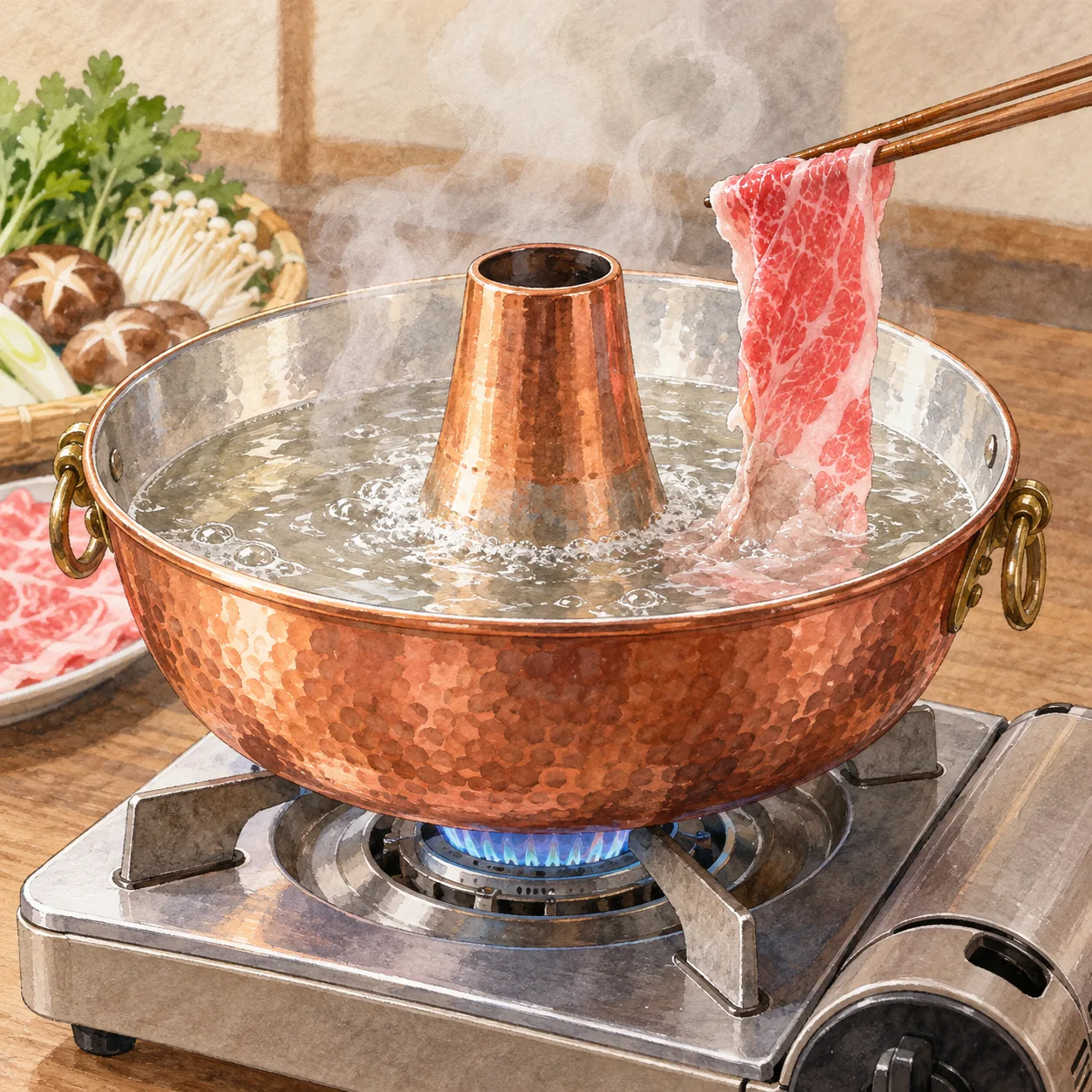
4. Tanabe Kanagu: A Chimney Pot From an Altar-Fittings Workshop
Tanabe Kanagu, founded in 1955, makes ornamental metal fittings for Buddhist altars, shrines and temples — and kitchen tools. It says plainly that all its copper products are made in-house, Made in Japan.
Its chimney pot is 30 cm across with a tall central chimney, pure copper with tin plating inside, and holds 3 litres. The chimney shape keeps the temperature from dropping when ingredients go in; each pot is made by skilled craftspeople in Tsubame-Sanjo. The listing doesn't state the heat source, so check with the seller before buying.
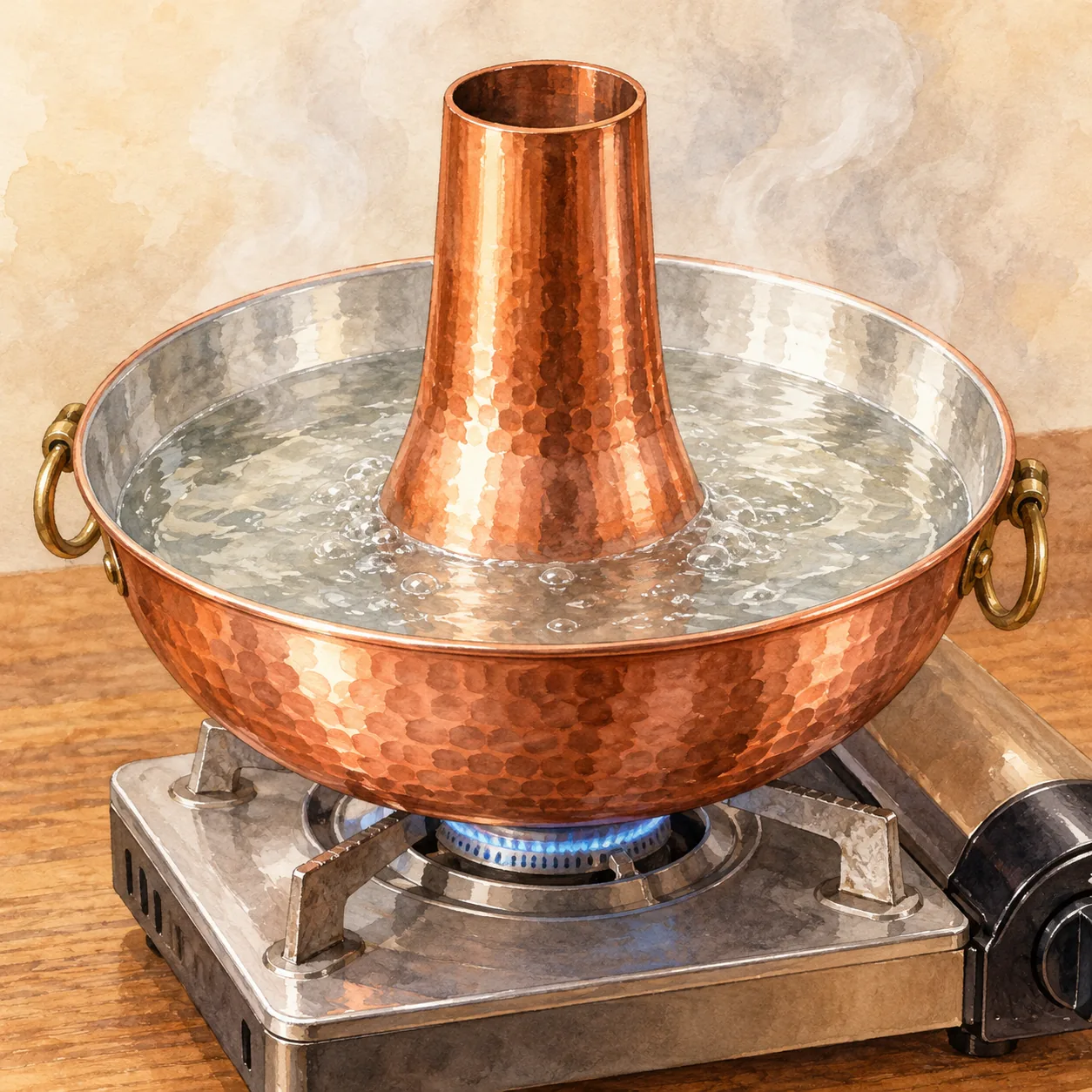
5. Why a Copper Pot Is Silver Inside
Look inside a Japanese copper pot and it's silver, not copper. That's tin plating — and in Japan it's the law. As COPPER100 explains, Japan's Food Sanitation Act, in force since 1952, requires the food-contact surfaces of copper pots, kettles, frying pans and mugs to be plated.
The copper outside does the heating; the tin inside touches the food. Protecting that plating is the whole point of caring for the pot.
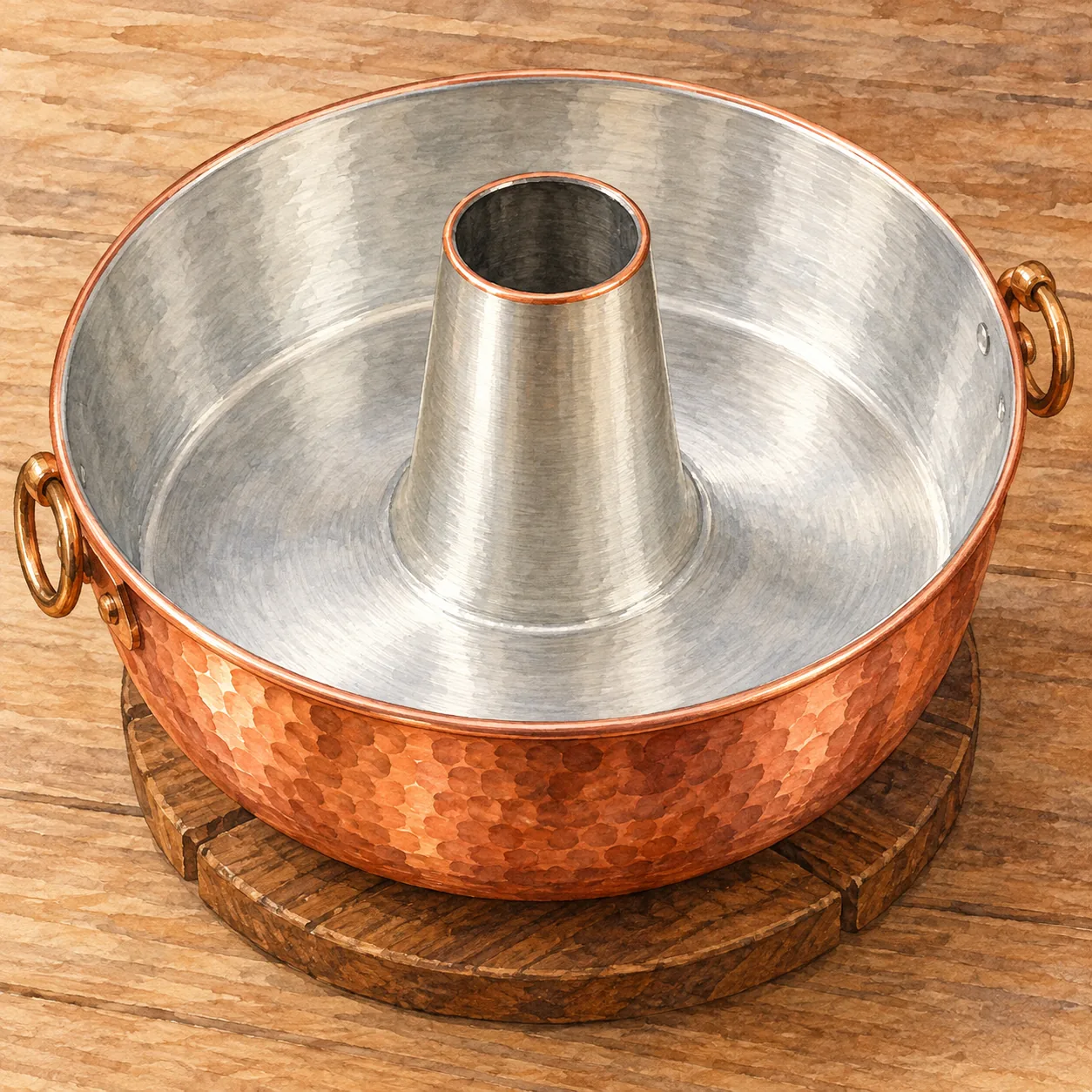
6. Keeping Verdigris Away
Verdigris (rokushō) is the green rust of copper. COPPER100's care advice:
- Before first use: wash with mild dish soap and a soft sponge in lukewarm water, then boil water in it once — boiling vegetable scraps with it helps it settle in.
- Don't store food in it. Move leftovers to another container right away; leaving salty or acidic food in the pot, or storing it somewhere damp, causes verdigris and wears the plating.
- Burnt-on food: soak in hot water and use a sponge or brush. Never scrape with a knife — scratched plating leads to verdigris.
- No dishwasher or dish dryer — they leave water marks. And never cool a dry-heated pot with water.
- If verdigris appears: wipe with a cloth dipped in household vinegar mixed with an equal amount of salt.
One buyer's tip: wash it well, dry it thoroughly, and put it back in its box — and it stays beautiful.
7. Buying From Outside Japan
COPPER100 and Tanabe Kanagu sell through Japanese shops; as of November 2026 we didn't find them on Amazon.com. A Japan-made copper shabu-shabu pot is listed there, marked for gas only:
Copper shabu-shabu pot, 26 cm (J-kitchens)
Copper, made in Japan, for gas only — the right match for a tabletop gas burner. 26 cm (10.2 in), a good size for three or four people.
Copper Shabu-Shabu Pot, 26 cm, Gas Only (J-kitchens)
Loading product details…
Whatever you buy, check three things on the listing: made in Japan, tin-plated inside, and the heat source.
8. Frequently Asked Questions
Can I use a copper shabu-shabu pot on induction?
No. COPPER100 states its copper pots can't be used on induction. Use gas — in Japan, a portable tabletop gas burner is the usual setup.
What is verdigris?
The green rust that forms on copper. Leaving food in the pot, salty or acidic residue, damp storage and scratched plating all encourage it.
How do I remove verdigris?
Wipe it with a cloth dipped in household vinegar mixed with an equal amount of salt, as COPPER100 recommends, then wash and dry the pot well.
Why is the inside of a copper pot silver?
Tin plating, required by law in Japan. Since 1952, the Food Sanitation Act has required the food-contact surfaces of copper cookware to be plated.
Can I put it in the dishwasher?
No. COPPER100 advises against dishwashers and dish dryers, which leave water marks. Wash by hand with a soft sponge and dry thoroughly.
Can I use it for anything besides shabu-shabu?
Yes — any hot pot cooked at the table, such as yudofu (simmered tofu). Just don't leave food stored in it afterwards.
Final Thoughts: A Rolling Boil in Tsubame Copper
Shabu-shabu needs water that stays at a boil, and Tsubame copper delivers it. COPPER100 engineered its pot to boil on a home tabletop burner; Tanabe Kanagu makes its chimney pot entirely in-house.
Use it on gas, not induction. Remember the silver inside is tin plating required by law — protect it, don't store food in the pot, and verdigris stays away.
Then gather around the burner this winter, and swish.
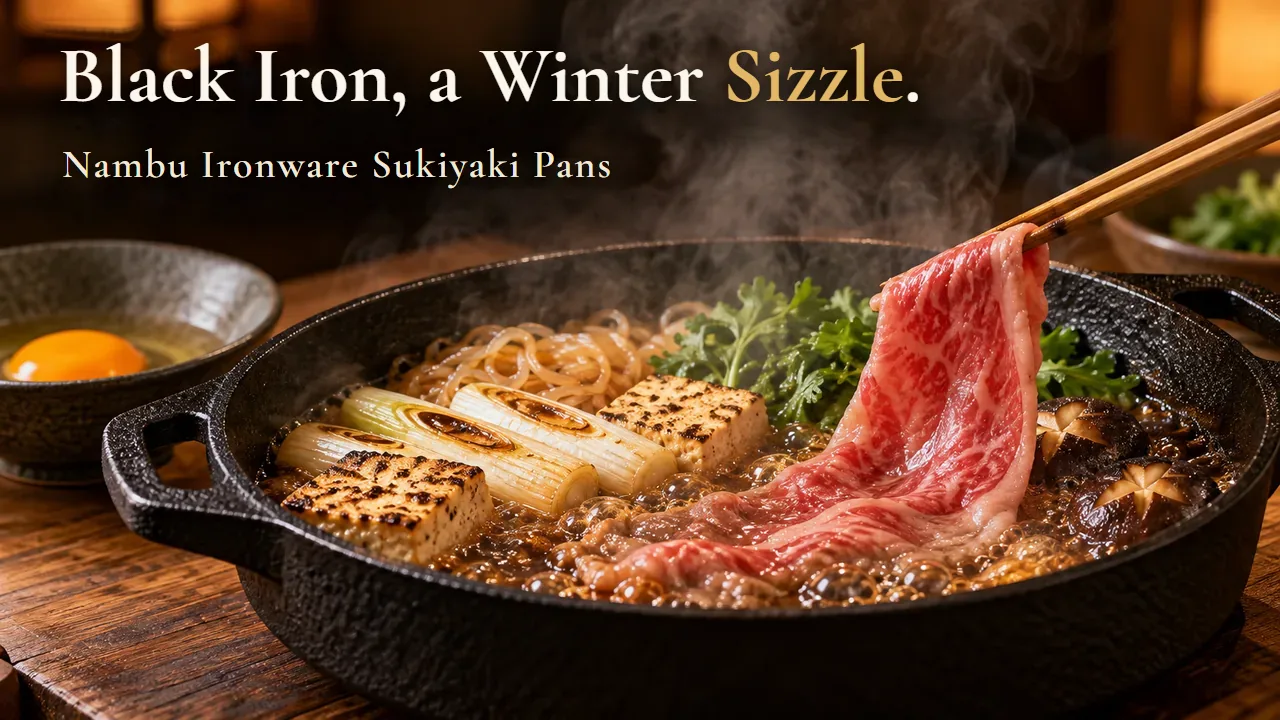
Sukiyaki Pan: Japanese Nambu Cast Iron From 3 Foundries

Japanese Stew Pots: Vermicular, and the 0.01mm Lid