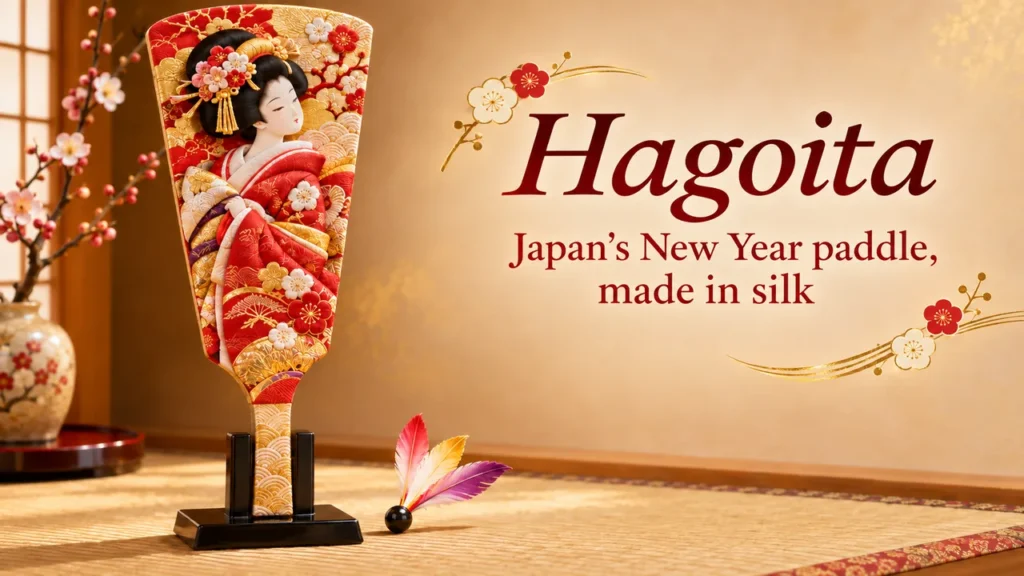
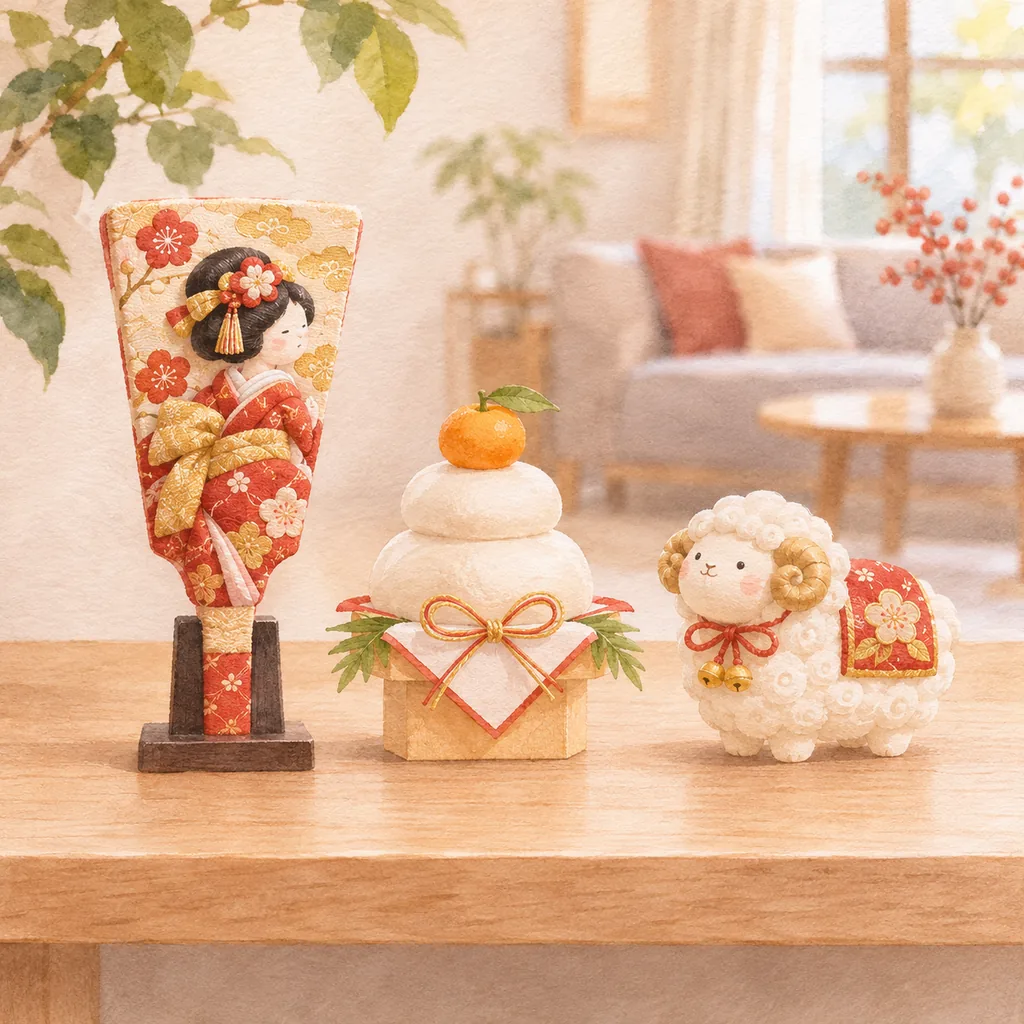
A hagoita is the wooden paddle of hanetsuki, Japan's New Year game of battledore and shuttlecock, and in its decorated form, a New Year charm. Batting the shuttlecock was a way of knocking bad luck away.
Today a decorated hagoita is given to a baby girl for her hatsu-shogatsu, her first New Year, with the wish that she grows up free of illness and misfortune. The most striking ones are made with oshi-e, padded silk figures built up in relief, and "Edo oshi-e" was named one of Japan's Traditional Crafts by the Ministry of Economy, Trade and Industry in 2019. This guide explains the tradition, how to tell a hand-made oshi-e hagoita, the Japanese makers worth knowing, and two pieces you can buy from outside Japan.
Quick Reference: Hagoita at a Glance
| If you want... | Pick | Where to buy |
|---|---|---|
| A hand-made Edo oshi-e hagoita | Shuko Ningyo Kobo, Edo Oshi-e No. 13 ▾ | Amazon.com |
| A small hagoita-motif gift | Anbo Tenugui, Hagoita ▾ | Amazon.com |
| The top Edo craftsmen, a paulownia version | Japan's makers ▾ | Tokyo, Kasukabe, or Japanese online shops |
Tap a name to jump to its review.
1. Why Japanese: A Paddle That Bats Away Bad Luck
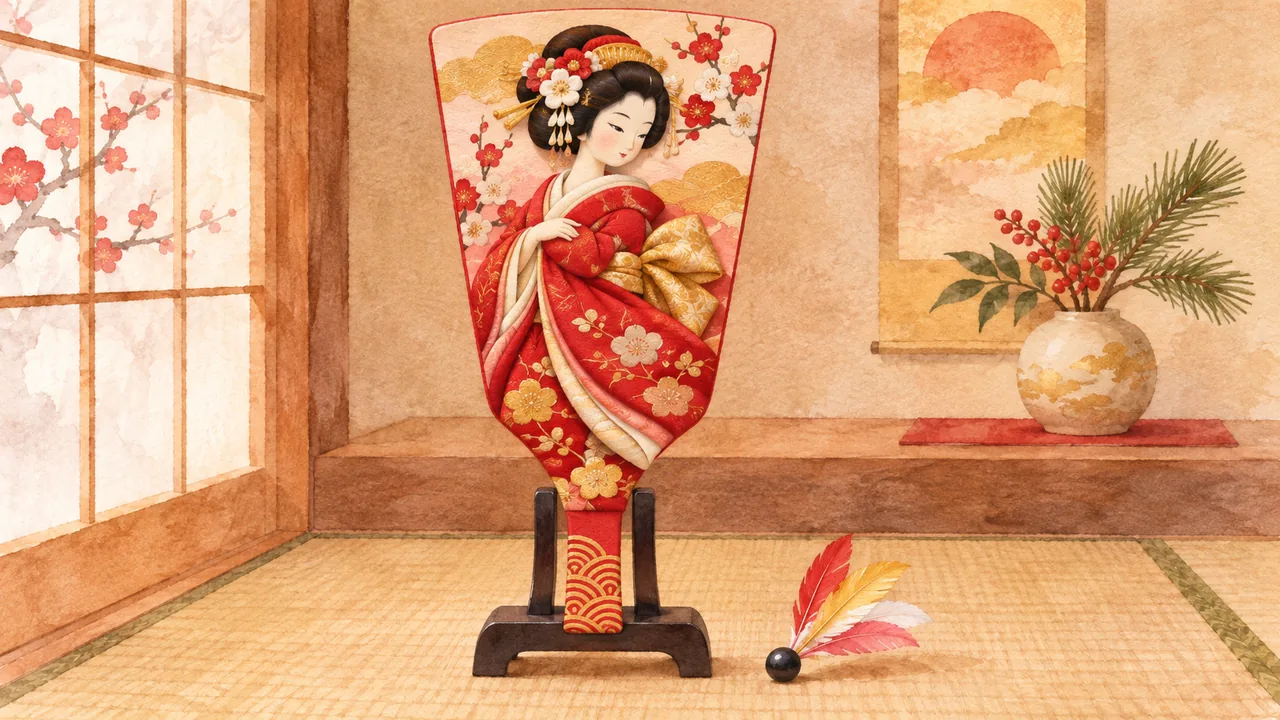
In hanetsuki, players hit a shuttlecock made from a soapberry (mukuroji) seed with feathers stuck into it. The game carried a wish to knock misfortune away, and from around the 16th century decorated paddles began to be made for display rather than play.
The Tokyo doll maker Kyugetsu describes the hagoita as a gift for a girl's first New Year, given with the wish that she will grow up safely, without meeting misfortune or illness. Boys receive a hamayumi, a ceremonial bow, for theirs.
2. How to Tell a Hand-Made Oshi-e Hagoita
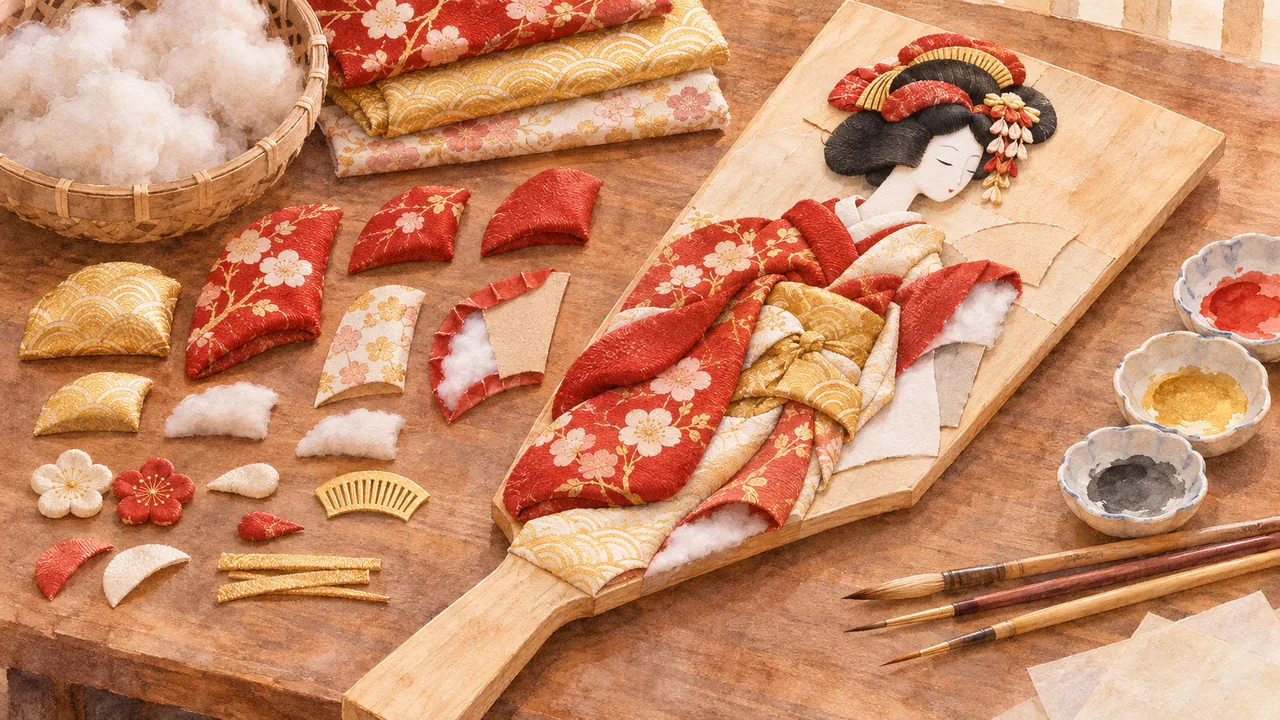
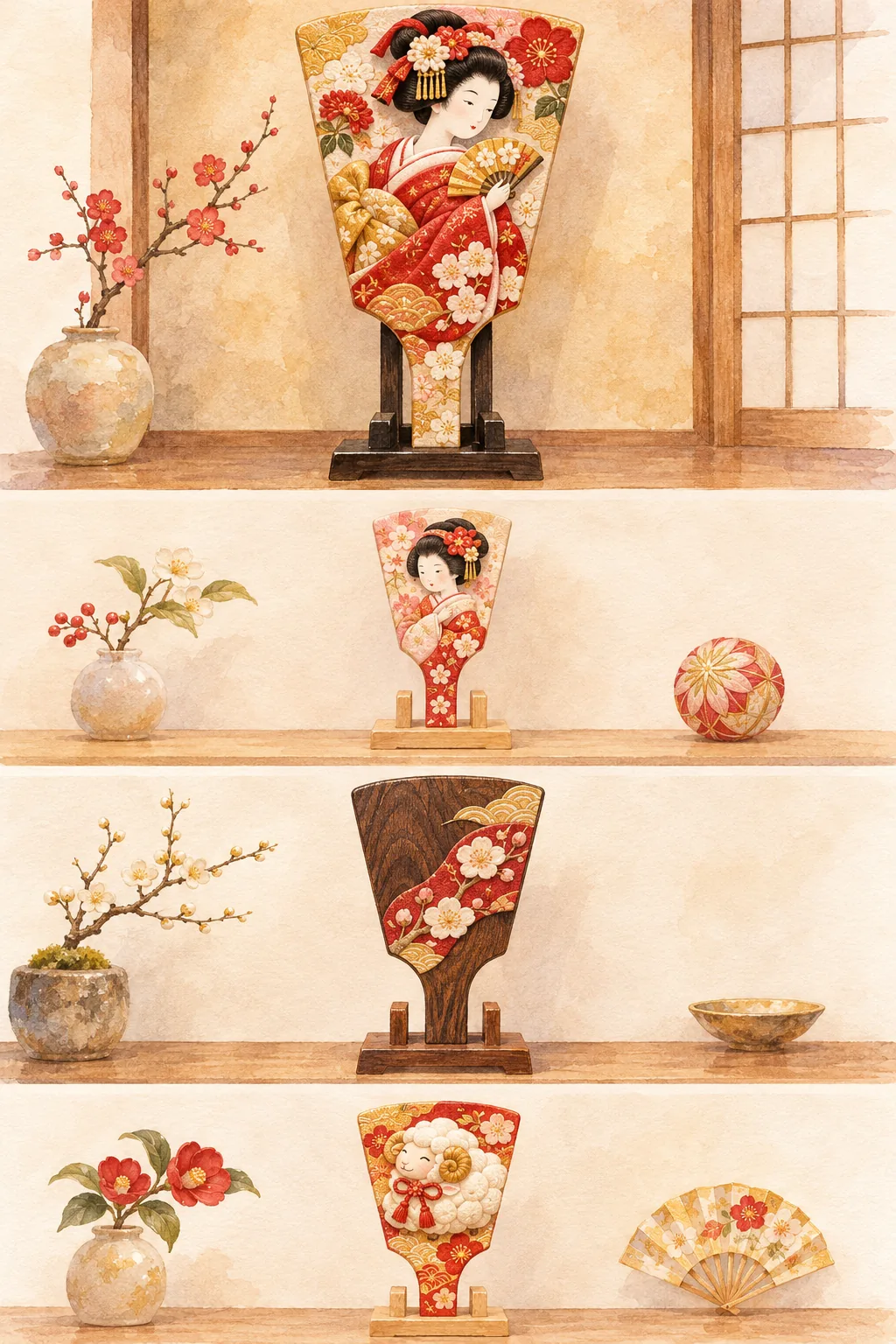
Edo oshi-e hagoita began, one Tokyo maker explains, with ukiyo-e artists drawing the designs and oshi-e craftsmen building them, often showing popular kabuki roles. Many hagoita today use synthetic fabric and spray-painted faces. In the hand-made pieces, look for:
- Silk: listings will say shoken or honken (pure silk).
- A hand-painted face on silk: eginu menso, a face painted with a brush on painting silk.
- Size in go: No. 10 is about 30 cm (12 in); No. 13 about 39 cm.
3. Hagoita You Can Buy Outside Japan
Shuko Ningyo Kobo, Edo Oshi-e Hagoita No. 13 in an Acrylic Case
For a real oshi-e hagoita to display at New Year. Shuko Ningyo Kobo is a doll workshop in Tachikawa, Tokyo, and states that all of its hagoita are made in Japan and entirely by hand. This No. 13 piece shows a figure in a three-dimensional furisode kimono with metallic brocade, and comes in an acrylic case that keeps dust off.
Shuko Ningyo Kobo Edo Oshi-e Hagoita No. 13, Acrylic Case
Loading product details…
Anbo Tenugui, Hagoita (Kabuki Girl)
For a small New Year gift with the hagoita motif. A cotton tenugui (Japanese hand towel) from the tenugui maker Anbo, printed with a kabuki girl holding a hagoita. It can be framed or hung as a seasonal wall piece. About 35 × 100 cm (13.8 × 39.4 in).
Anbo Tenugui, Hagoita (Kabuki Girl)
Loading product details…
4. Japan's Makers: Tokyo, Asakusa and Kasukabe
We couldn't find these on Amazon.com; look for them in Japan or through Japanese online stores and proxy shopping services.
- Suimon Shoten (Tokyo): Edo oshi-e hagoita by traditional craftsmen connected with Tokyo's hagoita fair, using kimono silk painted in the Japanese-painting style and faces painted on eginu silk. Only a handful of Edo oshi-e craftsmen still work this way, according to the shop.
- Musashiya Hozan (Tokyo): Edo oshi-e hagoita, a Tokyo-designated traditional craft, in sizes from No. 10 up.
- Hakocho (Asakusa, Tokyo): a paulownia workshop founded in 1874 that makes a wooden hagoita decorated with fabric inlaid into the carved wood (kimekomi), suited to modern rooms.
- Kasukabe (Saitama): a city with its own hagoita makers' association; its oshi-e hagoita, including small zodiac ones, are offered as Japanese hometown-tax gifts for residents of Japan.
5. When to Display It, and How to Store It
A hagoita is displayed with the other New Year decorations. Many families set it out from mid-December and put it away around Koshogatsu (the "little New Year," January 15). Who buys it differs by region and family, so in Japan both sides of the family often talk it over first.
Don't touch the oshi-e, especially the face. Silk can attract insects, so store it with an insect repellent, away from heat, humidity and direct sunlight.
6. Frequently Asked Questions
What is a hagoita used for?
Originally for hanetsuki, a New Year game; decorated ones are displayed as a charm. They are given to baby girls at their first New Year with a wish for a healthy, safe life.
What is oshi-e?
A technique that builds pictures in relief from fabric wrapped around cotton padding. Edo oshi-e, made in Tokyo, Saitama and Kanagawa, was designated a Traditional Craft of Japan in 2019.
What is the black bead on the shuttlecock?
A soapberry (mukuroji) seed. Feathers are inserted into it to make the shuttlecock.
Can I display a hagoita every year?
Yes. It is said to be fine to bring it out each New Year as a wish for the child's growth.
What size should I choose?
Sizes are given in "go." No. 10 is about 30 cm (12 in) and fits a shelf; No. 13 is about 39 cm; larger ones suit an alcove or entrance.
Is there an equivalent for boys?
Yes, the hamayumi, a decorative bow and arrow meant to drive away evil, given at a boy's first New Year.
Final Thoughts: A New Year Wish in Silk
A hagoita is a New Year charm that bats away misfortune, given to a girl at her first New Year.
From outside Japan, Shuko Ningyo Kobo's hand-made Edo oshi-e hagoita, or a hagoita tenugui as a small gift. In Japan, look for the Edo oshi-e of Suimon Shoten and Musashiya Hozan, Hakocho's paulownia hagoita in Asakusa, and Kasukabe's oshi-e.
A face painted by hand on silk, watching over a child's first New Year.
Japanese Zodiac Figurines 2027: Year of the Sheep
Maneki Neko: Round Tokoname or Slender Seto Lucky Cats