Itadakimasu: What Japanese People Really Say Before Eating
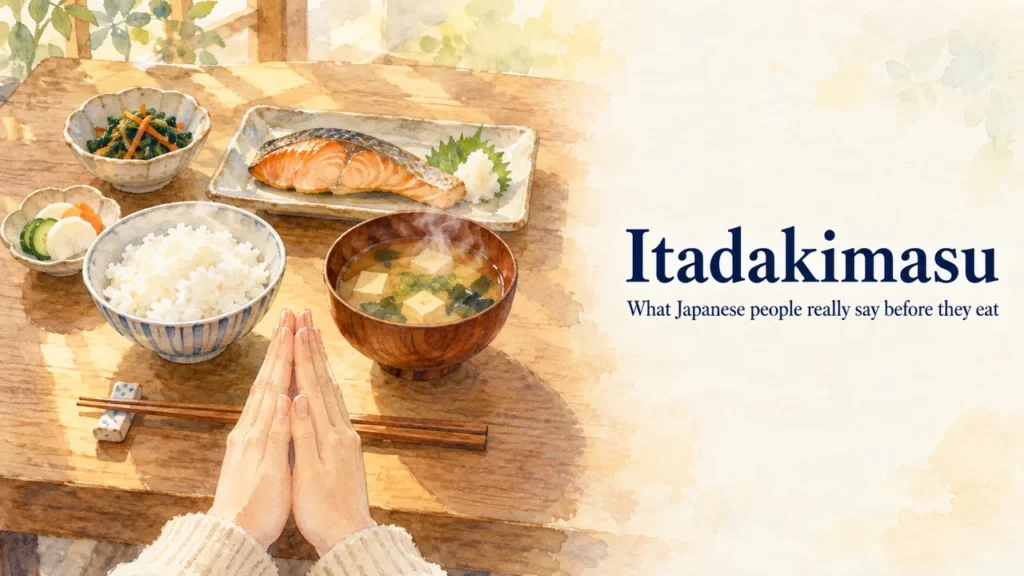
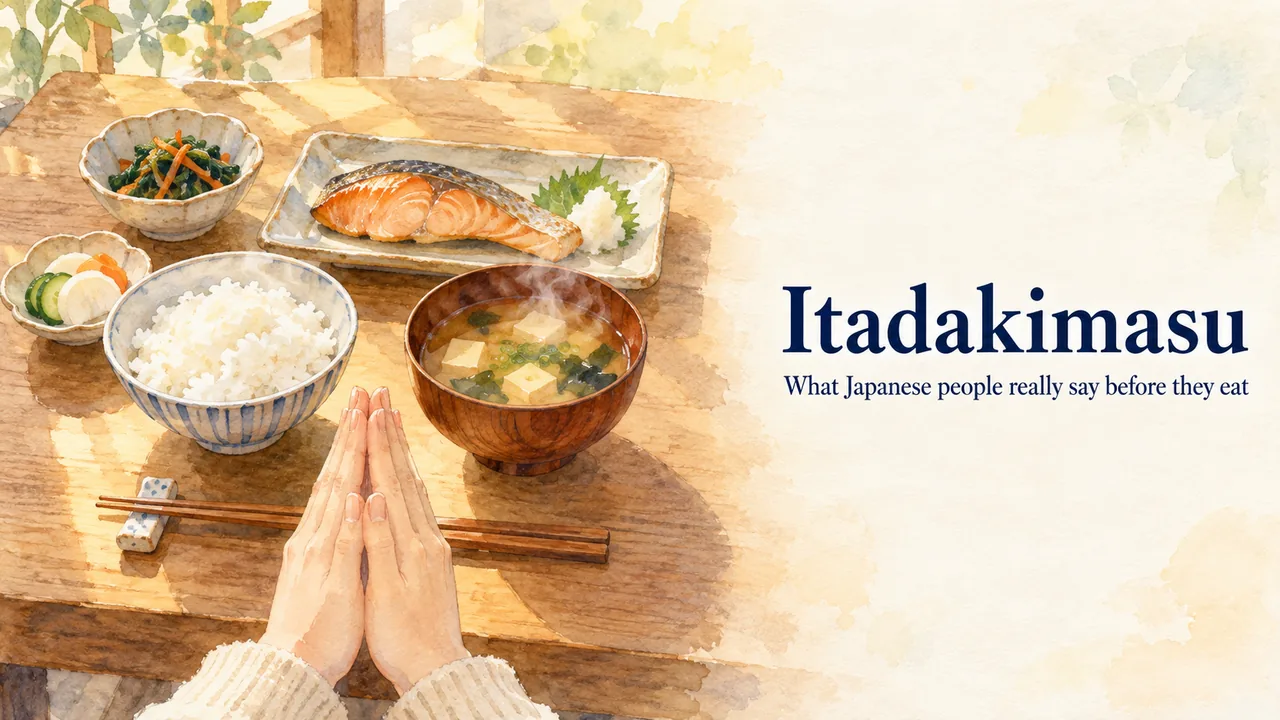
Before a meal in Japan, people put their hands together and say itadakimasu.
After the meal, they say gochisousama. If you have watched anime or Japanese films, you have
probably seen it.
Here is the short answer, from a Japanese parent: itadakimasu is not really
addressed to any one person. It is thanks to everything that brought the food to you — the
lives that became the food, the people who grew it and cooked it, and something unseen beyond them.
It is not quite a prayer, and not quite table manners.
In English, itadakimasu is usually translated as "I humbly receive." That is not wrong.
Itadaku is the humble way of saying "to receive," so that is the literal meaning.
But it leaves something out. Who, exactly, are you saying it to?
Grace before a meal is said to God. Bon appétit is said to the people at the table.
Itadakimasu is a little different from both. As someone who was born and raised in Japan,
and who is now the one teaching it to my own children, I want to write down what this word actually
holds.
You Don't Always Say It Out Loud
First, Japanese people don't actually say it out loud every single time.
When eating alone at a restaurant, not many people say it aloud. Most of us say it silently, in our heads. Some just bring their hands together for a moment. Then again, some people say it out loud even when they live alone.
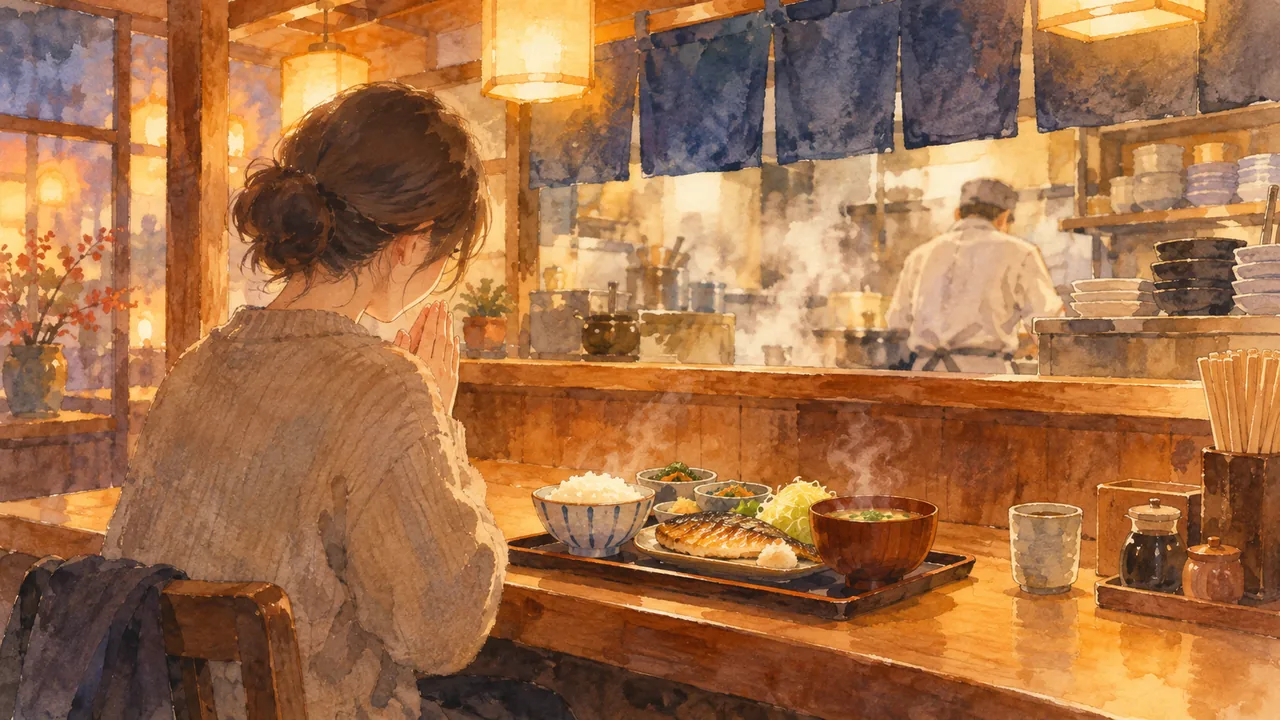
The interesting part is this: if you skip it, something feels off.
Japanese has a word, moyamoya, for a hazy, unsettled feeling — not guilt, not regret, just something that won't clear. That is close to what lingers when you forget to say it and start eating. You haven't been rude to anyone. Nobody is going to scold you. And yet something feels unfinished.
A Word That Doesn't Pick One Person
Why does it feel that way? I think it is because this word doesn't single out one person to thank.
Of course, if the person who cooked is right there, your thanks include them. If your mother made the meal, your itadakimasu carries thanks to your mother.
But it doesn't stop there. Japanese people say itadakimasu just the same at a restaurant, where the cook is out of sight, or over a meal they made themselves.
Japanese has another word built the same way: okagesama. You hear it in phrases like "okagesama de genki desu" — roughly, "I'm well, thanks to you." The kage in it means the shade, the unseen side of things. It thanks someone or something unseen — without naming who — and even adds the honorific -sama. I think itadakimasu is a close relative of that word.
Skip grace, and you are missing something in your faith. Skip bon appétit, and you may seem a little cold to the people you are eating with. In both cases there is someone specific on the other side, so leaving it out can come across as rude.
Itadakimasu doesn't pick one person. So leaving it out doesn't hurt anyone in particular. What remains is not someone else's disapproval, but a small untidiness inside yourself. It isn't an obligation, and it isn't faith — and yet, without it, you can't quite settle. Everyday life in Japan has words like that.
So What Are You Thanking?
What Japanese families teach goes roughly like this:
Thanks to everything involved in the food reaching your mouth and becoming part of your life.
The lives that became the food. The people who grew it. The soil, the sun, the rain. The people who carried it. The person who cooked it. The person who set it on the table.
I think of it less as a list and more as a way of drawing the circle: everything that had a hand in getting this food to you. That is why you can't count it all — and why you don't need to.
And the part about "becoming part of your life" matters. You take in the life of what you eat, and it becomes your own life. So the thanks doesn't stop at the ingredients. It reaches back along the whole path that brought them to you.
Did you know: itadaki means "the top of your head"
The itadaki in itadakimasu originally meant the crown of the head, or a summit. Long ago, when people received an offering made to the gods, or a gift from someone of higher rank, they raised it above their head before accepting it. That gesture slowly became the word for "to receive." Every time you say itadakimasu, you are — in words — lifting the meal above your head.
Japan has long had a feeling that there are gods in mountains, in rivers, in trees. Seen that way, "receiving nature's gifts" and "receiving from the gods" mean almost the same thing. Thanks to the lives you eat and thanks to something unseen sit together in a single word.
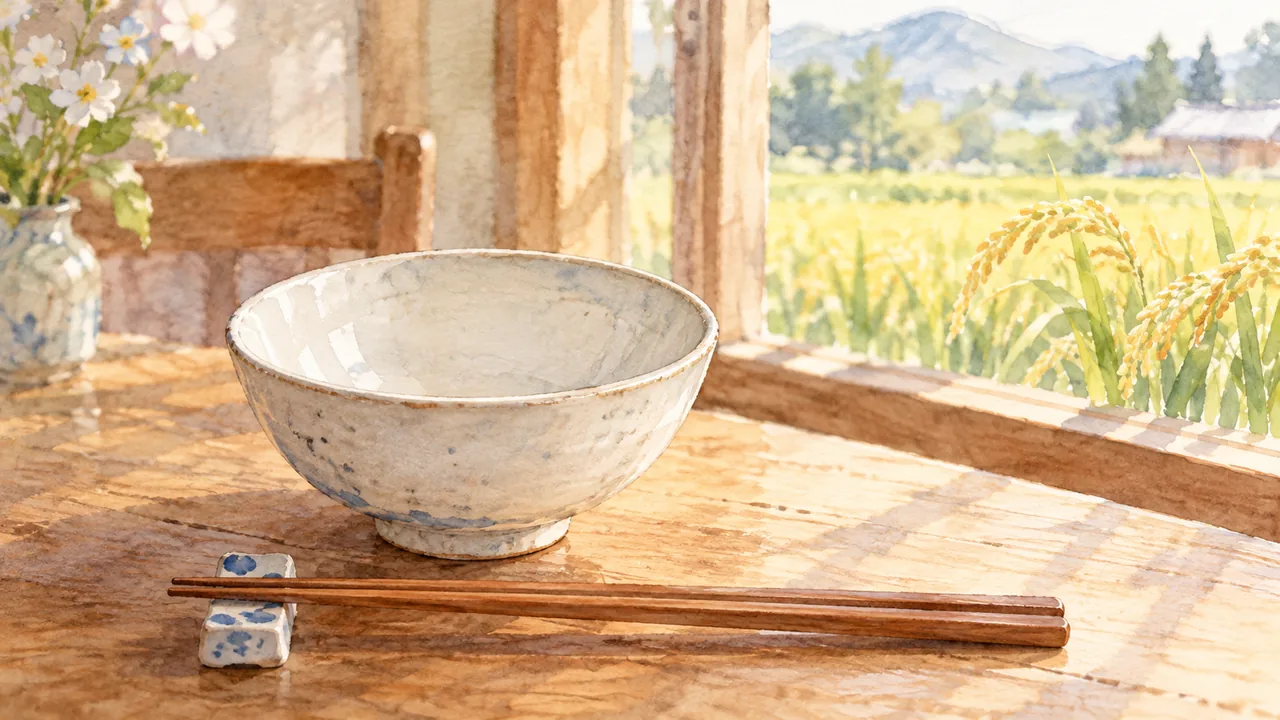
Many Japanese children grow up being told to eat every last grain of rice in their bowl. In my family, too, the rule was to leave not a single grain behind. Rice has long been treasured in Japan, as if each grain held a special power of its own. Don't let go halfway of what you received with itadakimasu. That promise is in the rice bowl, too.
Then You Pick Up Your Chopsticks
After saying itadakimasu, the first thing a Japanese person does is pick up their chopsticks.
At a Japanese table, chopsticks lie sideways, between you and the food. You pick them up to start eating, and set them back down when you are done.
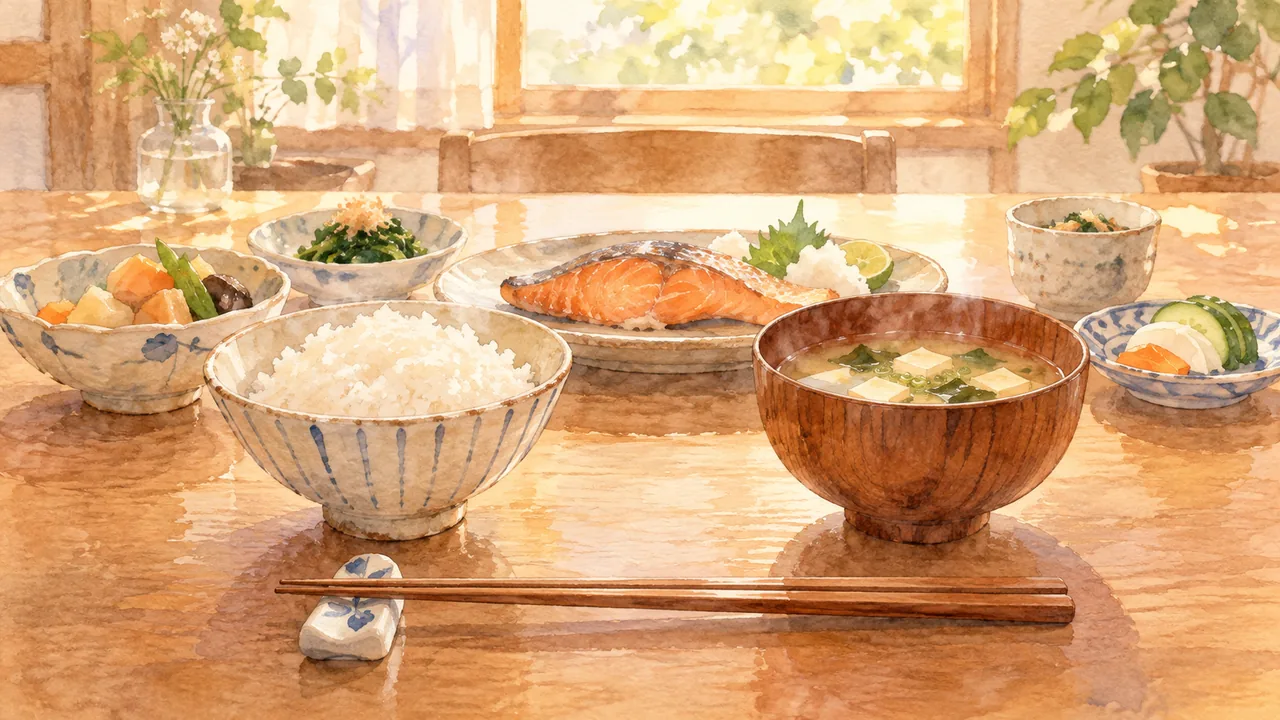
About those sideways chopsticks, I heard a story as a child.
The food on the far side of the chopsticks still belongs to the gods. Only when you say itadakimasu and pick up your chopsticks do you receive it from them. The chopsticks lying across the table are a boundary between the gods' side and the human side — a kind of sacred line.
I don't remember exactly who told me. My grandfather, or maybe my father. At the time it didn't interest me much; I just said "huh" and let it pass.
It isn't something I read in a book. I suspect it is the kind of thing passed down by word of mouth, inside families. Some Japanese people grew up hearing the same story; others have never heard it at all. And yet the story I barely listened to is one I still remember today.
Chopsticks carry other ideas about the table, too.
The special chopsticks used at New Year, called iwai-bashi, are tapered at both ends, so you could eat with either end. The explanation usually given is that one end is for you, and the other is for the gods. New Year food is also an offering to the god of the new year, and you eat it together with that god. That is why you are not supposed to flip iwai-bashi around, even when serving food from a shared dish.
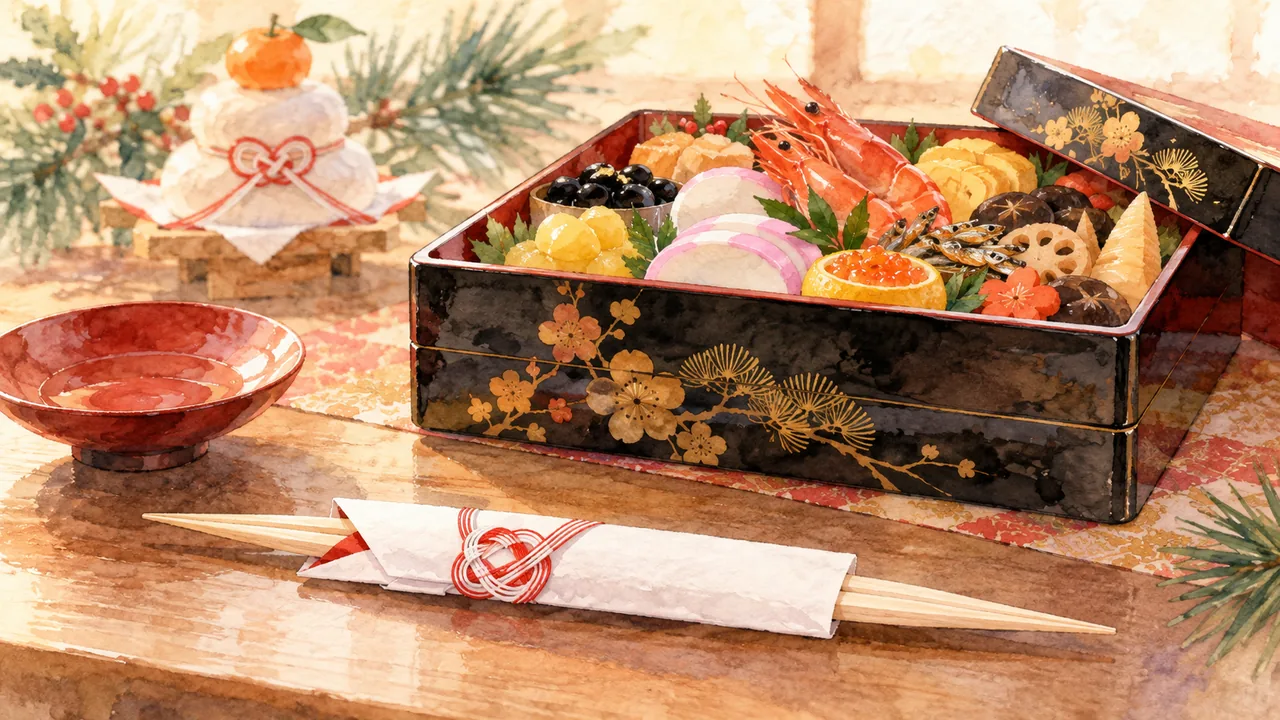
The idea of gods and people eating the same food shows up in Japanese festivals as well. After a festival, it is customary for everyone to share the food that was offered to the gods.
Did you know: Japan's Labor Thanksgiving Day began as a meal with the gods
November 23 is a national holiday in Japan called Labor Thanksgiving Day. It was originally the day of Niiname-sai, a ceremony in which the Emperor offers the year's newly harvested rice to the gods — and then eats it himself. The holiday took its current name in 1948, but Niiname-sai is still held on the same day, at the Imperial Palace and at shrines around the country.
On the other hand, there is one thing you should never do at a Japanese table: stick your chopsticks straight up in a bowl of rice. That is how rice is offered to someone who has died, placed by their pillow, so at an everyday meal it is considered deeply unlucky. When you eat in Japan, rest your chopsticks on a chopstick rest or across your bowl instead.
Gochisousama Faces the Other Way
Gochisousama, said after the meal, is also thanks — but a different kind.
Chisō originally meant running around. Both of its characters mean "to run," and the word goes back to old Chinese histories. In the days before refrigerators and shops, the only way to host someone was to run here and there gathering food. From there the word came to mean hospitality, and eventually a lavish meal.
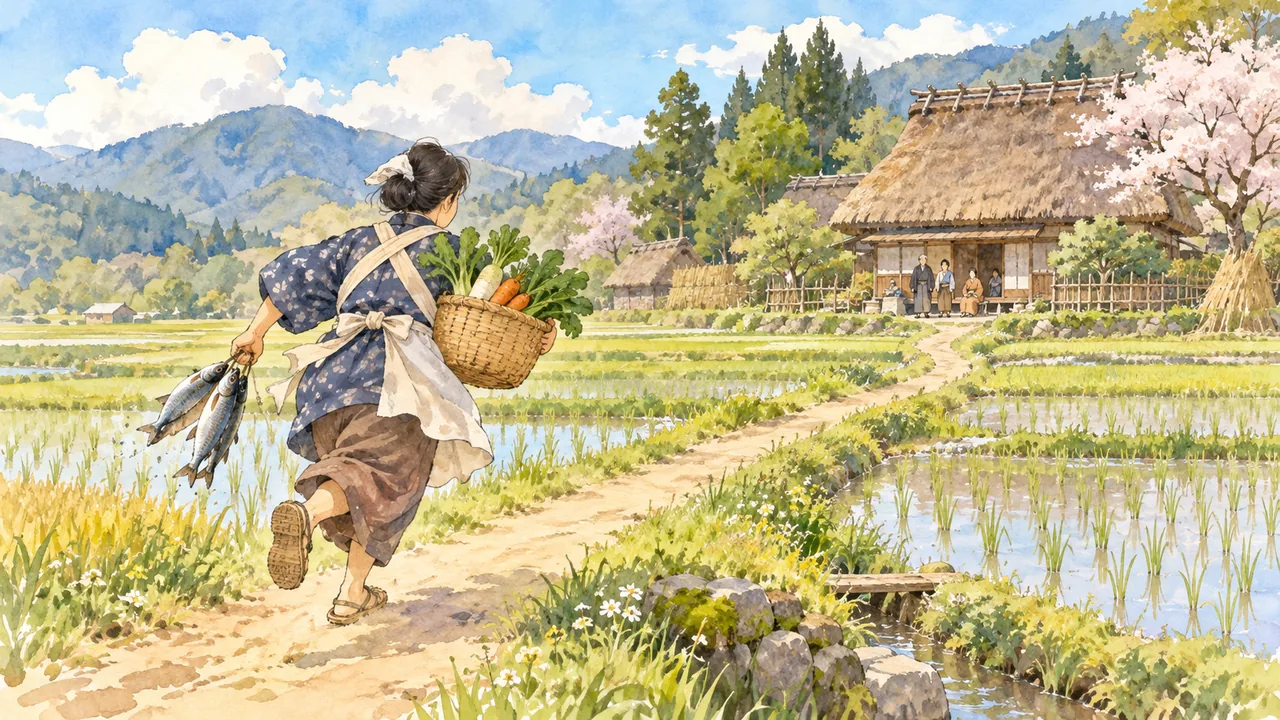
So gochisousama isn't praise for how fancy the food was. It thanks someone for the time and trouble they took — for all that running around.
Put the two side by side and you can see they face opposite ways. Itadakimasu grew out of your gesture of lifting something above your head to receive it. Gochisousama grew out of the other person's effort, running around for you. One is the receiver's word; the other is turned toward the person who did the work.
Gochisousama also carries a report on the meal: it was delicious; I'm full, thank you. Itadakimasu doesn't include "this looks good," but gochisousama includes how it went. If the cook is there, you say it to them.
You don't have to clean your plate to say it. It is simply what you say when the meal is over.
How It Gets Passed Down
Itadakimasu isn't something you learn in one lesson at school. It settles in little by little, in several places.
Usually you learn it first at home. The family sits down together, the parents put their hands together and say itadakimasu, and the child copies them. It may well be the first table manner Japanese parents teach their children.
Nursery schools and kindergartens teach it too, as a basic manner — but how they do it depends on the school.
The nursery school my children went to was run by a Buddhist temple of the Tendai school. There, before saying itadakimasu, the children put their hands together and recite words of prayer. I will come back to that, through my daughter, a little later.
In elementary school, there are chances to think about what it means, in moral education classes and elsewhere. And every school day, the whole class says it together at lunch — a lunch the children serve to each other themselves. Here is how lunch and cleaning time work at a Japanese school.
But it is hard for small children to understand the meaning behind the word. That animals and plants become food; that what is alive looks nothing like what ends up in your mouth. Children start to grasp that only when they are a bit older. The manners come first, and the meaning catches up later.
Whether to put your hands together is up to each person. Most people do, but there is no rule that you must.
An Old Word, a Newer Greeting
The word itadaku itself is old. Its use as a humble way to say "eat" or "drink" already appears in kyōgen comic plays from the late Muromachi period, around the sixteenth century.
As a greeting said before every meal across Japan, however, it may be much newer. One view is that it spread around the 1910s and 1920s, partly through etiquette lessons at school.
But when something started and what it holds are two different questions. And what passes from parents to children inside the home rarely gets written down. Just because something doesn't appear in the records doesn't mean it wasn't there — like the story about the chopsticks I heard as a child.
The Prayer My Daughter Taught Us
At my daughter's temple nursery school, the children recite words of prayer together before they start to eat. The words said before the meal are called shokuzenkan, and the words said after it are called shokugokan.
I don't remember the exact wording myself. But in the words before the meal, the children give thanks to the Buddha and to the many things that went into the meal. There is also a sense of receiving it gratefully, without complaining about how it tastes or how much there is. Then they say itadakimasu, put their hands together — and pick up their chopsticks.
When the meal is over, they recite the second set of words, giving thanks for the strength the food has given them and promising to repay the kindness they have received.
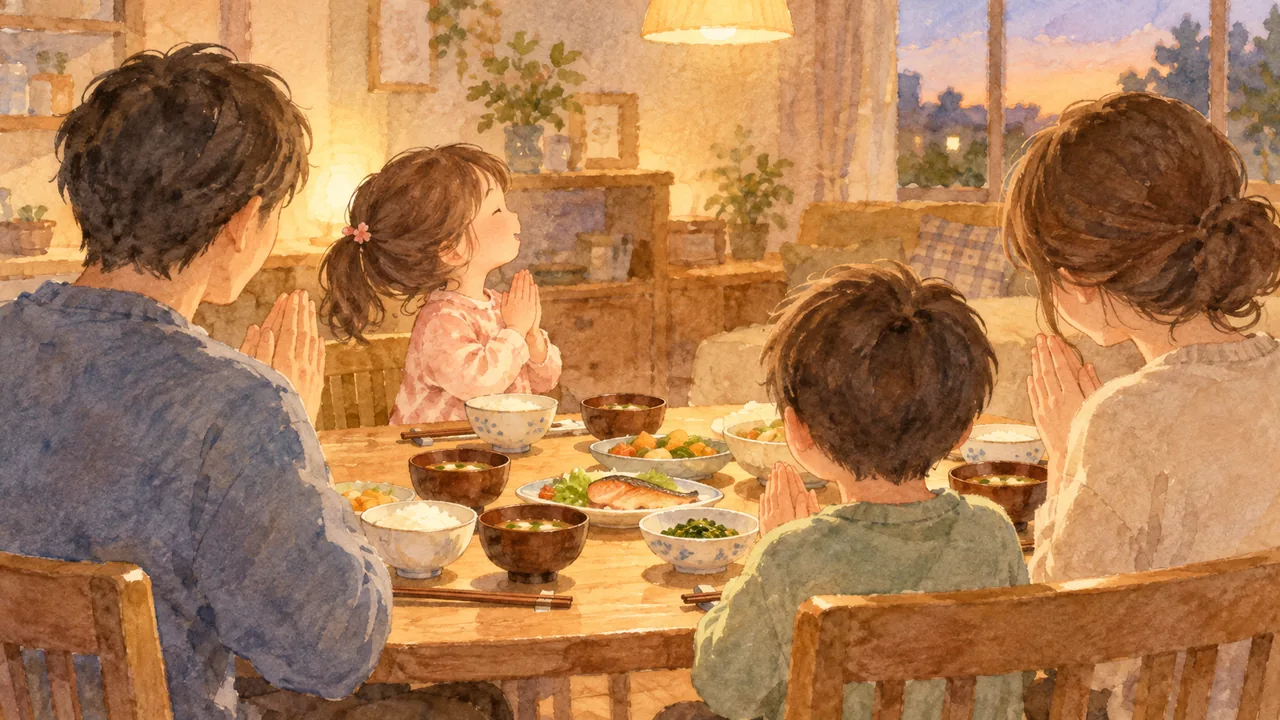
One day, my daughter taught this to the rest of us at the dinner table. "This is how you do it!"
At home, we normally just say itadakimasu. So I told her that the single word itadakimasu holds the same meaning as the prayer she says at school. She took that in, as if it made sense to her.
I had seen Christian families say grace before meals many times in foreign TV shows and movies. But it was my own child who taught me that something similar was right here, in everyday Japanese life.
Not Quite Faith, Just Part of Life
Japan is often described as a non-religious country. Yet in daily life, you run into religious moments all the time.
That doesn't mean people believe in a particular religion or belong to one. It means that customs born from religion have melted into everyday life, as something people simply do.
We greet the New Year by visiting shrines and temples, spend Christmas in a Christian-ish way, and close out the year with Shinto and Buddhist customs again. Many couples marry in a church, and nearly all funerals are Buddhist. For many Japanese people, I think religion is received less as faith and more as culture.
And Japan has a deep feeling for gratitude — for saying thank you. So we put thanks into words, for food and for people alike. Plenty of people live with a quiet gratitude toward the spirit they sense in everything around them.
Frequently Asked Questions
What does itadakimasu mean?
Literally, "I humbly receive." In practice, it is thanks to everything that brought the food to you. That includes the lives that became the food, the people who grew and cooked it, and something unseen beyond them. Japanese people say it before every meal, often with their hands together.
What does gochisousama mean?
It thanks someone for the trouble they took to prepare the meal. Chisō originally meant running around to gather food for a guest. It is said when the meal is over, and if the cook is there, it is said to them.
Is itadakimasu religious?
Not in the sense of belonging to a religion. It carries ideas that come from Japan's older beliefs — gratitude to lives and to something unseen — but people of any background say it as part of everyday life. It sits somewhere between a prayer and table manners.
Should I say itadakimasu as a visitor to Japan?
You don't have to, but saying it is a warm gesture. If you are eating with Japanese people or at someone's home, saying itadakimasu before eating and gochisousama after is a simple way to show thanks. Putting your hands together is optional.
Do Japanese people always say itadakimasu out loud?
No. Many say it silently, especially when eating alone. But most people say it in some form, and skipping it tends to leave a small, unsettled feeling.
Why shouldn't you stick chopsticks upright in rice?
Because that is how rice is offered to the dead in Japan. A bowl of rice with chopsticks standing in it is placed by the pillow of someone who has died, so doing it at an ordinary meal is considered very unlucky. Rest your chopsticks on a chopstick rest or across your bowl instead.
Final Thoughts: The Word That Faces Everything
That feeling of gratitude is slowly fading in Japan today. Even so — or rather, because of that — I believe it is something we have to pass on to the Japanese people of the future.
At the start, I asked who itadakimasu is actually said to. It is not as much about faith as a prayer, and not aimed only at the people at the table like bon appétit. It is a short word, said at the table every day, to all of it at once: the lives that became the food, the people who made it, and something unseen.
That, I think, is what itadakimasu means to the Japanese.
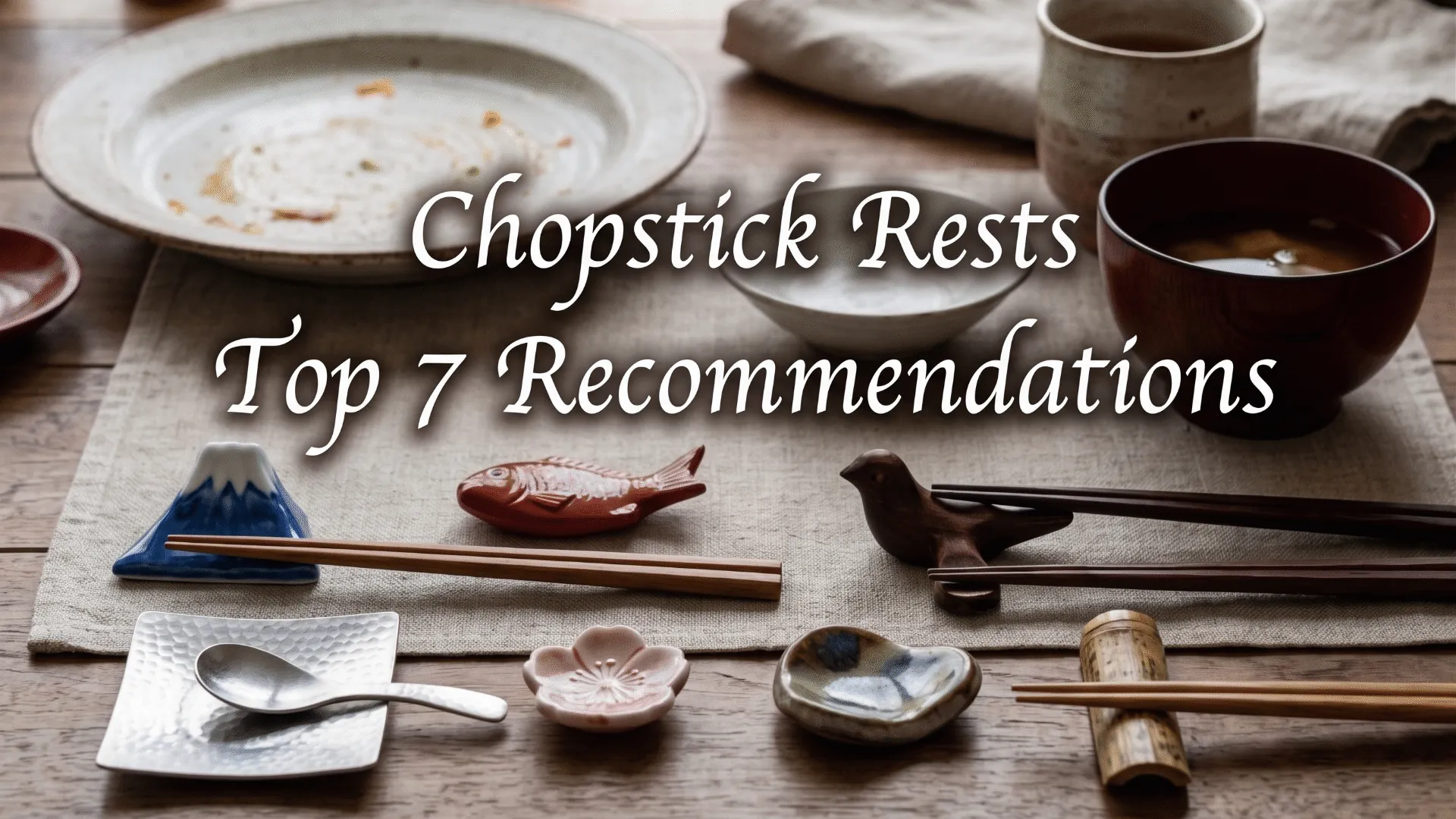
The Best Chopstick Rests: 7 Picks by Material
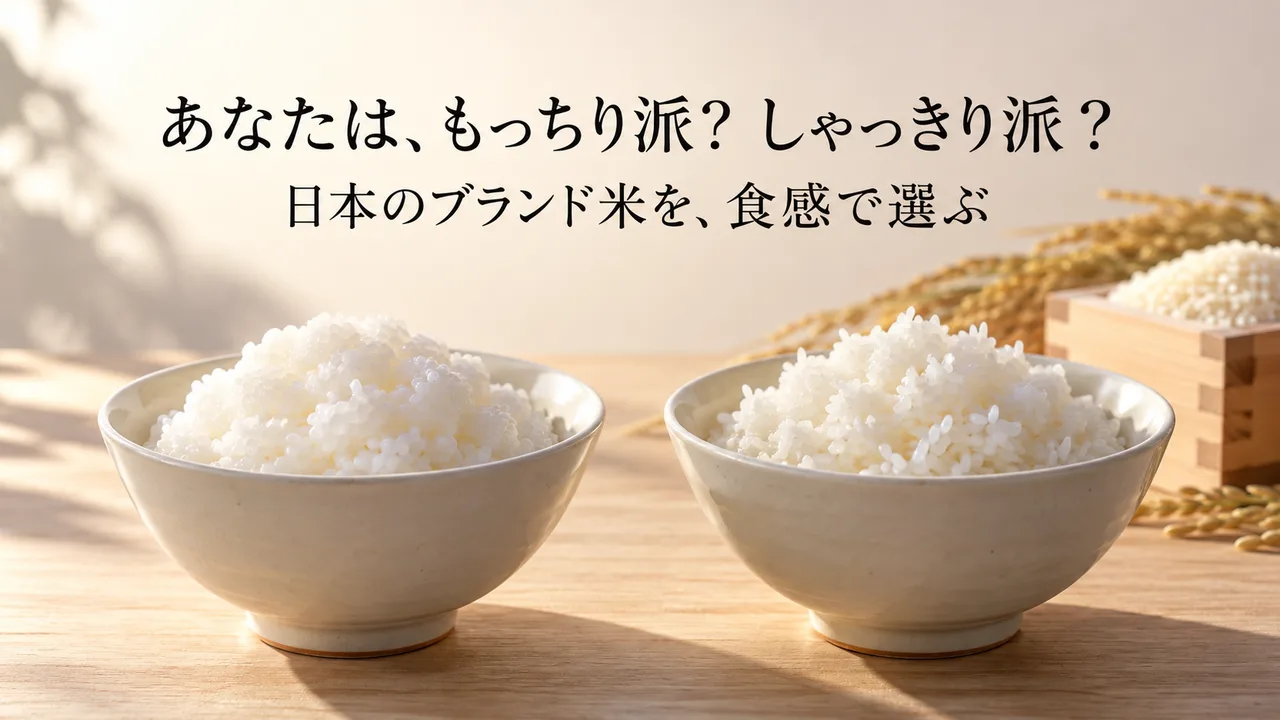
Japan's 7 Best Brand Rice Varieties: A Mail-Order Guide