Ibasen
Edo folding fans and uchiwa from Nihonbashi, Tokyo — a publisher and fan maker since 1590.
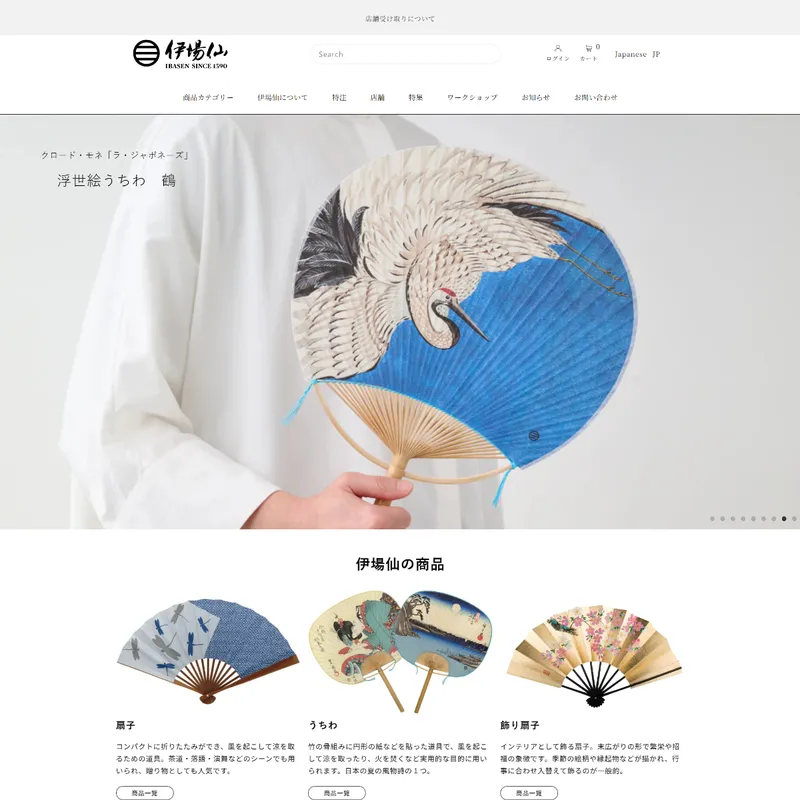
Ibasen Co., Ltd. is one of Japan's oldest established commercial firms, founded in 1590 in Nihonbashi, Chuo-ku, Tokyo — operating during the Edo period as both a publisher of ukiyo-e woodblock prints and a maker of Edo-style folding fans and uchiwa (rigid round fans). This dual history as a publisher and craftsman gives Ibasen an unusual position in Japanese fan production: the brand's fan designs draw directly on its ukiyo-e heritage, applying classic woodblock print imagery — Hiroshige landscapes, Kuniyoshi figures, Hokusai compositions — to fan surfaces through printing and painting techniques that have evolved over four centuries of production in the same Nihonbashi location.
PROFILE Company & Brand Story
Ibasen was founded in 1590 in Nihonbashi, Chuo-ku, Tokyo — operating as a commercial firm during the early Edo period when the newly established capital was developing its distinctive urban culture. The company operated simultaneously as a ukiyo-e publisher — producing woodblock prints of the popular imagery that documented Edo life — and as a fan maker, applying its graphic expertise to the surface design of folding fans and uchiwa.
This combination of printing and fan-making is the defining characteristic of Ibasen's historical identity. The ukiyo-e publishing tradition gave the company access to — and ownership of — an extraordinary archive of Edo-period imagery: landscapes, portraits, theatrical scenes, mythological subjects, seasonal motifs. This archive remains the source material for Ibasen's fan design today, updated and reinterpreted across generations of production but rooted in the visual vocabulary of Edo popular art.
The Edo folding fan differs from the Kyoto folding fan in character. Where Kyo-sensu (Kyoto fans) tend toward refined, subtle aesthetics appropriate for formal contexts — ceremonial use, traditional performing arts — Edo fans reflect the energy and directness of Edo merchant culture: bold imagery, vivid color, confident compositions. The Kuniyoshi Cat Fan series, for example, applies Utagawa Kuniyoshi's celebrated cat-as-human imagery from the mid-nineteenth century to fan surfaces with the graphic confidence characteristic of the Edo popular art tradition.
Ibasen's uchiwa (rigid fans) carry the same graphic tradition: printed or painted imagery on a round or oval rigid fan face, supported by a bamboo or wire frame. The uchiwa is the more vernacular form — distributed at festivals, associated with summer cooling in the traditional domestic setting — and Ibasen produces uchiwa in both traditional imagery and contemporary collaborations.
The Kakishibu (persimmon tannin) Fan and Shikebiki Fan represent specialized products within Ibasen's range: the Kakishibu fan uses a natural persimmon tannin treatment on the paper surface, producing a distinctive warm brown tone that darkens over time and imparts natural water and insect resistance. The Shikebiki fan uses a different papermaking or surface treatment technique that gives the fan face a specific texture and quality.
Founded 1590 — Nihonbashi ukiyo-e publisher and Edo fan maker
Ibasen has operated from Nihonbashi, Tokyo since 1590 — over 430 years in the same location, maintaining both a publishing heritage in ukiyo-e woodblock prints and a craft tradition in Edo-style folding fans and uchiwa. The combination of graphic publishing expertise and fan-making craft defines the brand's unique position in Japanese fan production.
Ukiyo-e imagery on fan surfaces — four centuries of graphic heritage
Ibasen's fan designs draw from its own ukiyo-e publishing archive: Hiroshige landscapes, Kuniyoshi figures, Hokusai compositions applied to fan surfaces through printing and painting techniques developed over four centuries. The brand produces the graphic content of its fans from its own historical material — a resource no other fan maker possesses.
Edo fan character — bold imagery, merchant city energy
Ibasen's fans reflect Edo aesthetics: bold composition, vivid color, confident graphic expression. Where Kyoto fans favor formal restraint, Edo fans carry the directness of the merchant capital's popular culture. Ibasen's designs express this character authentically, rooted in actual historical Edo publishing practice rather than contemporary nostalgia.
PRODUCTS Featured Products & Services
Ibasen Edo Folding Fan Ukiyo-e Series — Japanese Sensu, Tokyo
Folding fans with ukiyo-e imagery from Ibasen's publishing archive: Hiroshige, Hokusai, Kuniyoshi. Edo-style fan construction from Nihonbashi, Tokyo. Available in multiple designs from the historical woodblock print tradition.
View DetailsIbasen Edo Uchiwa — Japanese Round Fan, Nihonbashi
A traditional Edo uchiwa (rigid round fan) from Ibasen. Printed with ukiyo-e imagery or seasonal Edo motifs. Summer cooling fan from a publisher and fan maker operating in Nihonbashi since 1590.
View DetailsIbasen Kuniyoshi Cat Fan — Ukiyo-e Folding Fan
A folding fan bearing Utagawa Kuniyoshi's celebrated cat-as-human imagery — bold, humorous Edo-period woodblock print art applied to a fan surface by Ibasen. A particularly recognizable design from the historical ukiyo-e archive.
View DetailsIbasen Shikebiki Fan — Specialty Japanese Folding Fan
The Shikebiki folding fan from Ibasen — a specialty fan with distinctive paper surface treatment. Traditional Edo fan construction from Nihonbashi, Tokyo. A more unusual piece from Ibasen's extended range.
View DetailsIbasen Kakishibu Fan — Persimmon Tannin Japanese Fan
A fan with Kakishibu (persimmon tannin) surface treatment — a natural material that gives the paper a warm brown tone, darkens over time, and imparts natural water resistance. A traditional Japanese material application from Ibasen, Nihonbashi.
View DetailsMEDIA Media, Awards & Initiatives
- Ibasen is recognized internationally as one of Japan's oldest commercial firms, with a heritage as both a ukiyo-e publisher and Edo fan maker dating to 1590. The brand is cited by Japanese cultural heritage organizations and international arts media for maintaining the connection between historical woodblock print imagery and traditional fan craft in its Nihonbashi location.