Japanese Toilet Sink: How to Use It, and Why No Soap
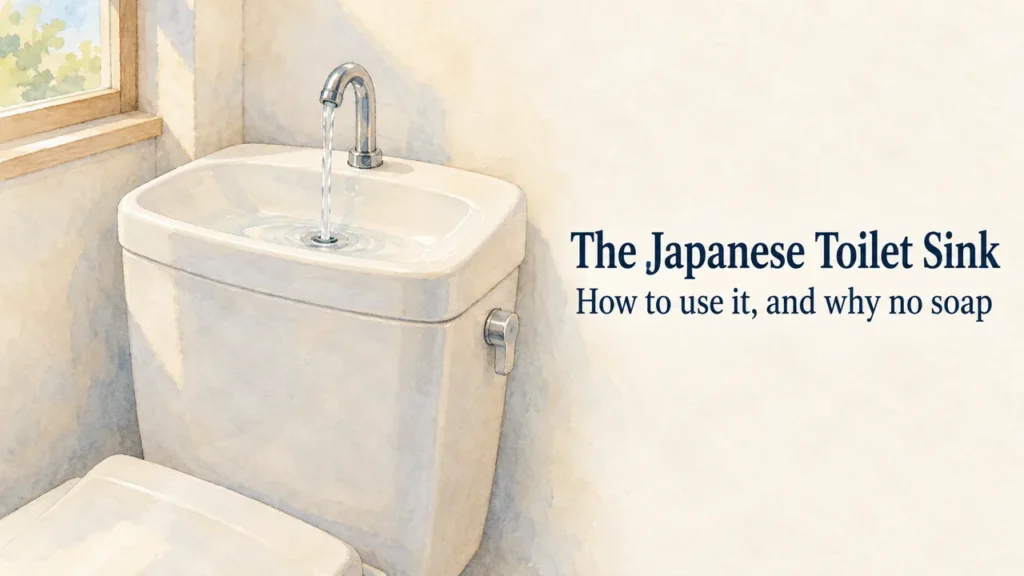
In many Japanese homes, when you flush the toilet, water starts running from a little faucet on top of
the tank. People seeing it for the first time are often unsure what to do. Is it for washing your
hands? Can you use soap?
A video about this little sink spread online recently, with one message: don't use soap in it.
Here is the short answer first: it is there so you can rinse your hands quickly in the water that runs
after you flush — and you don't use soap.
But to be honest, I have almost never washed my hands in one.
In My House, We Didn't Wash There
That little faucet has been on the toilet tank in my home for as long as I can remember. But the washroom was right next to the toilet, so it never occurred to me to wash my hands on top of the tank.
In fact, my family had a rule: don't wash your hands there. The basin is small, and the water splashes all over the floor.
So even among Japanese people, how this sink gets used depends on the house. Still, there are clear reasons why it is there, and why soap is a bad idea.
Flush, and the Water Runs
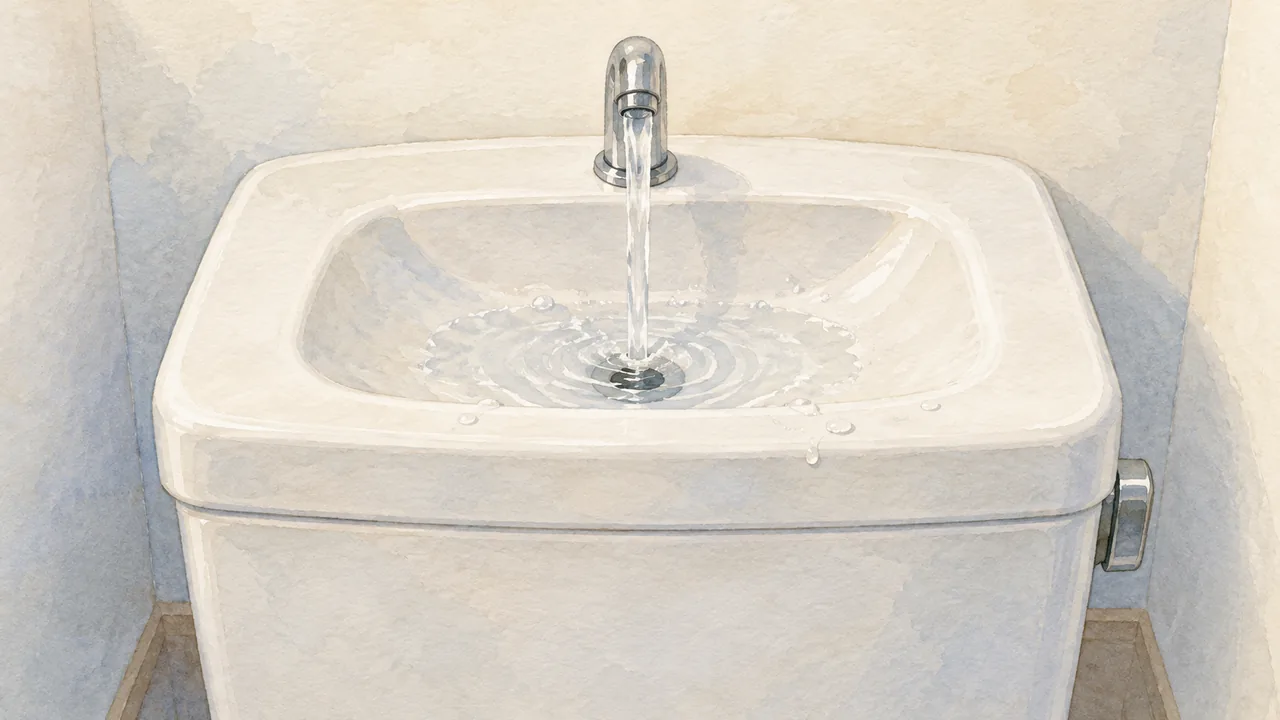
The mechanism is simple. When you flush, the tank empties. Then it refills with water for the next flush. That water does not go straight into the tank. It comes out of the faucet on top, falls into the little basin, and drains from there back into the tank.
So the water you wash your hands with is not thrown away. It collects in the tank as the water for the next flush. The same water is used twice: once for your hands, once for the toilet.
The water stops by itself when the tank is full. You don't turn the faucet on or off. If you want to rinse your hands, flush, and hold them under the water that comes out.
Why You Don't Use Soap
So why no soap? The answer is where the water goes.
The water from the basin runs straight into the tank, and the tank is full of parts that stop and release the water. Japan's major toilet makers say the same thing:
- TOTO: don't use soap in the basin on top of the tank. Soap can stop the parts inside from moving properly, which can lead to water that won't stop running, weak flushes, and leaks.
- LIXIL: the water you wash your hands with becomes the water in the tank, so soap that goes down the basin ends up inside it, where it can wear out or jam the parts that control the water level (the fill valve and the flapper).
In other words, you don't skip the soap because it's dirty. You skip it because it can break the toilet.
Since my family never washed there anyway, we never put soap there either. Our reason was splashing water — but as it turns out, we were doing exactly what the manufacturers ask.
When You Want to Wash with Soap
Of course, plenty of people want to wash with soap. Then you use a sink that is separate from the tank.
In restrooms at shops and train stations in Japan, a sink on top of the tank is actually the less common sight. There is usually a separate washbasin. The tank-top sink is mostly something you meet in people's homes.
Some homes add a small separate sink inside the toilet room. TOTO recommends exactly that for people who want to wash with soap in the toilet. And according to LIXIL, if the water from a sink goes straight to the toilet bowl or the drain instead of into the tank, soap is fine. The thing to look at is simple: does the water you wash with go into the tank, or not?
If you are staying in a Japanese home and the toilet only has the sink on the tank, rinse your hands there if you like, and use soap at the washroom sink. That is all you need to do.
Why Is There a Sink on the Tank at All?
A toilet in a Japanese home is usually its own small room — about the size of a single tatami mat. Turn around, and you can already touch the wall.
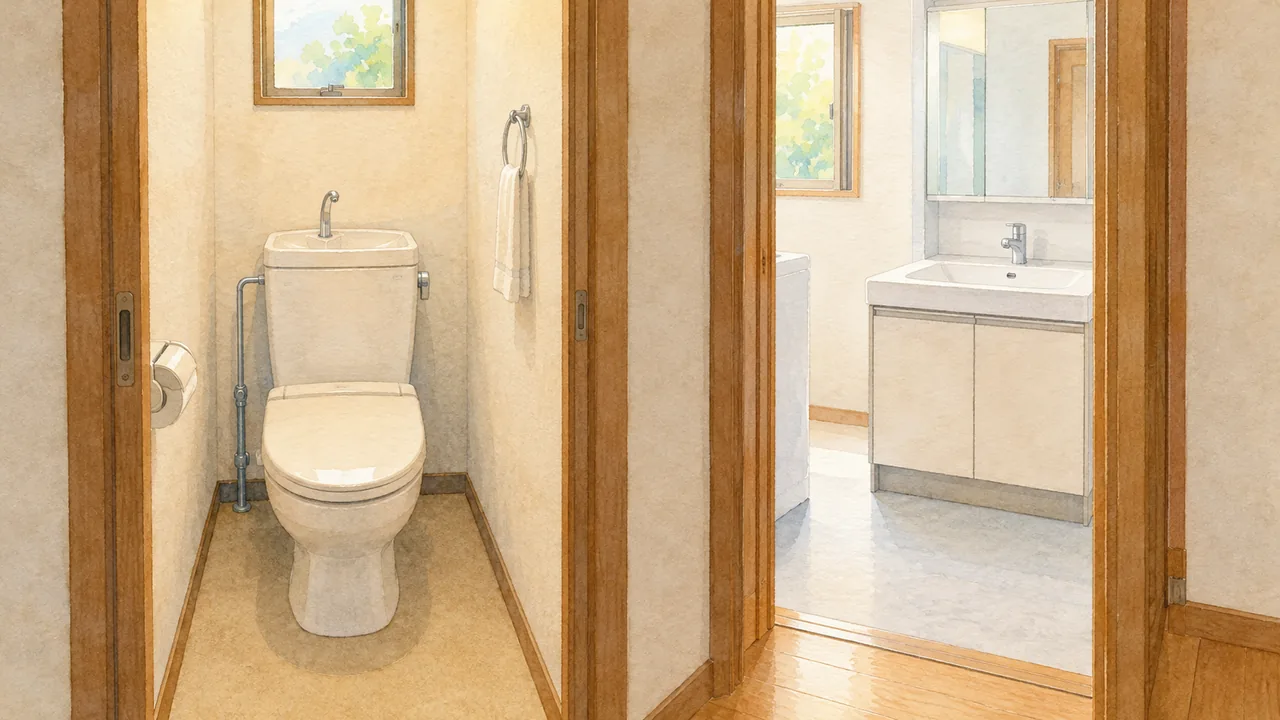
At the same time, Japanese homes are often designed with the toilet, the bath and the washroom grouped together. In the house I grew up in, and in the house I live in now, the toilet is right next to the washroom — a room that doubles as the changing room for the bath. It is a few steps away.
So if the washroom is that close, why put a sink on the tank too?
One reason is that you can give your hands a quick rinse before those few steps. The other is that it doesn't waste water: the water you rinse with becomes the next flush. A small room, and the idea of using water twice — both are packed into this little faucet.
And some families, like mine, simply decide not to wash there. Whether it gets used is up to each household.
Other Countries Have It Too
A sink on top of the toilet tank is not only a Japanese thing.
In Australia, the toilet maker Caroma sells the Profile 5, a toilet with a hand basin on the cistern. It first came out in 2007, at the height of a severe drought in Queensland, after a trial with Brisbane City Council. Caroma describes it in almost the same words I would use for the Japanese one: fresh water is used first for washing hands, then flows into the cistern to flush the toilet.
The reasons people live with it differ from place to place. The idea of using water twice is the same.
A Little Faucet You See Less and Less
This little faucet is still on the toilets in many Japanese homes. But in newer homes, you see it less often.
More homes now have tankless toilets, with no tank to put a sink on at all, and even with a tank, many families choose a model without the sink. Shops and stations, as I mentioned, have their own washbasins anyway.
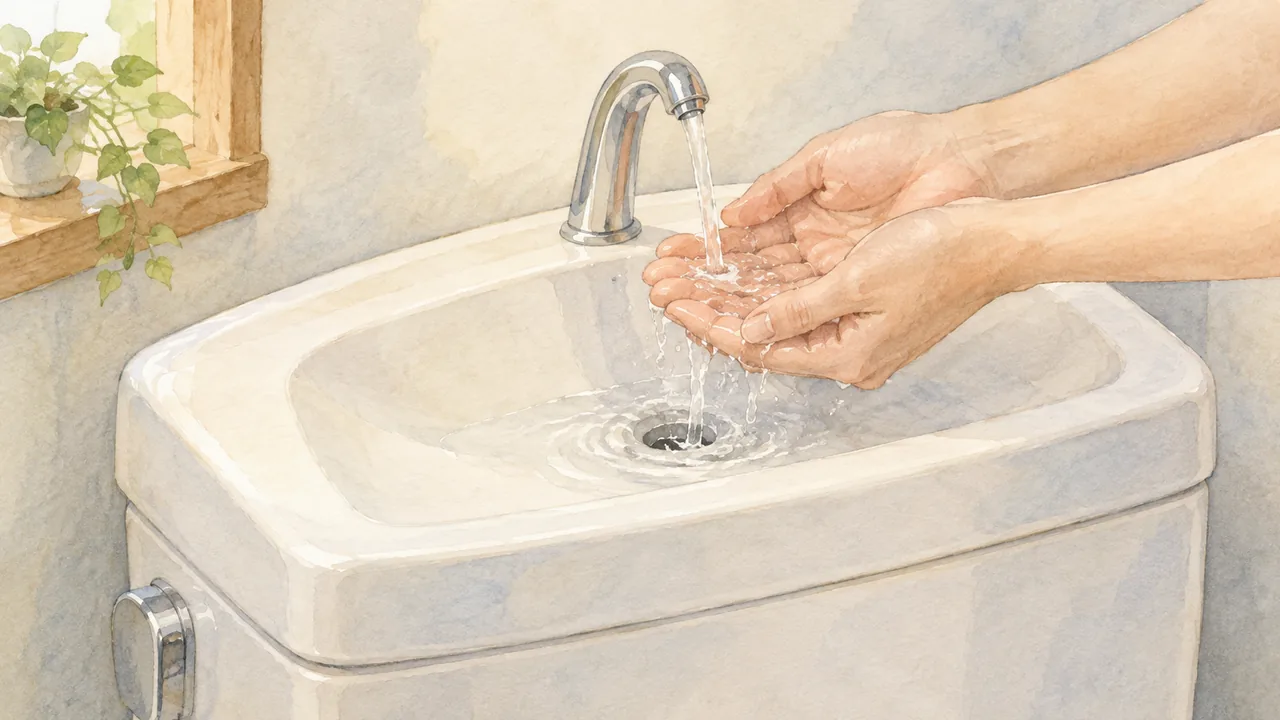
If you see one in Japan, pull the lever and rinse your hands in the water that comes out. Don't use soap. If you want to wash properly, the washroom is probably a few steps away.
Frequently Asked Questions
How do you use the sink on top of a Japanese toilet?
Flush the toilet, then rinse your hands in the water that runs from the faucet.
The water is the tank refilling for the next flush. It stops by itself when the tank is full, so there is
nothing to turn on or off.
Can I use soap in a Japanese toilet tank sink?
No.
The water goes into the tank, and TOTO and LIXIL both say soap can jam or wear out the parts inside, leading to
water that won't stop, poor flushing or leaks. Use soap at a separate sink.
Do Japanese people actually wash their hands in it?
Some do, some don't — it depends on the household.
Many homes have the washroom right next to the toilet. In my family, the rule was not to wash there at all,
because the small basin splashes water on the floor.
Why does the water turn on when you flush?
Because the water refilling the tank is routed through the faucet first.
It falls into the basin and drains into the tank, where it waits as the water for the next flush.
Where should I wash my hands with soap in Japan?
At a separate sink.
In a home, that is usually the washroom, which is often next to the toilet. Restrooms in shops and stations
usually have their own washbasins.
Do other countries have toilets with a sink on top?
Yes.
In Australia, Caroma's Profile 5 has a hand basin on the cistern. Its water is used first for washing hands
and then for flushing, the same idea as the Japanese one.
Final Thoughts: The Faucet I Grew Up With
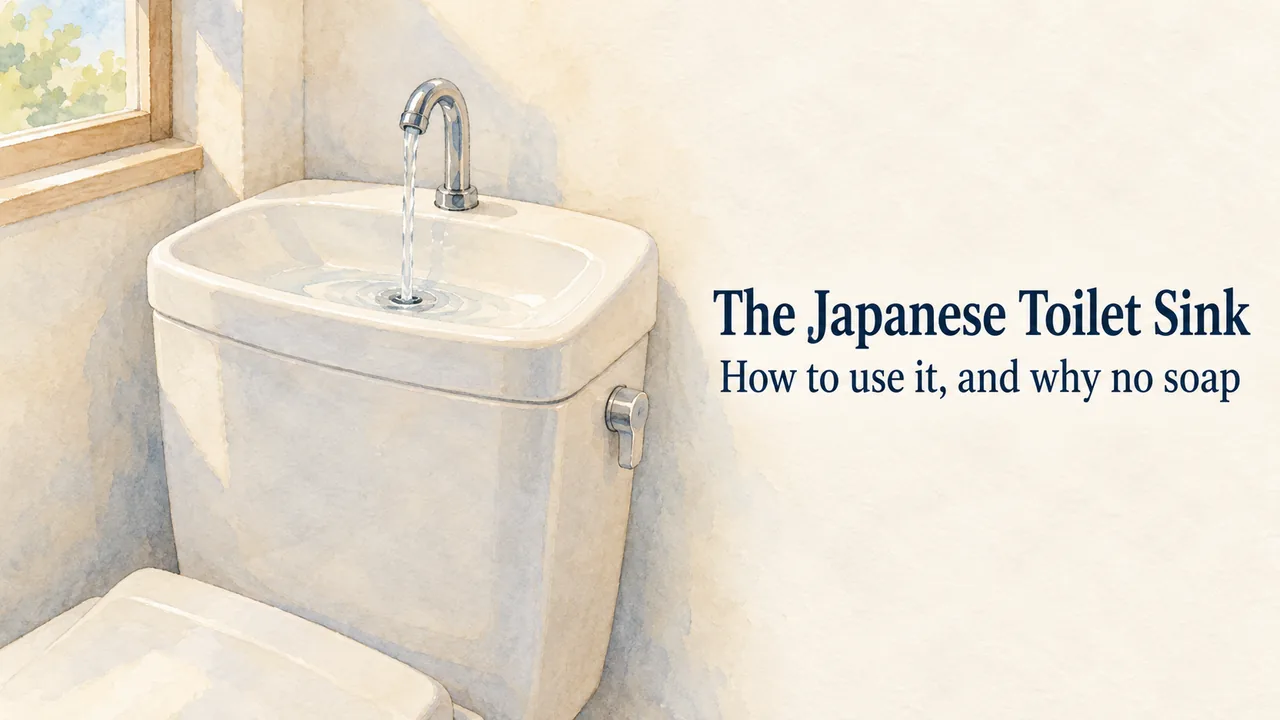
Flush. Water runs. Rinse your hands if you like. No soap.
That is all there is to it. But inside that little faucet are a small room, and the habit of not letting water go to waste.
It was there for as long as I can remember, and I grew up almost never using it. Even so, seeing it slowly disappear makes me a little sad.
Japanese Soap Dishes That Keep Soap Dry
Japanese Soap: Additive-Free Bars, 5 Makers