Why Japanese Students Serve Lunch and Clean Their School
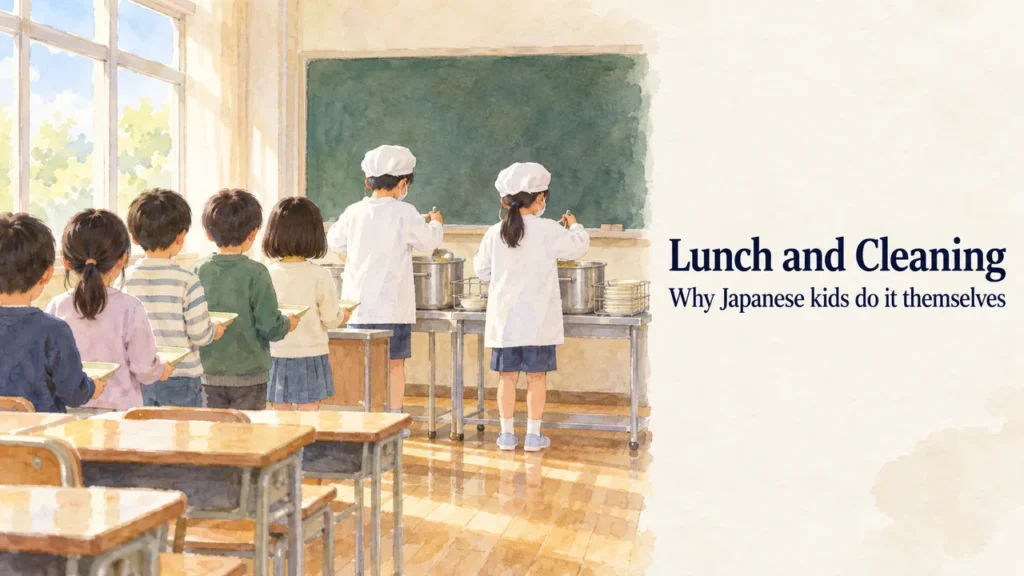
In a Japanese elementary school, lunch is served by the children. Kids in white smocks and caps
carry big pots from the kitchen and ladle out food for their classmates. After lunch, they move the desks to the
back of the room, sweep, and wipe the floor on their hands and knees with wet rags.
Visitors to Japanese schools are often surprised by both. For Japanese people, it is simply what school was
like.
Here is the short answer, from a Japanese parent who grew up with it and now sends their own children to school:
Japanese schools treat lunch and cleaning as part of learning to live together — you take care of the
places you use, and you do your part until it is done.
Lunchtime in a Japanese Classroom
A friend of mine, a teacher, once showed a group of American teachers around a Japanese elementary school. They were already surprised to see small children riding the train to school on their own (I wrote about that in another article). But inside the school, there were two more scenes that made them stop and stare.
The first was lunch. Children wearing white smocks and caps carried large pots into the classroom and served food onto their classmates' plates. When everyone had finished, the children cleared it all away themselves.
The second was cleaning time, right after. All the children pushed their desks and chairs to the back of the room, swept the floor, and then, with tightly wrung-out rags, wiped the floor on their hands and knees.
To the American teachers, it was something they could not imagine happening in their own schools.
For Japanese people, it is the everyday scenery everyone grew up with. I never once thought of lunch duty or cleaning time as anything special. But from the outside, apparently, it is. So I want to write about what children actually do at a Japanese school — as someone who went through it, and as a parent who now sends my own children there.
At Lunch, the Kids Put on White Smocks
Most public elementary schools in Japan serve school lunch, called kyushoku. Children don't bring a packed lunch. The whole class eats the same meal, made in the school kitchen or delivered from a lunch center, together in their classroom.
When lunchtime comes, the children on duty that week put on white smocks called kappogi, caps and masks. They go to the kitchen or the serving room, pick up the big pots and containers, and carry them back to the classroom.
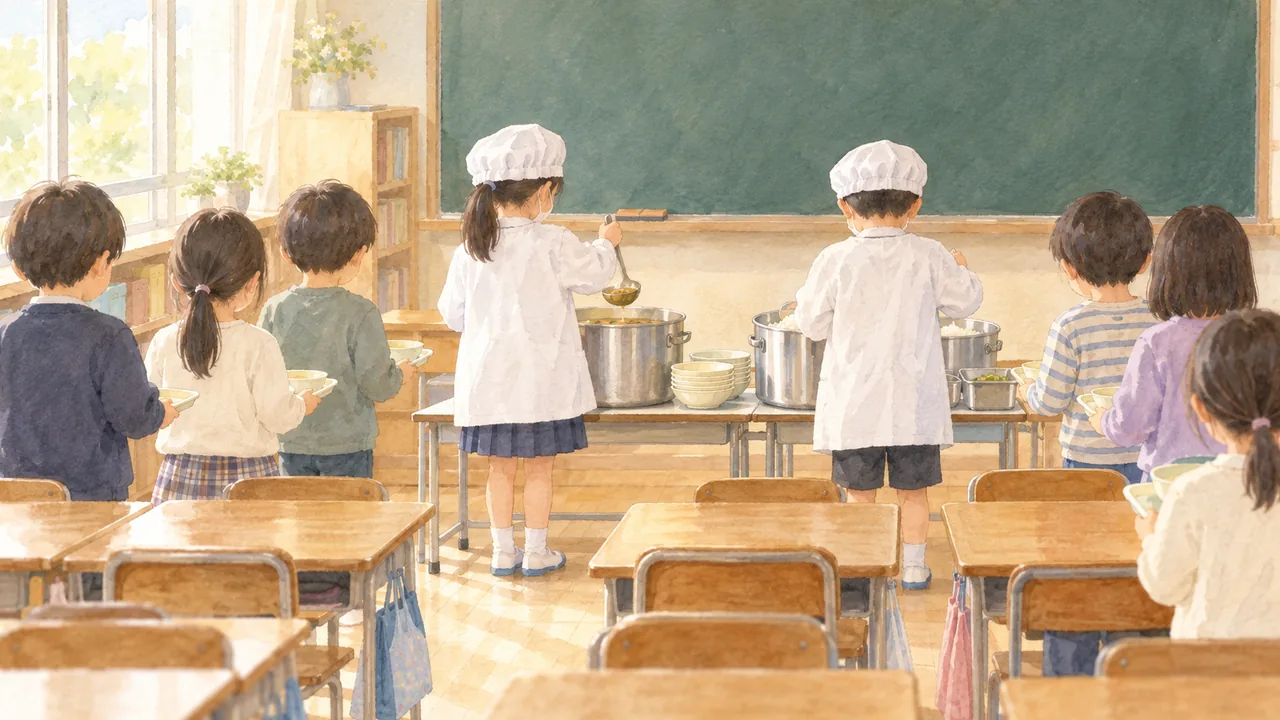
The rest of the class lines up holding trays. The children on duty scoop the rice, dish out the side dishes and ladle the soup, trying in their own way to make sure no one gets too much or too little.
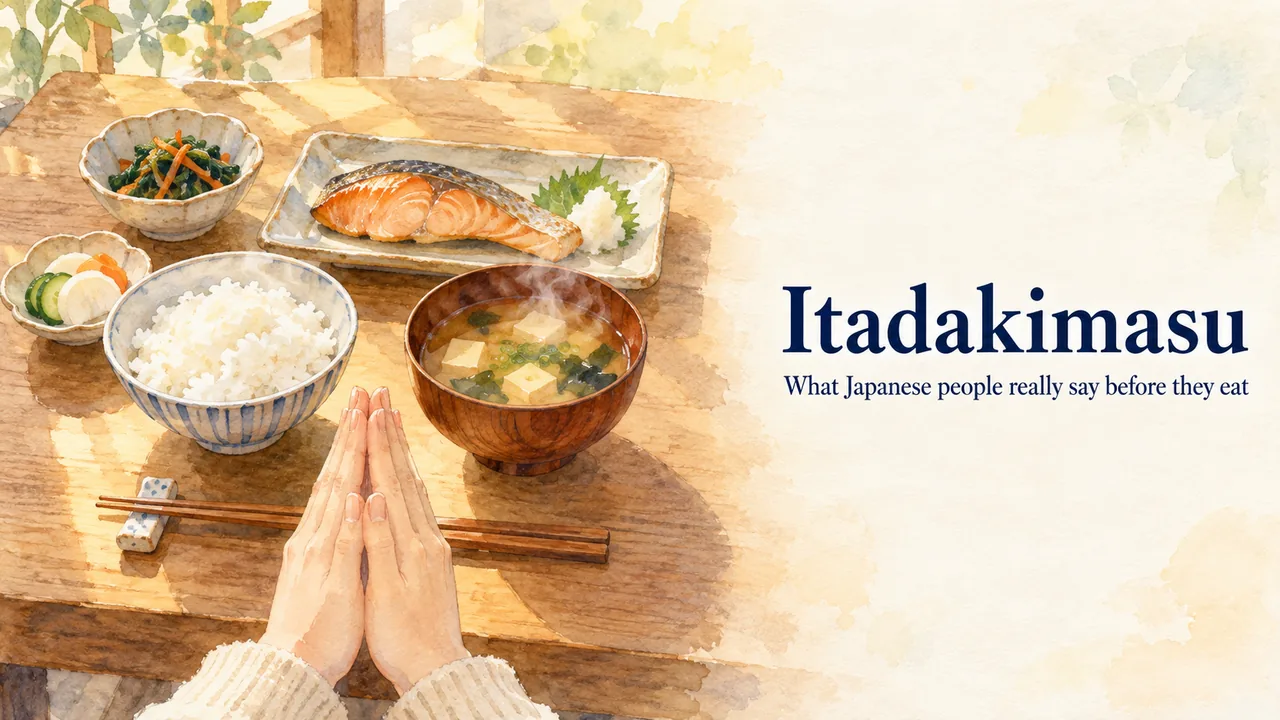
Once everyone has their food, the whole class puts their hands together and says itadakimasu. The teacher eats the same lunch, in the same classroom, with the children.
After eating, the children put their dishes back in the crates and return the leftovers to the pots, and the lunch-duty team carries everything back to the kitchen. At some schools, they even open up their milk cartons and fold them flat.
Right through to gochisousama at the end, lunch is not only a time to eat. It is a time to prepare together and clean up together.
My favorite school lunch was agepan: fried bread rolled in sugar or kinako, a roasted soybean flour. On agepan days, I was somehow happy from the morning.
And soft noodles — soft, thick noodles somewhere between udon and pasta, eaten with meat sauce. My classmates all said they hated them, but I liked them. Every Japanese school lunch menu has memories like that, the kind only the kids who grew up at that school understand.
The Smock That Travels from Home to Home
There is a part of this that a school visit doesn't show.
Lunch duty rotates among the children. These days, it comes around to my child about once a month.
When their week on duty is over, the child brings the white smock home. It gets washed and ironed at home and then handed to the child on duty the next week. So the same smock travels around the class, from one family's home to the next.
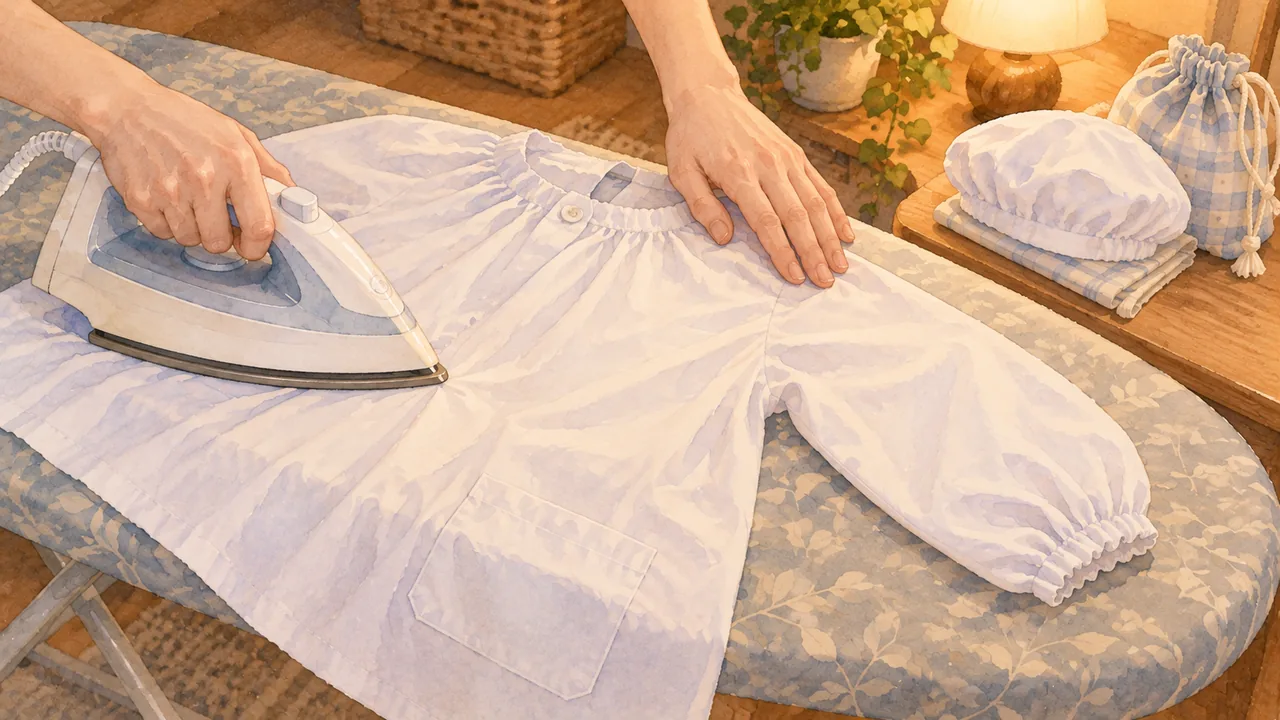
It was the same when I was a child. At the end of my week, I took the smock home, it was washed, and my mother ironed it.
Behind the children serving lunch at school, families are doing part of the work too. Lunch duty is something the school and the home keep going together.
School Lunch Began at a Temple
Did you know: Japan's first school lunch was rice balls and salted salmon
Japanese school lunch is said to have begun in 1889, in Tsuruoka, Yamagata Prefecture, at a small school set up inside a Buddhist temple. For poor children who could not bring a lunch from home, the monks made lunch themselves: rice balls, salted salmon and pickles. The rice and money came from alms the monks collected.
Today's school lunches are planned for balanced nutrition, and children eat a different meal every day. But the starting point was simple: someone wanted to feed children who were hungry.
Cleaning Time
After lunch, most schools have cleaning time, called soji.
The children split into groups, and each group takes charge of a place. Besides their own classroom, there are the hallways, the stairs, the entrance where everyone changes shoes — and at some schools, even the toilets. Each place has its team, and the teams rotate.
Cleaning a classroom goes roughly like this.
First, everyone pushes the desks and chairs to the back of the room. They sweep the empty front half with brooms. Then they wipe the floor with tightly wrung-out rags called zokin: down on their hands and knees, both hands pressing the rag to the floor, they run it from one side of the room to the other in one go. When the front is done, they carry the desks forward and clean the back half the same way. Finally, the desks and chairs go back into their rows, and that's it.
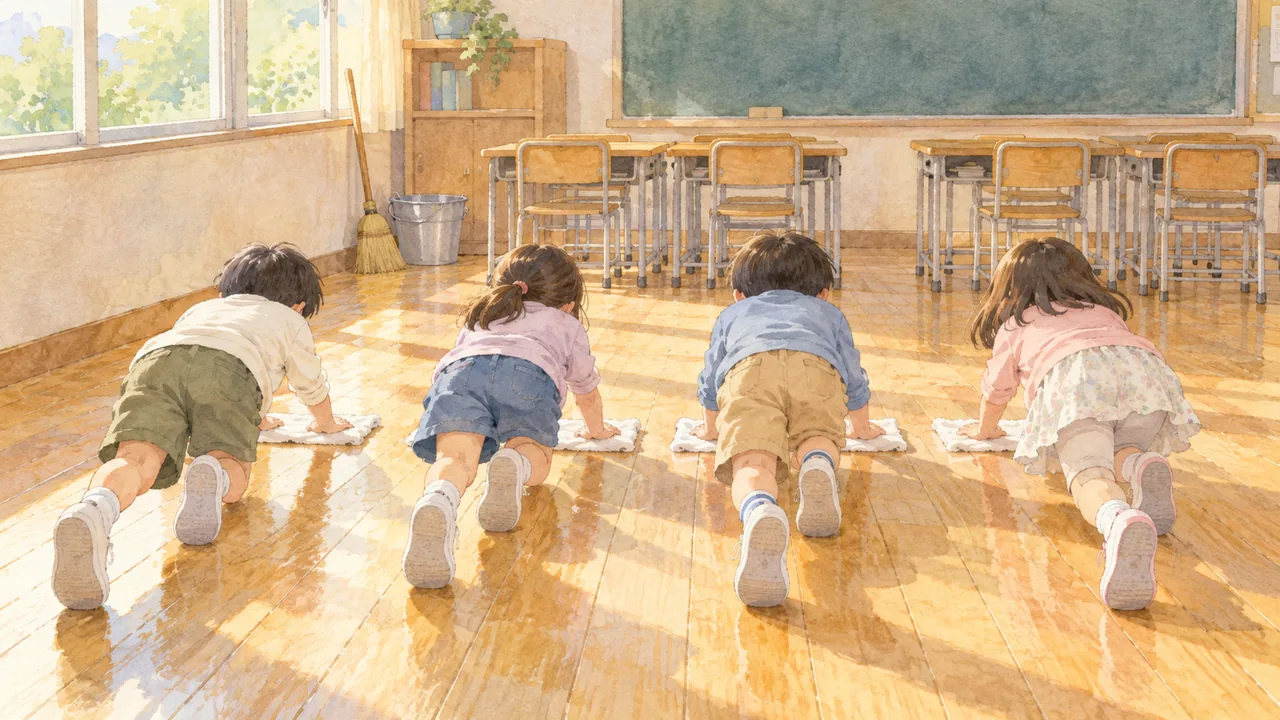
What surprised the American teachers most was exactly this: children wiping the floor on all fours.
To be honest, as a kid I found cleaning a real chore.
In the lower grades, the floor wiping started out almost as a game. The teacher would call out "Yoi, don!" — ready, set, go — and everyone would push their rags across the classroom at once. But that was really a way to practice. After a while, it turned into a rotation, and the jobs were divided: sweeping, wiping, taking out the trash.
The Rags Come from Home
Those rags come from home.
When I was in elementary school, there was a strange rule about them: you were not allowed to use rags from a store. A parent had to sew them by hand.
In my house, my mother sewed them. She layered old, worn-out towels and stitched them together into a rag.
Today, most families seem to send store-bought rags. Even so, turning old towels into rags at home is still perfectly ordinary. Nobody sews them anymore, though.
I still don't know for certain why that rule existed.
But this is just my own guess, and it is what I think now. Back then, it wasn't only the rags. The drawstring bags and tote bags children used at school were also things parents made by hand. Maybe that was a step the school set up to help parents grow into being parents, as they sent their children off to school. I think it was part of the culture of the Showa era, the period that ended in 1989.
Why Do Japanese Schools Have Kids Clean?
It is hard to give one reason. I think several things overlap.
One is a religious sense. In Japan, clearing away dirt and clearing the mind are connected somewhere deep down. There is also an old feeling that a god can live in anything, and that places where a god lives should be kept clean. In Buddhist temples, cleaning has long been treated as a practice for polishing the mind. Whether school cleaning comes from that, I don't know. But children quietly wiping a floor with brooms and rags have something in common with it.
Another is responsibility. You clean the places you use, and the places you have used. A classroom is not a place someone else keeps clean for you. It is a place you look after yourselves. Lunch is the same: you don't wait for someone to bring it and hand it out. You prepare it, and you clear it away.
And there is the lesson of dividing up the work and finishing something together. Sweeping, wiping, taking out the trash — the classroom only gets clean when each child does their own part. It is teamwork, but more than that, I can't think of a better place to learn how to see your own role through to the end.
In Japan, school is not seen only as a place to study. It is also a place to learn how to live together. Rotating duties and having a group take care of one place are part of that.
How Is It Where You Live?
I want to write this part not to say which way is better, but simply to understand the differences.
In American TV shows and movies, you often see children lining up in a cafeteria with trays while adult staff serve the food. Cleaning the school seems to be generally done by adults whose job it is.
Over the past ten years or so, some countries have started to take up the Japanese approach.
In Singapore, since 2016, students clean their classrooms and corridors every day. News reports said the idea was modeled on schools in Japan.
In Egypt, schools based on Japanese-style education have been set up, and time for children to clean is part of them. At first, both children and parents were puzzled. Many people there thought of cleaning as something done by family members or hired help — not by children.
I don't think either way is right or wrong. Who does the cleaning depends on how a country lives and how it divides up work. Still, as a Japanese person, it feels a little strange — and a little nice — that something so ordinary in Japan is being received overseas as something new.
How do school lunch and cleaning work where you live? Did you ever clean your school when you were a child?
The "Clean Company" My Son Started
This wanders a little from cleaning time.
When my eldest son was in elementary school, he started something called the "Clean Company" as one of the student committee activities. It wasn't a real company — just the name of the committee. Apparently the idea was his.
During committee time, the members picked a place and cleaned it thoroughly. One day they raked up the fallen leaves in the schoolyard. Another day they polished a hallway until it shone. Another day they brought a murky fish tank completely back to life. It was a way of making the school clean and having fun doing it.
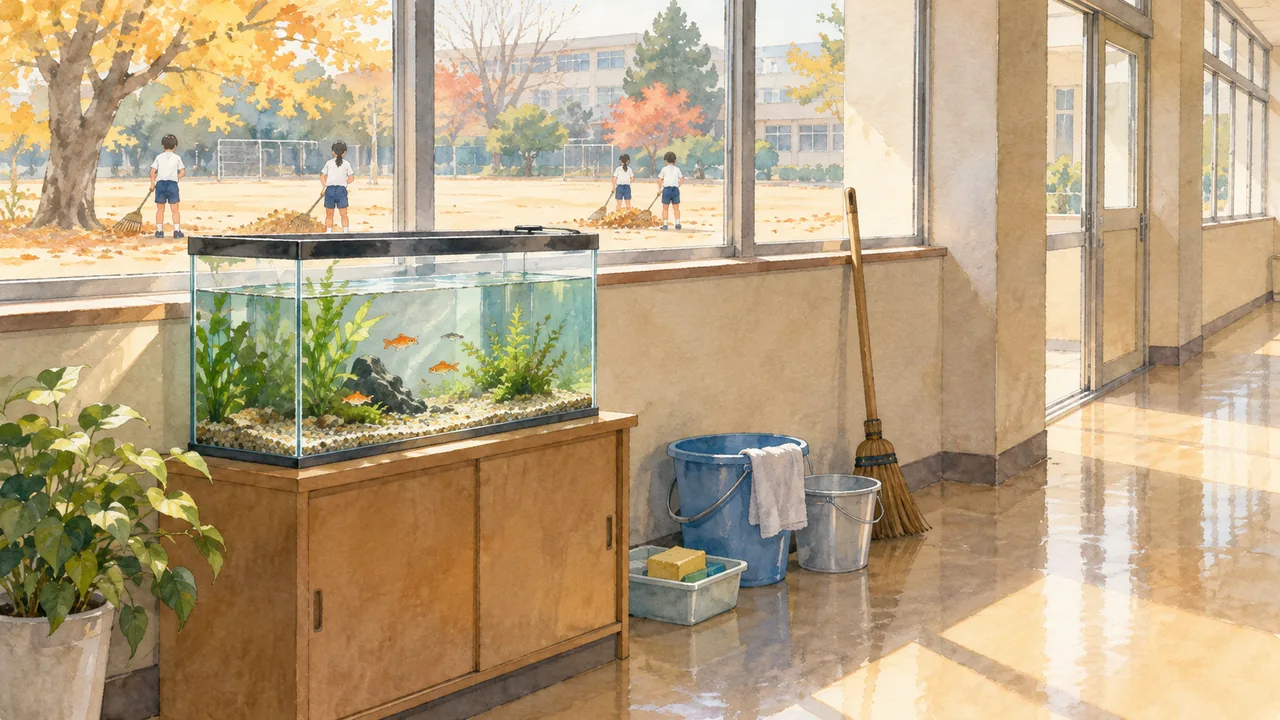
Somehow it became the talk of the school, and it turned into one of the most popular committees. It even raised the standard of the everyday cleaning time. Even now that he has graduated, I hear it is still one of the school's favorite committees.
A chore can turn into something fun in the hands of children. When I think of that, the time I spent pushing a rag across a classroom floor doesn't feel wasted after all.
Frequently Asked Questions
Do Japanese students really clean their own school?
Yes. Most schools have a cleaning time every day, usually after lunch.
Children split into groups and clean their classroom, hallways, stairs and entrance. At some schools, they clean
the toilets too. The places and jobs rotate.
Do Japanese students serve their own school lunch?
Yes. Children on lunch duty serve their classmates.
Wearing white smocks, caps and masks, they carry the food from the kitchen and dish it out to the class, then take
everything back afterward. The duty rotates, about once a month per child at my child's school.
What do Japanese kids eat for school lunch?
A full meal, planned for balanced nutrition, that changes every day.
Rice or bread, a main dish, side dishes, soup and milk are typical. Old favorites include agepan
(fried bread rolled in sugar or roasted soybean flour) and soft noodles with meat sauce.
Who washes the white lunch smocks?
The families.
After their week on duty, the child takes the smock home. It is washed and ironed at home and passed on to the
next child, so the same smock goes around the class.
Why do Japanese schools make students clean?
There isn't one official reason, but several ideas overlap.
A sense that cleaning a place also clears the mind, the responsibility of cleaning the places you use, and
learning to do your own part in a shared job. School in Japan is also seen as a place to learn how to live
together.
Do other countries do this?
Some have started to.
Singapore introduced daily cleaning by students in 2016, reportedly modeled on Japan, and schools in Egypt based
on Japanese-style education include cleaning time.
Final Thoughts: Eat, Clear Up, and Clean
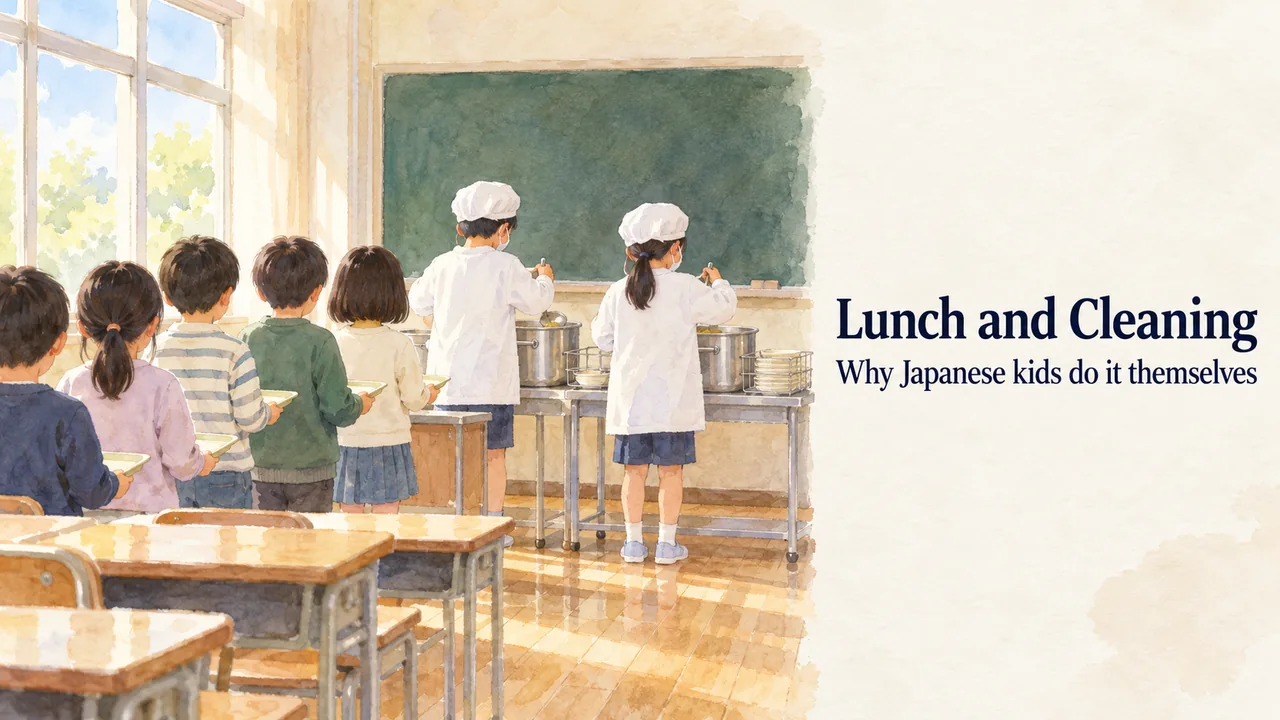
Start with itadakimasu, finish with gochisousama, clear the dishes, and clean the classroom. At a Japanese school, the lunch break runs in one line: being grateful for what you received, and putting the place you used back the way it was.
It isn't taught in a lesson. It sinks in by doing it every day. Clean the places you use. See your own part through to the end. Long after leaving school, it may still show in small things — wiping the table before you stand up, taking your own trash home.
My mother washed and ironed the white smock. I wore it to serve lunch. Now my own children bring the same kind of smock home. This lunchtime scene is still going on, just as it was.
Why Japanese Kids Go to School Alone (From Age Six)
Itadakimasu: What Japanese People Really Say Before Eating