A natural moisture-proof box that lasts 100 years. "Tea boxes" handmade by craftspeople in Kawane.|Maeda Kobo (Kawane Chabako)
The feel of air pushed out the moment you close the lid.
The humidity control of cedar and the moisture barrier of tin keep the inside in a stable, "clean-room"-like environment.
Once you use it, you'll be astonished by the overwhelming preservation performance.
Nori (seaweed) stays crisp inside
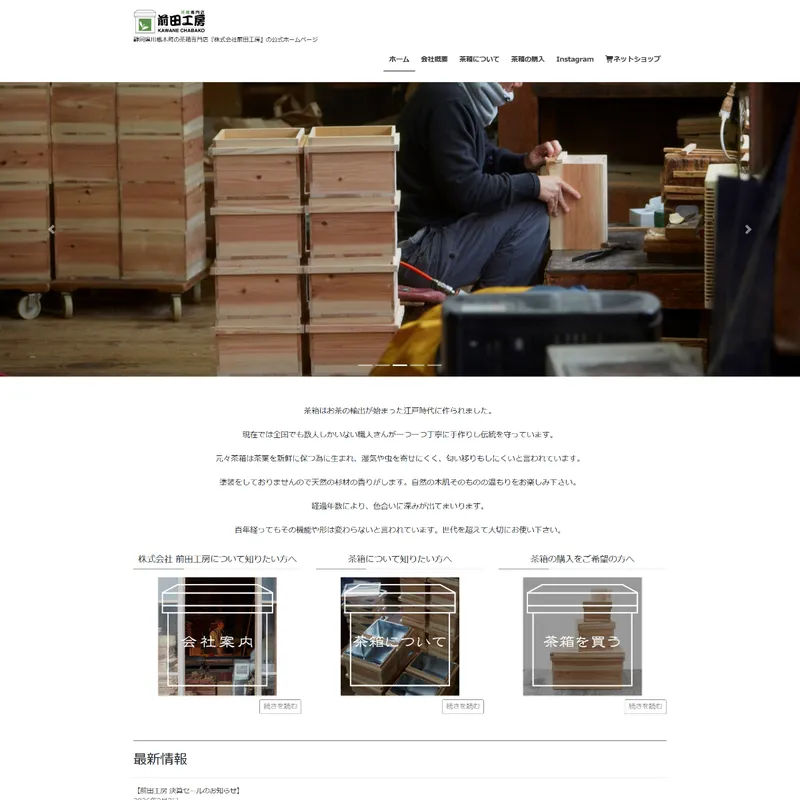
Kawanehon-cho in Shizuoka is one of Japan's leading tea-producing areas. The "chabako" (tea box) was developed here as a sturdy container to protect tea leaves from humidity and insects, and to withstand overseas export. Maeda Kobo's tea boxes use local cedar wood, double-layered with galvanized iron (tin) tightly lined inside. The airtightness — completely shutting out outside air and moisture — far exceeds that of modern plastic. As a "breathing wooden box," it continues to protect anything that dislikes humidity: rice, dry foods, clothing, cameras and more.
Why "Maeda Kobo" Is Chosen | 3 Reasons
"Complete sealing" through tin lining
The greatest feature of the tea box is the galvanized iron (tin) bonded across the entire inside. Seams are filled with solder, with no gaps — completely blocking moisture, light, odors and insects from outside. This dramatically slows the deterioration of food and clothing inside.
Using local "Kawane cedar"
Thinned cedar from Shizuoka is used for the material. Cedar contains natural insect-repelling components and offers a "humidity regulating effect" — absorbing moisture when humidity is high and releasing it when dry. Only quality boards free of warping are selected after at least three months of drying.
Durability that lasts 100 years
How the nails are driven, sealing with washi paper, soldering — every process is done by hand by skilled craftspeople. With proper use, the lifespan is said to be several decades to 100 years; tea boxes from the Meiji and Taisho eras still in active use are not uncommon.
Editor's Note
We use the "5kg size" as a rice bin at home. Before, bugs used to breed in the rice in summer — but since switching to the tea box, there are none at all! Maybe because the rice's moisture is held steady, it cooks deliciously down to the last grain. It looks retro and cute too — just placing it in the kitchen makes me feel like I'm living a more considered life. I think it's also ideal for storing humidity-sensitive single-lens reflex cameras and hina dolls.
Lifetime Boxes That Protect from Humidity | 5 Editor's Picks
From small boxes ideal for dry foods in the kitchen, to large boxes you can use as a clothing case or rice stocker. A size lineup you can choose by use.
Tea Box 5kg (5K)
Holds 10kg of rice perfectly. The best size for the kitchen.
The name "5kg" means "5kg of tea leaves fit inside" — for rice, "about 10kg" fits. The ideal size as a household rice bin. Keeps rice fresh through the power of cedar and keeps bugs away. Also popular as a stocker for large bags of snacks and dry noodles.
A 10kg rice bin, storage of dry foods and pasta, or a container for pet food.
Tea Box 1kg (1K)
Cute as a loaf of bread. A dedicated home for coffee beans and tea leaves.
A compact tea box that fits in both hands. Holds 1kg of tea, or about 2–3kg of coffee beans. Doesn't get in the way on a kitchen shelf or desk, and keeps the aroma of daily luxuries from escaping. Cute to look at — excellent as an accessory case too.
For coffee beans, nori (seaweed), rice crackers, a medicine box, or stationery storage such as masking tape.
Tea Box 10kg (10K)
Clothing and albums too. A shelter for "precious things" that dislike humidity.
A medium size that holds 10kg of tea (about 20kg of rice). With depth and capacity, it suits storing seasonal clothes, albums, records and kimono. Sturdy enough to double as a simple stool or side table.
Clothing storage (no moth repellent needed), precision equipment such as cameras, hina dolls, or stockpiling disaster-prep goods.
Ranji (Label) Design Tea Box
A reprint of the Meiji-era export label. A retro tea box that becomes an interior piece.
A model with "ranji" — the orchid-character labels pasted on tea exports overseas during the Meiji era — applied by laser engraving or printing. A Japanese-Western fusion design like ukiyo-e shines on solid cedar boards. Practical, yet a piece of craft that becomes an accent in the room.
As display storage in the living room. Beloved as a gift for someone overseas, or as a housewarming gift.
Flat Box (10kgS / 15kgS)
Under the bed or sofa. A shallow type that's easy to access.
A "hirabako" (flat-box) type with a lower profile than a normal tea box. Suited to kimono — hard to retrieve from a deep box — documents you want to stack and store, and making use of the dead space under a bed.
Kimono / obi storage, document organization, or under-bed storage. Low height means no visual heaviness.
Summary: Protect what's inside; carve history.
A tea box isn't just a storage case.
The cedar shifts toward amber the more you use it, and even scratches become character.
It's a tool like family history — passed down from parent to child while what's inside keeps changing.
- Company
- Maeda Kobo Co., Ltd.
- Founded
- 2016 (business with roots in the founding era)
- Address
-
837 Senzu, Kawanehon-cho, Haibara-gun, Shizuoka 428-0411, Japan
Google Map - Tel
- +81-547-59-2210
- Business
- Manufacturing and sales of tea boxes; production of interior tea boxes
愛用者の声・口コミ
口コミを投稿するには、ログインが必要です。
まだ口コミはありません。最初の愛用者の声を投稿しませんか?